







For many across India, the desire to stay fit clashes with the reality of poor air quality. How do you stick to your fitness goals without compromising your health? It's not about stopping, but about adapting with smart, informed choices.
First, Understand the Air Quality Index (AQI)
Before you even
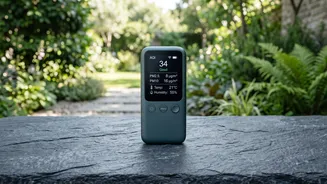
lace up your shoes, your first step should be to check the local Air Quality Index (AQI). The AQI is a colour-coded scale from 0 to 500 that measures major pollutants in the air. A lower number means cleaner air. It's crucial to know that different apps might use different scales (like the US AQI vs. India's National AQI), which have different thresholds, so using an official source like the Central Pollution Control Board (CPCB) provides consistency. For example, on India's scale, an AQI of 101-200 is 'Moderate' and may affect sensitive people, while 201-300 is 'Poor', where even healthy individuals can feel discomfort with prolonged exposure. Knowing the day's number is the foundation of every other decision you make.
Time Your Workouts Strategically
The common belief that early morning is the freshest time for a workout is often a myth in polluted urban areas. Due to a phenomenon called temperature inversion, pollution often gets trapped near the ground overnight and in the early morning, especially during winter. This, combined with early rush hour traffic, can make 7 am to 10 am a particularly bad time to exercise outdoors. The safest window is often late morning or early afternoon, roughly between 10 am and 4 pm, when the sun has warmed the ground, allowing pollutants to disperse. If your schedule doesn't permit this, and the AQI is elevated, it's safer to move your workout indoors.
Modify Workout Intensity and Duration
On days with 'Moderate' or 'Poor' air quality, you don't necessarily have to cancel your workout, but you should adjust it. When you exercise, your breathing rate increases, meaning you inhale a larger volume of air and any pollutants it contains. High-intensity workouts like sprinting or heavy cycling cause you to breathe deeper and faster, significantly increasing your exposure. On days with elevated pollution, consider swapping your intense run for a brisk walk, gentle yoga, or light cycling. Reducing the duration and intensity of your workout can substantially lower the dose of pollutants your lungs have to handle. If the AQI is 'Very Poor' or 'Severe' (above 301), all strenuous outdoor activity should be avoided.
Choose Your Location Wisely
Where you work out matters almost as much as when. Air pollution is not evenly distributed. Unsurprisingly, levels are highest near busy roads and traffic intersections. Studies show that moving even a block or two away from a major road can significantly reduce your exposure to vehicle emissions. Whenever possible, opt for parks, green spaces, or quieter residential streets for your outdoor activities. Trees and vegetation can act as natural filters, helping to improve the air quality in their immediate vicinity. Avoid running behind vehicles, as their exhaust plumes contain a high concentration of harmful particles.
Know When to Take It Indoors
There will be days when exercising outdoors is simply not a safe option. When the AQI enters the 'Very Poor' or 'Severe' categories, it's time to embrace indoor workouts. This doesn't mean your fitness routine has to stop. There are countless effective alternatives you can do at home or in a gym. Bodyweight circuits, which include exercises like squats, pushups, and planks, provide an excellent fullbody workout without any equipment. Other great options include yoga, Pilates, indoor cycling, or dancing. Viewing indoor workouts not as a compromise but as a planned part of your flexible fitness strategy is key to staying consistent and healthy during periods of high pollution.
A Note on Masks and Diet
While a wellfitted N95 or N99 mask can reduce your inhalation of particulate matter,' they are not a perfect solution and do not filter out harmful gases.' Exercising vigorously with a mask can be uncomfortable and may impact your breathing.' On days with very high pollution,' an indoor workout is a safer and more comfortable choice than a masked outdoor one.' Additionally,' some experts suggest that a diet rich in antioxidants,' found in fruits and vegetables,' may help the body combat some of the oxidative stress caused by pollution exposure.' Hydrating well also helps your body flush out toxins.