

A Target Ripe for Discovery
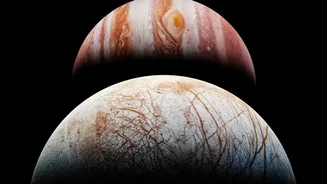
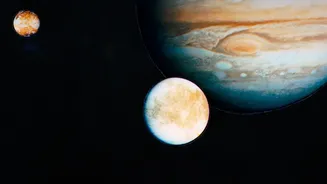
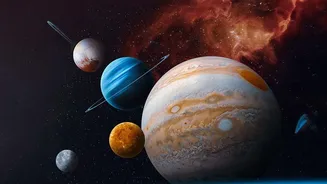
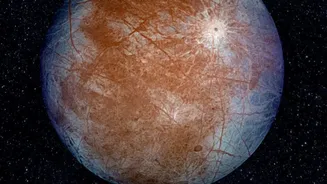
For decades, scientists have been captivated by Europa. Smaller than Earth's moon but thought to hold more than twice the water of all of Earth's oceans combined, it represents one of the most promising places to find a habitable environment in our solar
system. The key ingredients for life as we know it—water, energy, and chemistry—are all believed to be present. The main goal of the Europa Clipper mission is to determine if there are places below the moon's surface that could actually support life. While the spacecraft is not equipped to find life itself, its primary objective is to hunt for 'biosignatures'—specifically, the organic molecules that are the fundamental building blocks of life. Finding these would be a monumental step in understanding our place in the cosmos.
A Mission of Flybys, Not Landing
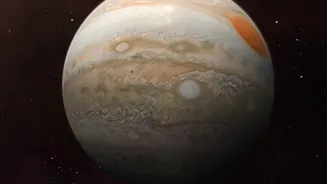
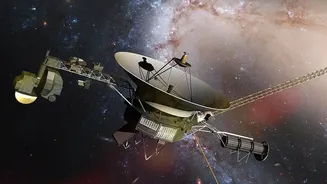
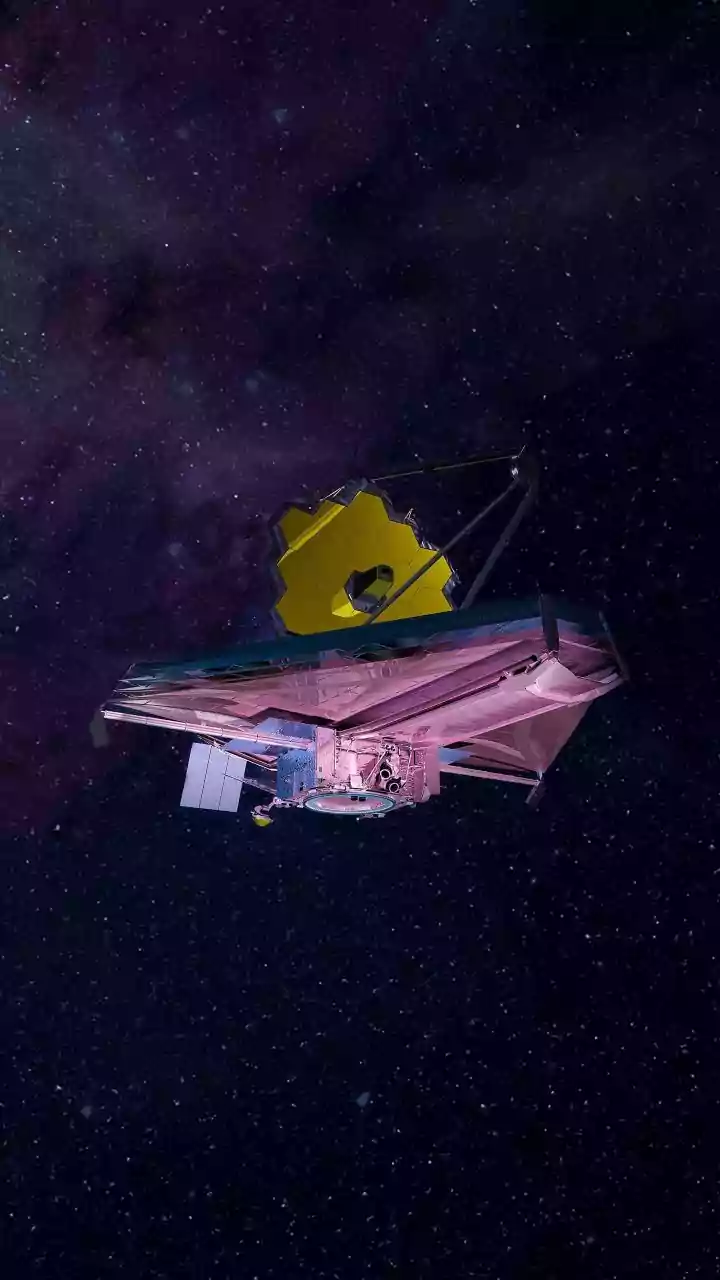
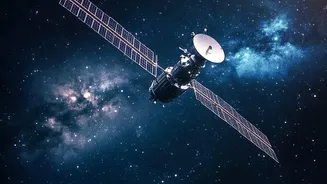
Getting to these potential building blocks of life is no simple task. Europa’s icy shell is estimated to be 15 to 25 kilometers thick, and landing a probe to drill through it is beyond our current technological reach. Instead, the Europa Clipper, the largest interplanetary spacecraft ever built by NASA, will perform approximately 49 close flybys of the moon. This strategy allows the probe to gather immense amounts of data without the risks of landing. Some flybys will bring the spacecraft as close as 25 kilometers to the surface, swooping through the harsh radiation belts of Jupiter for short, intense periods of observation before retreating to a safer distance. During these passes, the spacecraft will rely on a sophisticated suite of nine scientific instruments to analyze Europa from above.
The Molecule Sniffer: MASPEX
One of the key instruments for detecting organic molecules is the MAss Spectrometer for Planetary EXploration, or MASPEX. This highly sensitive device is designed to analyze the gases in Europa’s extremely thin atmosphere and, more importantly, any plumes of water vapor that may be erupting from beneath the ice. As Clipper flies through these plumes, MASPEX will collect gas samples and analyze their composition. It works by converting the gas molecules into ions and then timing how long they take to travel through the instrument. This process allows scientists to determine the mass of each molecule with incredible precision, distinguishing between compounds that have nearly identical masses, like carbon monoxide and molecular nitrogen. This capability is crucial for identifying complex organic molecules that could be signs of biological processes.
The Dust Detective: SUDA
Europa's surface is constantly bombarded by tiny meteorites, which kick up a fine spray of ice and dust into space. The SUrface Dust Analyzer (SUDA) is designed to catch these microscopic particles. As the Clipper spacecraft makes its low-altitude flybys, SUDA will act like a futuristic bucket, scooping up these ejected grains. Once a particle is captured, the instrument analyzes its chemical makeup, capable of identifying traces of organic and inorganic compounds. SUDA is so sensitive it could potentially detect biosignatures even if a collected ice grain contains fragments of a single bacterial cell. By analyzing the composition of this dust, scientists can effectively sample Europa’s surface without ever touching down, offering direct clues about the chemistry of the ice and, by extension, the ocean below.
Building a Complete Picture
While MASPEX and SUDA are the primary tools for sniffing out organics, they don't work alone. The entire suite of instruments on Europa Clipper collaborates to create a comprehensive profile of the moon. The Mapping Imaging Spectrometer for Europa (MISE) will analyze reflected light to map the distribution of ices, salts, and organics across the surface. Meanwhile, an ice-penetrating radar called REASON will probe the thickness of the ice shell and search for pockets of liquid water that might be closer to the surface. An ultraviolet spectrograph will help spot plumes from afar, guiding the spacecraft toward the most promising areas for sampling. By layering data from all these instruments, scientists can build a holistic picture of Europa, identifying regions where ocean material might have recently reached the surface and increasing the chances of a groundbreaking discovery.