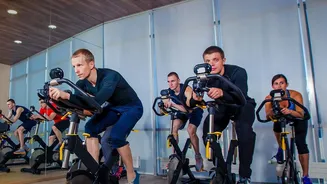







The Powerhouse: Unpacking Cycling's Muscle Demands
Cycling is renowned for its ability to build formidable lower-body strength. The primary movers are the large muscles of the legs: the quadriceps, hamstrings, glutes, and calves. Every push of the pedal is a powerful contraction that builds both strength and endurance.
Pedalling against resistance, such as climbing a hill or increasing the gear, acts as a form of resistance training, sculpting and strengthening your leg muscles without the high impact of exercises like running. While your core is engaged to maintain stability on the bike, the workout is overwhelmingly concentrated in the legs, making it an exceptional choice for anyone looking to focus on building pure lower-body power and endurance.
The Art of Balance: Skating's Core Challenge
Where cycling focuses on raw power, skating excels in developing balance, stability, and coordination. Inline skating is a full-body workout that relies heavily on your core muscles to keep you upright and in control. The constant need to shift your weight and make micro-adjustments engages not just your abs and lower back, but also a wider range of leg muscles. Specifically, skating is fantastic for targeting the hip abductors and adductors (the outer and inner thigh muscles) which work tirelessly to keep you stable. This dynamic balancing act enhances your proprioception — your body's awareness of its position in space — in a way that the more stable platform of a bicycle simply cannot match.
Heart Rate and Calorie Burn: A Head-to-Head Look
Both cycling and skating are excellent cardiovascular exercises that get your heart rate up and burn a significant number of calories. The exact amount burned in either activity depends heavily on intensity, duration, and your body weight. However, studies and fitness experts often note that at a similar level of perceived effort, inline skating can sometimes have an edge in calorie expenditure. This is because skating engages more muscle groups simultaneously for stabilization, including the core and upper body, which requires more energy. While a cyclist can coast and momentarily rest, a skater must continuously work to maintain momentum and balance, leading to a potentially higher overall metabolic burn during a session.
Impact and Injury: Which is Gentler on the Body?
Both activities are considered low-impact, making them excellent alternatives to running for those with sensitive joints. The smooth, gliding motion of skating and the circular pedal stroke of cycling reduce the jarring stress on knees and ankles. However, their injury profiles differ. The most common injuries in cycling often relate to falls, such as collarbone or wrist fractures, or overuse issues from repetitive motion. Skating injuries are also predominantly caused by falls, with wrists and ankles being particularly vulnerable as people try to break their fall. The key takeaway is that proper form and protective gear, especially a helmet, are nonstoppable for both activities to minimize risk.
The Final Verdict: Power or Poise?
So, which activity should you choose? The answer lies in your personal fitness goals. If your primary aim is to build powerful leg muscles and cover long distances, cycling is an unmatched choice. It's a fantastic tool for developing leg strength and cardiovascular endurance with great efficiency. If you're looking for a more comprehensive, full-body workout that sharpens your balance, agility, and core strength, then inline skating is the winner. It challenges your body in a more holistic way, promoting stability and coordination that can translate to better performance in other sports and daily activities.