
Why Choose a Natural Rangoli?
In a world moving towards sustainability, the art of rangoli is returning to its roots. For centuries, rangoli was created using materials from the earth. The use of synthetic, chemical-laden powders is a relatively modern trend that poses environmental
concerns. By choosing natural ingredients, you are not only creating a safer environment for your family but also honouring a tradition of co-existence. A sustainable rangoli is fully biodegradable; the flower petals wilt gracefully back into the soil, and the rice flour serves as food for tiny creatures like birds and ants, a practice known as 'Bhuta Yajna'. This mindful approach connects us to a cultural wisdom that was always in harmony with nature.
Your Sustainable Toolkit
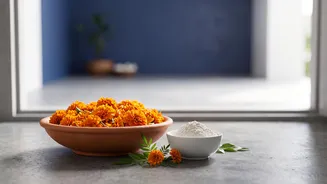
Gathering your materials is the first step in this creative process. You won't need much, and most items can be found in your garden or a local market. Your primary components are fresh marigold flowers—look for vibrant shades of orange and yellow—and simple rice flour for your white lines. To add more colour, consider other natural pigments from your kitchen: turmeric powder for a brighter yellow, and kumkum for a deep, traditional red. You can also incorporate other elements like fresh leaves for green hues or even colourful pulses and grains for added texture. Having a piece of chalk for outlining your design can be helpful for beginners.
Preparing Your Canvas
A good rangoli starts with a clean base. Choose a spot at your home's entrance, a place meant to welcome guests and positive energy. Sweep the area thoroughly to remove any dust or debris. Once clean, lightly sprinkling the surface with a little water is a traditional technique. This slight dampness helps the rice flour and petals adhere better to the ground, ensuring your design remains intact for longer. This simple preparation turns your doorstep into a ready canvas, setting the stage for the art you are about to create.
Bringing Your Design to Life
With your materials and canvas ready, it is time for the most enjoyable part. Start by lightly sketching your chosen pattern on the ground with a piece of chalk. Once you have the basic outline, use a pinch of dry rice flour between your thumb and forefinger to draw the main lines of your design. After the framework is in place, begin filling it in. Separate the marigold petals and start arranging them within the sections of your rangoli, working from the centre outwards. Layer the petals to create a lush, textured look. Use turmeric or kumkum for smaller, detailed sections that require a pop of colour. The process is a form of meditation, a slow and deliberate act of creation.
Inspiration for Your Designs
You don't need to be a professional artist to create a stunning rangoli. Often, the simplest designs are the most effective. Classic motifs like floral patterns, geometric shapes, paisleys, and peacocks work beautifully with natural materials. A circular mandala filled with concentric rings of different coloured petals is a classic and visually striking option. Another timeless idea is to create a design that incorporates a space for a diya in the centre, which looks especially magical when lit in the evening. Remember, the goal is not perfection but expression. Even a simple pattern made with care and intention will radiate beauty and festive charm.