



The Science of Saving Space
The debate between rolling and folding has long been a staple of travel forums, but the consensus among seasoned travellers and packing experts is clear: rolling generally saves space. The logic is simple. When you tightly roll a garment, you compress
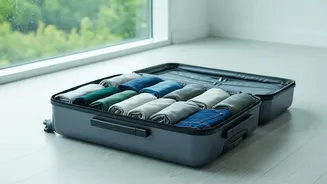
it and squeeze out the air trapped between the fabric layers. This creates a dense, compact cylinder. Unlike bulky, square-folded clothes that leave awkward gaps in your suitcase, these rolled items can be packed together like a puzzle, fitting snugly into every nook and cranny of your bag. This method is especially effective for lightweight and casual items like t-shirts, jeans, shorts, and synthetic fabrics. Experiments have shown that by rolling clothes, travellers can often fit significantly more into their bags, sometimes allowing them to switch from a checked bag to a carry-on.
How to Roll Like a Pro
Mastering the art of rolling is easy. The goal is to create a tight, uniform roll that won't unravel in transit. For a t-shirt, lay it flat, fold the sleeves in, and then roll tightly from the bottom hem up to the collar. For trousers or jeans, lay them flat and fold one leg over the other. Smooth out the fabric, then roll tightly from the waistband down to the cuffs. For best results, smooth out any wrinkles before you start rolling. Some travellers even secure their rolls with rubber bands, though a well-packed suitcase where items are pressed against each other usually makes this unnecessary. While most casual wear benefits from rolling, be mindful of bulky items like thick sweaters or formal wear like blazers, which may be better off folded to avoid taking up more space or creating unwanted creases.
Your First Defence Against Wrinkles
A common myth is that rolling clothes leads to a suitcase full of wrinkles. In reality, the opposite is often true. Traditional folding creates hard, sharp creases that set into the fabric. Rolling, on the other hand, avoids these harsh folds. Because the garment is curved into a cylinder, any compression is distributed more evenly, resulting in fewer deep-set wrinkles upon arrival. To ensure your clothes stay as smooth as possible, make sure to flatten the garment and smooth out any existing wrinkles before you begin the rolling process. This technique is so effective at keeping uniforms neat that it's a standard practice in the military. Of course, no method is completely foolproof against all wrinkles, especially with delicate fabrics, but for most travel wardrobes, rolling is a superior choice for arriving with ready-to-wear clothes.
An Unlikely Shield on Rainy Days
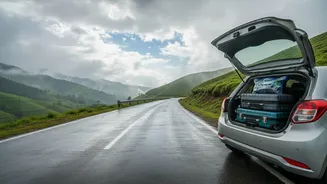
Here is where rolling transforms from a space-saving hack into a smart protective measure, especially for road trips during monsoon season or travels to rainy destinations. Imagine your bag gets caught in a downpour as you move it from the car to your hotel. A bag filled with loosely folded clothes will act like a sponge, allowing moisture to seep in and spread quickly. However, a suitcase packed with densely rolled clothes offers better resistance. The tightly compacted fabric of each roll is less permeable to water. While the outer layer of the rolls might get damp, the moisture will have a much harder time penetrating to the core of the garment. Furthermore, a bag packed this way has less empty air space for moisture to occupy. This creates a denser, more cohesive block of belongings that can better withstand an unexpected soaking, keeping the items at the center of your bag dry and safe.
Packing for Total Possession Protection
The benefits extend beyond just your clothes. When your bag is methodically packed with tight, dense rolls, it creates a more stable and cushioned environment for everything else. Electronics, toiletries, and fragile souvenirs are less likely to shift and break during transit. You can strategically place your rolled garments to form protective walls around more delicate items. For example, a tablet or a book can be sandwiched between rows of soft, rolled t-shirts. This turns your clothing into functional padding, a bonus that haphazardly folded items simply can't offer. On a bumpy road trip, this stability can mean the difference between arriving with your belongings intact or dealing with a broken charger or a leaky shampoo bottle. By treating your rolled clothes as the foundational building blocks of your luggage, you create an organized, secure, and shock-absorbent system that protects everything inside.