

Witness the Spectacle of Vallam Kali
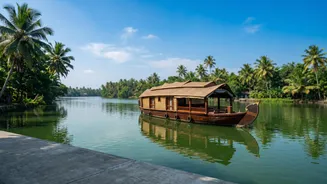
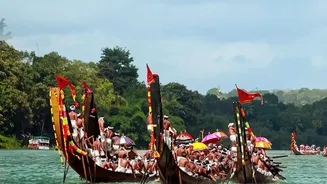
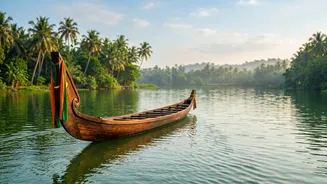
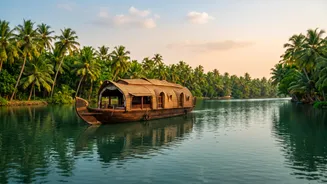
The Vallam Kali, or snake boat race, is one of Onam’s most electrifying events. Held on Kerala's serene backwaters, these races feature long, slender 'Chundan Vallams' (snake boats) that can be over 100 feet long, carrying up to 150 rowers, helmsmen,
and singers. More than just a sport, it’s a powerful display of teamwork and community pride with deep historical roots, originally serving as war canoes. The rowers paddle in perfect synchrony to the rhythm of traditional boat songs (Vanchipattu) and pounding drums. The energy of the cheering crowds on the riverbanks and the sight of these majestic boats cutting through the water is an unforgettable spectacle. The Nehru Trophy Boat Race in Alappuzha is one of the most famous, turning Punnamada Lake into a roaring racetrack. It's a tradition that embodies the spirit of unity and Kerala's profound connection to its waterways.
Savour the Grand Onam Sadya
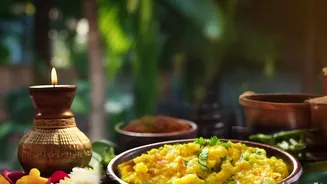
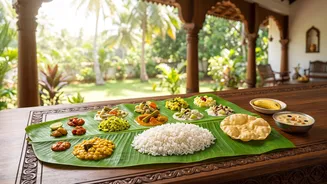
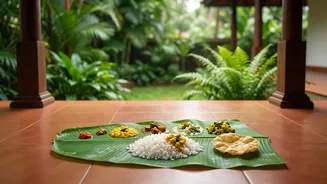
No Onam experience is complete without partaking in the Onam Sadya, a lavish vegetarian banquet that is the heart of the celebration. This multi-course meal is traditionally served on a fresh banana leaf and features anywhere from 24 to over 28 dishes. The arrangement is an art form, with each dish placed in a specific spot on the leaf. Key dishes include staples like parboiled rice, parippu (lentil curry with ghee), sambar, and avial (mixed vegetables in a coconut gravy), alongside a variety of pickles, fried banana chips (upperi), and crispy pappadams. The feast is a carefully balanced blend of sweet, salty, sour, and spicy flavours. It concludes with one or more servings of payasam, a sweet milk-based pudding. More than just a meal, the Sadya is a symbol of abundance, prosperity, and the communal joy of the harvest.
Marvel at the Artistry of Pookalam
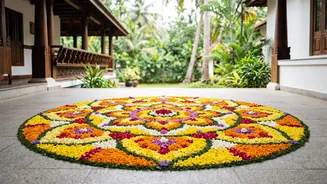
One of the first signs that Onam has arrived is the appearance of Pookalams. These are intricate and colourful carpets made entirely of fresh flower petals, laid out at the entrances of homes, offices, and public spaces. Creating the Pookalam is a cherished daily ritual throughout the ten days of the festival, often undertaken as a community or family activity. The designs typically start small on the first day (Atham) and grow in size and complexity each day, culminating in a large, elaborate carpet on the main day of Thiruvonam. These floral arrangements are created to welcome the spirit of the legendary King Mahabali, whose annual return is celebrated during Onam. Walking through Kerala during this time, you'll see a stunning variety of these beautiful, ephemeral artworks, each one a vibrant expression of festive spirit and creativity.
Experience the Energy of Pulikali
For a truly unique and high-energy spectacle, head to Thrissur for Pulikali, the ‘Tiger Dance’. This vibrant folk art form, with a history of over 200 years, takes place on the fourth day of Onam. Performers, with their bodies meticulously painted in bright yellow, red, and black to resemble tigers and leopards, dance through the streets to the powerful beats of percussion instruments like the chenda and thakil. The process of painting is a painstaking one, often starting in the early hours of the morning. The dancers, with large, painted bellies shaking, mimic the movements of a tiger, often enacting themes of a tiger hunt. It is a boisterous, playful, and captivating performance that transforms the city's Swaraj Round into a massive stage, attracting thousands of locals and tourists alike.
Watch the Graceful Thiruvathira Kali
In contrast to the wild energy of Pulikali, Thiruvathira Kali (or Kaikottikali) is a gentle and graceful group dance performed by women. Dressed in traditional off-white and gold bordered Kerala sarees (mundu-neriyathu), their hair adorned with jasmine flowers, the dancers move in a circular pattern around a lit lamp (Nilavilakku). The dance involves simple, elegant steps and coordinated hand-clapping, all performed in time with melodious folk songs sung by the dancers themselves. The performance celebrates marital bliss and is often performed to attain a happy and prosperous married life. Its lasya (slow and graceful) movements and lyrical quality create a mesmerising and serene atmosphere, offering a glimpse into the more understated and poetic traditions of the Onam festival.