

A Tale of Two Telescopes
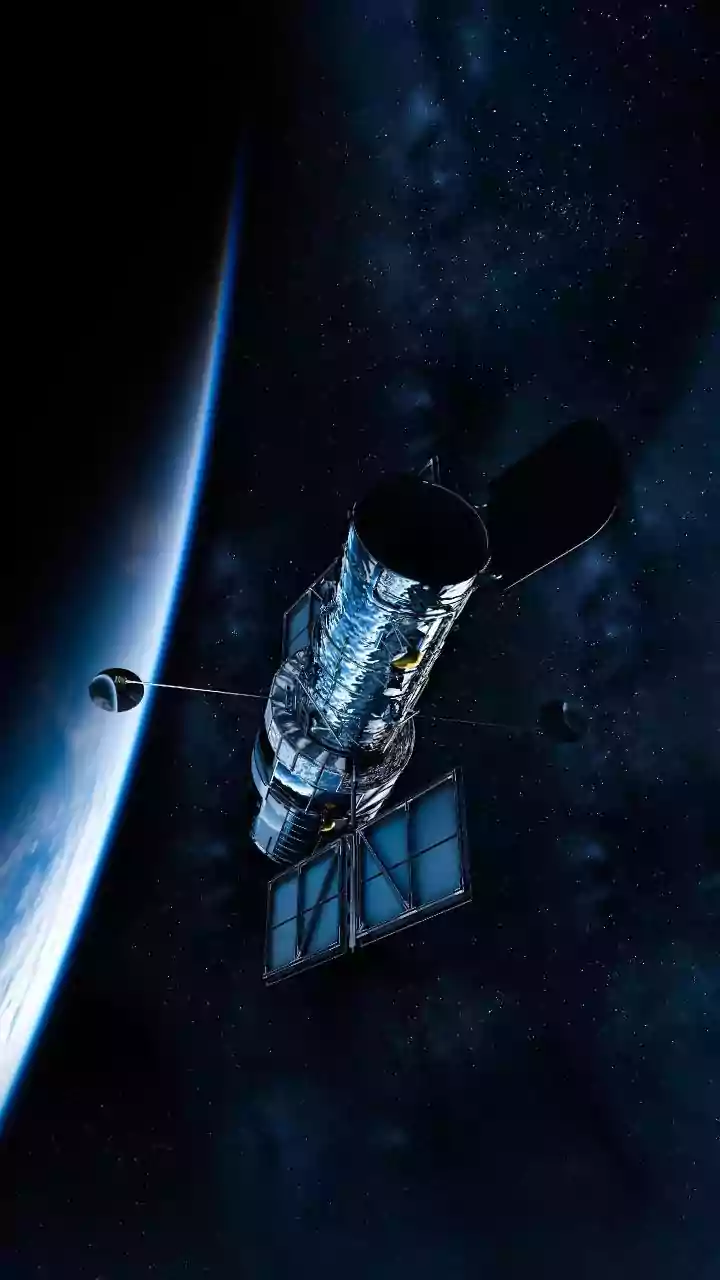
While the headline specifies Hubble, the latest comprehensive look at Saturn actually comes from a powerful partnership. NASA's Hubble Space Telescope, a long-serving sentinel of the cosmos, teamed up with the newer James Webb Space Telescope (JWST) to
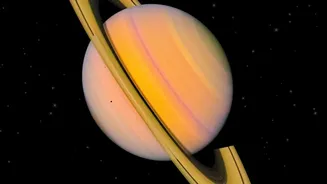
observe the planet in late 2024. Hubble captured the planet in visible light as part of its ongoing Outer Planet Atmospheres Legacy (OPAL) program, which has been tracking Saturn's seasonal changes for years. A few months later, Webb used its powerful infrared instruments to peer beneath the hazy cloud tops. This combination allows scientists to see the planet in a way that neither telescope could achieve alone, creating a 3D view of its complex atmosphere. By using both, researchers can effectively slice through the atmospheric layers like an onion.
Peering Through the Haze
Why is infrared so important? Saturn's atmosphere is mostly hydrogen and helium, with traces of other chemicals that form a thick haze. To our eyes, and to Hubble, this results in subtle, pastel-coloured bands. But Webb's infrared vision can cut through that haze to sense heat and chemical signatures at different depths. This reveals a much more dynamic and chaotic world underneath. The infrared observations highlight temperature differences, hidden atmospheric waves, and the structure of clouds and aerosols far below the visible surface. This deep view is critical for understanding the engine driving Saturn's weather.
Storms, Ribbons, and Bizarre Beads
The joint observations have highlighted several key features. Webb's infrared view clearly shows a long-lived jet stream in the northern mid-latitudes known as the “ribbon wave,” which meanders across the planet. Just below it, a small spot remains visible—a lingering remnant of the massive “Great Springtime Storm” from over a decade ago. Other, smaller storms are also visible dotting the southern hemisphere. Even more mysteriously, separate Webb observations from 2025 uncovered strange dark, bead-like features in the ionosphere and an odd star-shaped pattern in the stratosphere below, phenomena never seen on any other planet.
A Last Look at the Hexagon
One of Saturn’s most iconic features is the massive, six-sided jet stream at its north pole, known simply as “the hexagon.” The recent images managed to capture its faint edges. However, these views are especially precious because the planet's northern hemisphere is tilting away from the sun, heading for its 2025 equinox and a long, 15-year winter. This means the hexagon will soon be plunged into darkness, hidden from our telescopes until the 2040s. The latest data provides a final, high-resolution portrait of this strange structure before it disappears from view.
Mysterious Polar Glow
In Webb's infrared view, Saturn's poles exhibit a distinct grey-green glow. Scientists believe this indicates light being emitted at a specific wavelength, around 4.3 microns. There are two leading theories for this. It could be caused by a layer of high-altitude aerosols that scatter light in a unique way at these latitudes. Alternatively, it might be the result of faint auroral activity, where charged particles interact with the planet’s magnetic field, causing the upper atmosphere to glow. Further study will be needed to determine the true cause of this polar phenomenon.