



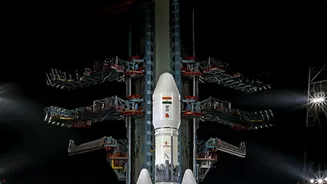
A New Space Age Dawns
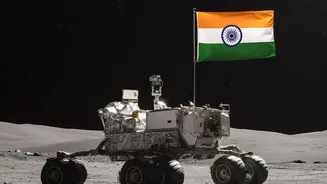
For decades, India's celebrated space journey was synonymous with one name: the Indian Space Research Organisation (ISRO). From launching its first satellite on a bullock cart to missions to the Moon and Mars, ISRO's achievements were a source of national
pride. But a monumental shift is underway. The government's decision in 2020 to open the sector to private enterprise, followed by the landmark Indian Space Policy in 2023, has ignited a commercial space race within the country. This policy framework was designed to transition ISRO's role towards research and development of advanced technologies, while enabling private companies, or Non-Governmental Entities (NGEs), to handle end-to-end space activities. The goal is to dramatically increase India's share of the global space economy, which stood at just 2% in 2022. Projections now see India's space economy rocketing from around $8.4 billion to $44 billion by 2033.
The Rise of the Space Startups
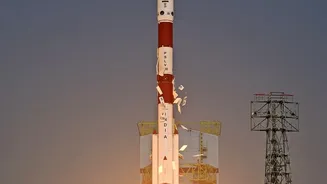
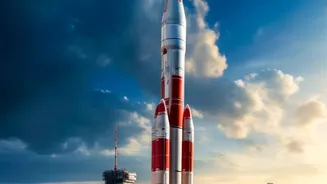
The policy shift created a fertile ground for a new breed of entrepreneurs. Since 2020, the number of space-tech startups has surged from just a handful to over 400. These companies are not just vendors to ISRO anymore; they are building, launching, and operating their own space hardware. Hyderabad-based Skyroot Aerospace made history in July 2026 by launching Vikram-1, India's first privately developed orbital rocket, making India only the third country, after the US and China, with a private company to achieve this feat. Another key player, Agnikul Cosmos, successfully launched its semi-cryogenic, 3D-printed engine in a sub-orbital test flight, showcasing its innovative manufacturing techniques. These launch providers aim to capture the burgeoning global market for small satellite launches, offering dedicated and on-demand services.
More Than Just Rockets
The boom extends far beyond launch vehicles. Companies like Pixxel are deploying constellations of advanced hyperspectral imaging satellites to provide 'health monitoring' for the planet, with applications in agriculture, environmental monitoring, and urban planning. Pixxel is leading a consortium to build India's first privately-led national Earth Observation constellation in a major public-private partnership. Meanwhile, Dhruva Space offers full-stack space engineering, from satellite platforms to solar panels and ground station services, and is developing a large satellite manufacturing facility near Hyderabad. These companies are creating a diversified ecosystem, providing services like satellite data analytics, in-space mobility, and ground support. This diversification is critical for building a robust and self-reliant space industry.
Fueling the Final Frontier
This rapid expansion is powered by a significant influx of capital. The Indian government amended its Foreign Direct Investment (FDI) policy to allow up to 74% FDI via the automatic route for satellite manufacturing and operations, and up to 49% for launch vehicles. Private venture capital has also poured in, with companies like Skyroot Aerospace raising over $100 million. To further boost the ecosystem, a dedicated venture capital fund anchored by IN-SPACe — the single-window agency created to promote and authorize private space activities — has been established to support startups at various stages. This financial backing is crucial for the capital-intensive nature of space technology, allowing companies to scale operations and commercialize their innovations.
The Path Forward: Challenges and Opportunities
While the trajectory is steep, challenges remain. The private sector still faces hurdles such as the need for clearer liability laws and intense global competition from established players like SpaceX. However, the momentum is undeniable. The success of initial private launches is a powerful validation of the new policy direction. With IN-SPACe facilitating access to ISRO's world-class facilities and expertise, the public-private collaboration is set to deepen. The vision is clear: to create a self-sustaining ecosystem where private innovation drives commercial success, transforming India into a global space hub. As more private rockets light up the sky from Sriharikota, they are not just carrying satellites; they are carrying the aspirations of a new space-faring India.