








The New Digital Writing Assistant
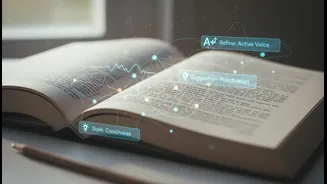
Not long ago, a final check on an essay meant running a basic spell-checker. Today, students have access to sophisticated AI-powered writing assistants that do much more. Tools like Grammarly, QuillBot, and Paperpal are designed to act as a second pair
of eyes, scanning text for a wide range of issues. They go beyond simple spelling and grammar corrections, offering suggestions to improve clarity, style, and tone. These platforms use artificial intelligence to analyze sentences in context, helping students produce more polished and professional essays. For many, especially those for whom English is a second language, these tools can be invaluable for building confidence and improving language skills.
Strengthening Structure and Logical Flow
Perhaps one of the most significant advancements is AI's ability to provide feedback on logic and structure. Writing a coherent argument is challenging, but AI tools can help students organize their thoughts more effectively. Some platforms can assist in the brainstorming and outlining stages, suggesting potential structures or sub-points for an essay. By analyzing a draft, these tools can highlight areas where the logical flow breaks down, suggest better transitions between ideas, and even point out where an argument might be weak or inconsistent. This allows students to focus on the quality of their ideas, using the AI as a guide to ensure their argument is presented clearly and persuasively.
Mastering the Art of Citation
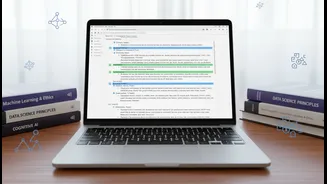
Citations are the bedrock of academic integrity, but they are also a common source of error and frustration. AI is making this painstaking process much more manageable. AI-powered citation checkers can automatically format references in various styles like APA, MLA, or Chicago with remarkable speed and accuracy. More advanced tools can even help verify sources. Some platforms can check if a cited source genuinely supports a claim or identify fake citations, which can sometimes be generated by other AI tools. This functionality not only saves students a significant amount of time but also helps them learn the importance of credible sourcing and avoid accusations of academic misconduct.
A Tool, Not a Replacement
Despite their power, educators and experts caution that these AI tools are assistants, not replacements for human intellect. An over-reliance on this technology can prevent students from developing their own fundamental writing and critical thinking skills. The goal of education is not just to produce a perfect essay, but to foster the ability to think critically, form original arguments, and communicate effectively. Furthermore, there are ethical lines to consider. Using AI to brainstorm or edit is generally seen as acceptable, but having it generate entire essays is widely considered plagiarism. Many Indian educational policies, like the National Education Policy (NEP) 2020, encourage AI literacy but stress the importance of ethical use.
The Path to Responsible Use
The key lies in using these tools responsibly to supplement, not supplant, the learning process. Students should use AI to get feedback on their own work, not to create the work for them. It can be a powerful partner for overcoming writer's block, refining a draft, or double-checking tedious formatting. By critically evaluating the AI's suggestions and making thoughtful decisions, students can improve their writing without compromising their academic integrity or their own intellectual growth. The most effective approach is to see AI as a tutor that can point out mistakes and suggest improvements, while the student remains the author and, most importantly, the thinker.