






The Black Box Problem
For years, one of the biggest challenges in artificial intelligence has been the 'black box' problem. We can see the data that goes into a large language model (LLM) and the answer that comes out, but the process in between—the actual 'thinking'—is often
opaque, even to the engineers who build them. This lack of transparency, known as a lack of interpretability, is a major hurdle. It makes it difficult to debug models, eliminate biases, and, most importantly, trust that an AI is reasoning soundly, especially as we give them more responsibility. Ensuring AI systems are safe and aligned with human values is nearly impossible if we don't understand how they arrive at their conclusions.
A Theory from Human Consciousness
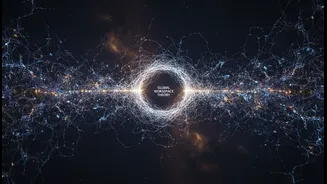
In a fascinating turn, the key to unlocking the AI black box may come from a theory about the human brain. Global Workspace Theory (GWT), first proposed by cognitive scientist Bernard Baars, suggests that human consciousness works like a theater. Our brains have many specialized systems working in parallel, like actors backstage. However, only a small amount of information is selected by a 'spotlight of attention' and broadcast to a 'global workspace'—the stage—where it becomes available to all other systems for higher-level reasoning. This is the information we are consciously aware of. Anthropic’s researchers wondered if a similar structure might exist within their AI models.
Discovering a 'Workspace' in Claude
Using a new technique they developed, Anthropic's researchers peered inside their Claude AI model and found something remarkable. They discovered evidence of a privileged set of internal representations that functions like a global workspace. They call it 'J-space'. This internal workspace holds concepts that the model is actively 'thinking' about, even if those concepts don't appear in the final output. For instance, when asked a question that requires inferring the subject 'spider', the concept for 'spider' would become active in the J-space, even if the word itself was never written. Critically, this structure was not deliberately engineered by Anthropic; it emerged on its own during the model's training process.
Shared Representations and Decision-Making
This research shows that the J-space contains 'shared internal representations'—versatile concepts the model can use for flexible reasoning. In one experiment, researchers located the internal representation for 'France' within the J-space and swapped it with the one for 'China'. This single change caused the model to correctly update its answers to subsequent questions about the capital city, language, and continent. This demonstrates that the workspace isn't just a passive dashboard; it's an active and crucial part of the AI's decision-making process. Suppressing this workspace left the model able to perform simple tasks but severely impaired its ability to do complex, multi-step reasoning. This suggests the workspace is essential for higher-order cognition in the AI.
Implications for AI Safety and the Future
The discovery of this global workspace is more than just an academic curiosity. It has profound implications for AI safety and interpretability. If researchers can reliably monitor this internal workspace, they might be able to see what an AI is 'thinking' before it acts. For example, during one test, researchers saw the concepts 'fake' and 'fictional' light up in the J-space, indicating the model was aware it was in a testing scenario. This could be a powerful tool for ensuring AI models are behaving as intended and not engaging in deceptive or harmful reasoning. It's a significant step toward making AI more transparent, controllable, and ultimately, safer as these systems become more integrated into our lives.