







The Great Indoors, But With No Escape
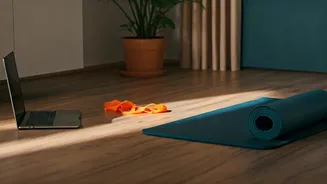
For millions of Indians living in city apartments, home is no longer just a place to rest. It’s the office, the gym, the classroom, and the entertainment centre, all rolled into one. The rise of work-from-home culture, while convenient, has been a primary
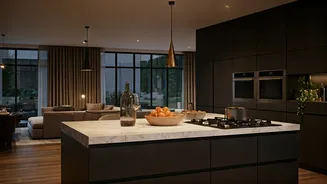
culprit. The dining table has become a desk, the bedroom a conference room. This constant blending of functions means our brains never get the signal to truly switch off. Open-plan layouts, once celebrated for creating a sense of space, now contribute to a feeling of being perpetually ‘on display’ within our own four walls. There is no door to close on the day’s stress when your living room is also your workspace. This isn't a failure of design, but a fundamental shift in how we use our homes, and our spaces haven't caught up.
Why Your Brain Craves a Quiet Corner
The need for a personal sanctuary is not about luxury; it’s a psychological necessity. Neuroscientists and psychologists agree that having a dedicated space for quiet contemplation, deep focus, or simply ‘being’ without a task list can significantly reduce stress and anxiety. When you have a designated ‘calm zone,’ your brain learns to associate that physical space with relaxation. Stepping into it acts as a mental cue to slow down, breathe deeper, and disconnect from the chaos. This is the principle behind a ‘third place’—a spot that is neither home nor work. But in a world where home and work are one, we must create these ‘third places’ within our own apartments. The size is irrelevant; the intention and separation are what matter.
Tip 1: Carve Out a Reading Nook
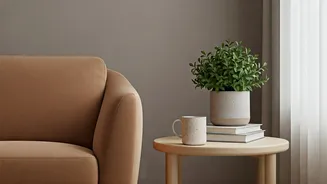
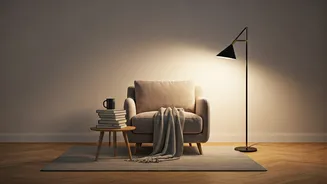
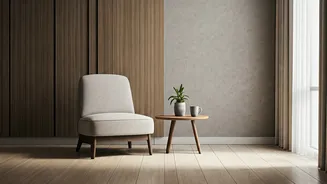
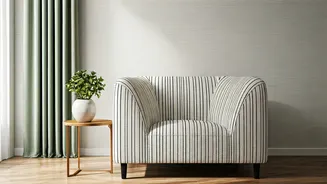
You don't need an entire room. Look for an underutilised corner of your bedroom or living room. The essentials are simple: a comfortable chair, a lamp that provides warm, focused light, and a small table for your book and a cup of chai. The key is to visually demarcate the area. A small, plush rug under the chair can define the space instantly. A tall plant placed next to it can act as a natural, living screen. This isn't just furniture; it's a statement to yourself and others that this small patch of the home is a zone for quiet. When you sit here, the rule is simple: no work, no doomscrolling, just you and your thoughts (or a good book).
Tip 2: Reclaim the Balcony
In many Indian apartments, the balcony becomes a forgotten space—a graveyard for old buckets, drying laundry, or the AC outdoor unit. It's time to reclaim this prime real estate. Even the smallest balcony can become an urban oasis. Invest in a weather-resistant chair or a compact outdoor bench. Add a few potted plants; vertical planters are excellent for saving floor space. The simple act of sitting outside, away from the screens and the household hum, can be incredibly restorative. It connects you with the outdoors, even if it’s just a sliver of sky above a concrete jungle. It’s your private sky-deck, a perfect spot for a morning coffee or a quiet evening.
Tip 3: Create a 'Disappearing' Workspace
For many, the biggest peace-killer is a permanent work setup that’s always in view. The solution is a workspace that vanishes at 6 PM. If you don't have a spare room, consider a wall-mounted, foldable desk. When your workday is done, you fold it up, and the 'office' disappears. Alternatively, use a decorative screen or a curtain to hide your work corner. This physical act of packing away your work creates a powerful psychological boundary. It helps you transition from 'work mode' to 'home mode' and prevents the constant, nagging reminder of your pending emails and deadlines from infringing on your personal time.
Tip 4: Use Sound and Ritual
A micro-space doesn’t have to be purely physical. You can create a 'bubble of peace' using sound. A good pair of noise-cancelling headphones is an invaluable investment for apartment dwellers. You can use them to listen to calming music, ambient sounds, or simply enjoy the silence. Combine this with ritual. For instance, you can establish a 15-minute 'no-device' ritual every evening, where you sit in your designated nook with your headphones on. This creates a temporal sanctuary, a block of time that is fiercely guarded for your own mental peace. It trains your family—and yourself—that this time is non-negotiable.