


The Ultimate Long-Haul Pantry Problem
Sending a crew on a mission to Mars, which could last for years, presents a logistical nightmare for food supply. Packing enough pre-packaged meals is incredibly expensive and heavy, with every kilogram launched into space costing a fortune. Beyond cost,
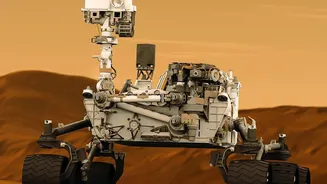
there's the issue of nutrient degradation over time and the profound psychological impact of life without fresh food. For humans to truly establish a long-term presence on the Red Planet, they can’t just be visitors; they’ll need to become farmers. But Mars is anything but a welcoming greenhouse. Its thin atmosphere, intense radiation, and nutrient-barren surface make agriculture a monumental challenge.
From Campus Labs to Martian Gardens
Across the globe, university students are at the forefront of solving this very problem. In projects from Texas to Arkansas and beyond, student researchers are designing and testing innovative ways to turn the toxic Martian surface into fertile ground. One common approach involves using 'regolith simulant'—a type of manufactured dust that mimics the mineral composition of Martian soil. This simulant is fundamentally lifeless, containing none of the organic matter or microbes that Earth soils use to support plant life. Many student projects focus on figuring out how to kickstart this biological activity, essentially creating living soil from scratch. Recent projects, like one developed by a team of Texas students, focus on systems that can process the regolith to make it a viable medium for growing food, a crucial step toward self-sufficiency.
The Menu for Mars
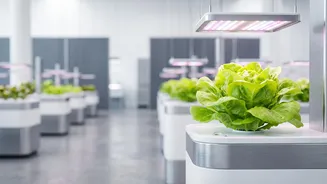
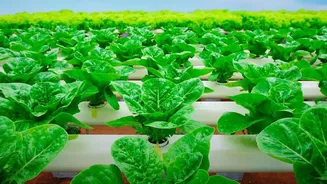
So, what’s on the menu? Researchers are experimenting with a variety of hardy and efficient crops. Leafy greens like lettuce, fast-growing radishes, turnips, and potatoes are popular candidates. These plants are chosen for their nutritional value, relatively short growth cycles, and resilience. One fascinating student-led discovery found that alfalfa, a common cattle feed crop, grows surprisingly well in simulated Martian soil without any added nutrients. Even better, the harvested alfalfa can then be ground into a powder and used as a biofertilizer, enriching the barren regolith enough to support other food crops like lettuce and radishes. Other projects are exploring hydroponic and aquaponic systems, which don't use soil at all. These methods grow plants in nutrient-rich water, which could be a more efficient and controllable solution inside a sealed Martian habitat.
Overcoming a Toxic Environment
One of the most significant challenges is that real Martian regolith contains toxic compounds called perchlorates, which are harmful to humans and prevent most plant growth. Much of the cutting-edge research, including projects involving students at universities like Florida Tech and Arizona State, is focused on using bacteria to break down these toxic salts. The idea is to use microorganisms as microscopic detoxifiers, which would not only remove the harmful perchlorates but also begin to enrich the soil with organic matter. These experiments are complex, involving testing different bacteria under various simulated Martian conditions to see which ones perform best. Success in this area would be a true game-changer, turning a poisonous liability into a planetary asset.
Inspiring the Next Generation of Explorers
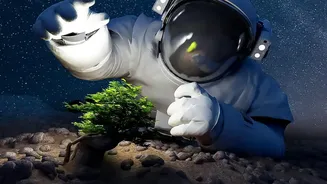
While these student projects may not result in a full-scale Mars farm tomorrow, they are vital pieces of a much larger puzzle. They provide crucial data and proof-of-concept for space agencies like NASA, which collaborates with and funds many of these university initiatives. These projects do more than just advance science; they provide hands-on experience and inspiration for the very students who may one day design, build, or even live in these off-world habitats. They demonstrate that the path to Mars isn't just being forged in the launch towers of space agencies, but also in the quiet determination of campus laboratories. Moreover, the psychological benefit of having living, green plants in an otherwise sterile environment is seen as a major boost for the mental well-being of future astronauts on long, isolated missions.