





Why Warm Light Works Wonders
The secret to battling the monsoon blues indoors lies in colour temperature. Measured in Kelvin (K), lighting ranges from cool to warm. Cool light, which is often above 4000K, has a bluish-white tone similar to bright daylight and can feel clinical or harsh,
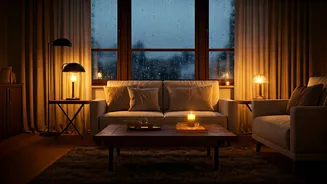
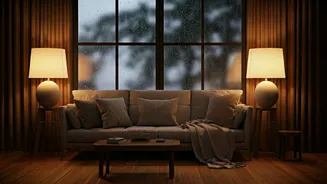
especially on a dark day. Warm light, typically in the 2700K to 3000K range, emits a soft, yellowish glow that mimics a sunset or candlelight. This warm hue has a powerful psychological effect, creating a sense of comfort, relaxation, and cosiness. It makes a space feel more intimate and inviting, counteracting the dreary, flat light of a rainy afternoon. This is why cafes and lounges almost exclusively use warm tones to create a welcoming atmosphere.
Start with the Source: Choosing Your Bulbs
The simplest step is to change your bulbs. When you're shopping, look for packages that specify the Kelvin value or use terms like "Warm White." LED bulbs are an excellent choice as they are energy-efficient and long-lasting, which is a bonus during the humid monsoon months when you might have lights on for longer. If you want more flexibility, consider investing in smart bulbs. These can be controlled via a smartphone app, allowing you to change not only the brightness but also the colour temperature from a cool white for daytime tasks to a warm glow in the evening. This gives you complete control over your apartment's mood without ever leaving the sofa.
Easy, Renter-Friendly Fixture Ideas
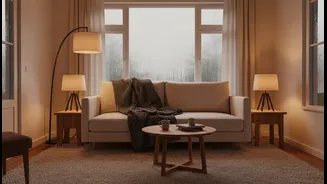
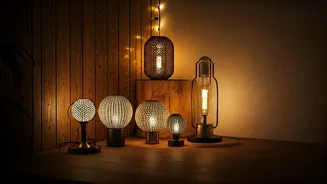
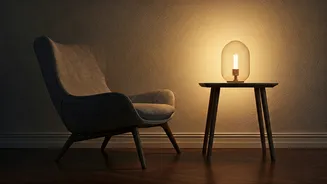
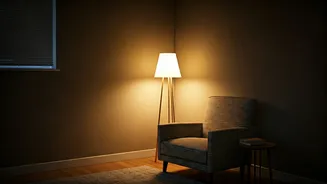
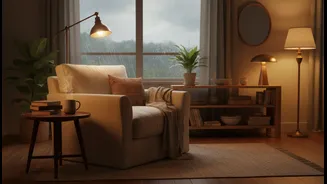
You don't need an electrician to introduce new light sources. For small, and especially rental, flats, portable and plug-in options are your best friends. A slim floor lamp can tuck into a corner behind a sofa, providing overhead light without taking up valuable floor space. Table lamps are perfect for side tables, desks, or shelves, adding pockets of warm light around the room. For a touch of magic, drape fairy or string lights over a bookshelf, around a window frame, or along a wall. They provide a soft, ambient glow that instantly makes a space feel cosier. Another great option is a plug-in wall sconce, which gives you the sophisticated look of a wired-in fixture without any of the installation hassle.
The Art of Layering Light
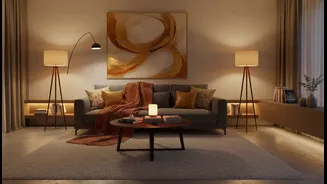
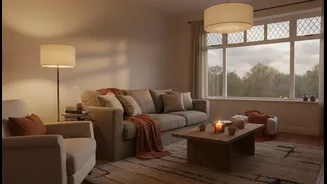
Interior designers talk about 'layering' light, which simply means using a mix of different light sources to create depth and ambiance. Instead of relying on a single, harsh overhead light, turn it off and use a combination of other sources. Use a floor lamp for general ambient light, a table lamp for a specific task like reading (task lighting), and string lights to highlight a particular feature (accent lighting). This approach eliminates dark corners that can make a small room feel smaller and creates a more dynamic and interesting space. The combination of different light points makes the room feel warmer and more thoughtfully put together.
Amplify the Glow with Smart Decor
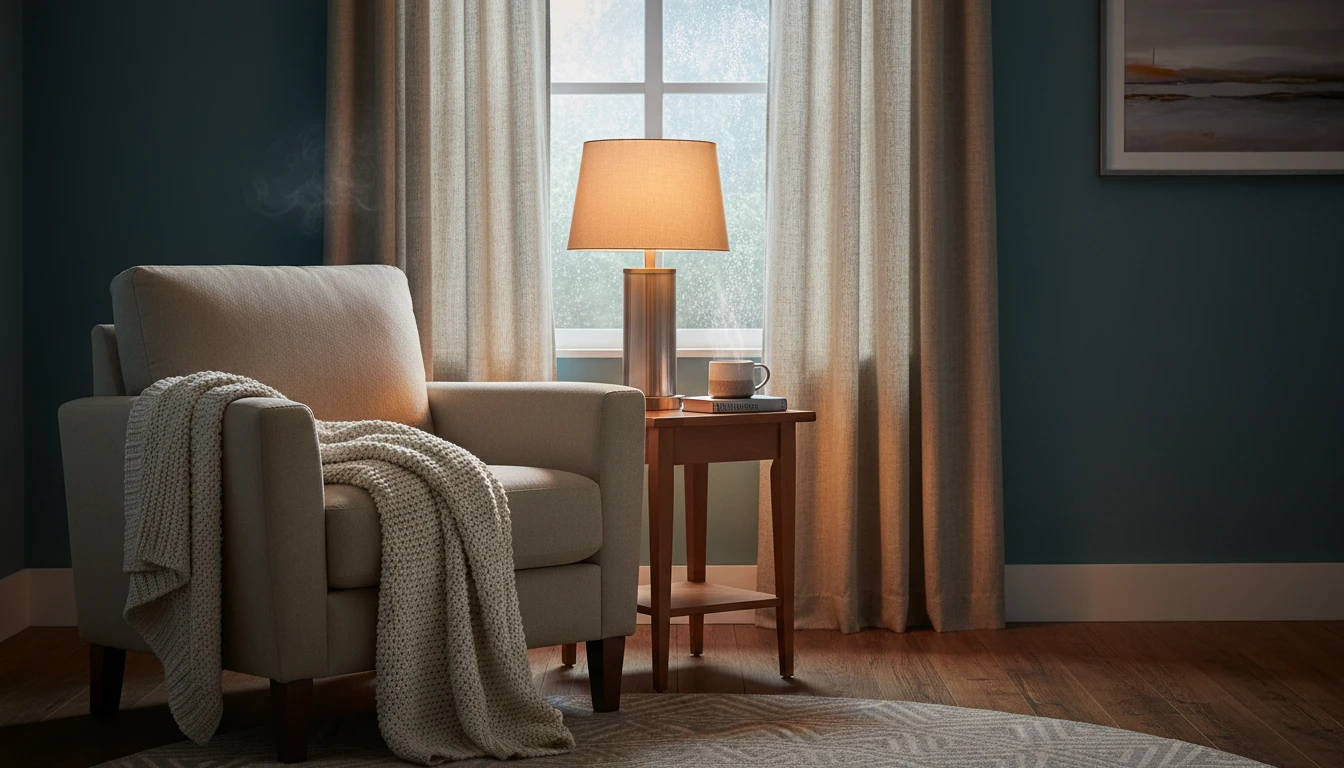
A few simple decor choices can enhance the effect of your warm lighting. Lampshades made from fabric, jute, or rattan will diffuse the light beautifully, casting a softer, gentler glow than a bare bulb or a glass shade. Placing a large mirror on a wall opposite a window or a lamp is a classic trick to bounce light around the room, making it feel brighter and more spacious. Also, consider your textiles. Adding cushions and throws in warm tones like terracotta, mustard, or deep reds can complement your lighting scheme and complete the cosy feeling, turning your flat into a welcoming retreat from the rain outside.