



The Heavens: A Realm of Perfection
Before the 17th century, the dominant view of the cosmos in Europe came from the ancient Greek philosopher Aristotle. His model, refined by Ptolemy, placed an imperfect, changeable Earth at the centre of the universe. Surrounding it were a series of perfect, crystalline
spheres. The Moon, Sun, planets, and stars were embedded in these spheres, which rotated in flawless circles. This celestial realm, made of a fifth element called 'aether', was considered eternal and unchanging. Change, decay, and corruption were confined to the 'sublunary' sphere below the Moon. For nearly two thousand years, this idea of immutable heavens was a cornerstone of both science and philosophy.
A 'New Star' Lights Up The Night
In early October 1604, observers in Europe and Asia noticed a stunning new object in the constellation Ophiuchus. This 'new star', or 'stella nova', was astonishingly bright, at its peak outshining every other star and the planet Jupiter. For over three weeks, it was even visible during the daytime. The event captivated the public and astronomers alike, arriving just as a generation of scientists was beginning to question ancient doctrines. Though it was first spotted in Italy on October 9, the event would become inextricably linked with the German astronomer who studied it most meticulously.
Kepler's Meticulous Observations
Working as the imperial mathematician in Prague, Johannes Kepler began his detailed observations of the new star on October 17, 1604. He documented its position and fading brightness for over a year until it disappeared from naked-eye view. Crucially, Kepler, along with other astronomers like Galileo, looked for parallax—a slight shift in the object's apparent position when viewed from different locations. Nearby objects, like the Moon or comets, show a measurable parallax. This new star showed none. The conclusion was irrefutable: the star was not a meteorological phenomenon in Earth's atmosphere but was located far beyond the Moon, in the supposedly unchangeable realm of the fixed stars.
Shattering an Ancient Worldview
The implications of this discovery were profound. If a new star could appear and then fade away in the 'perfect' heavens, then the heavens were not perfect or immutable at all. This directly contradicted the Aristotelian cosmology that had dominated Western thought for centuries. The supernova of 1604, coming just 32 years after another 'new star' observed by Tycho Brahe in 1572, provided powerful evidence that the cosmos was a dynamic and evolving place. It wasn't just an astronomical curiosity; it was a philosophical crisis that helped dismantle the old worldview and clear a path for the Scientific Revolution.
The Legacy of SN 1604
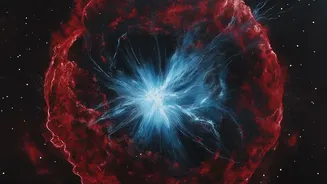
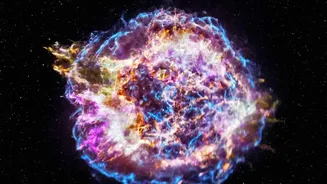
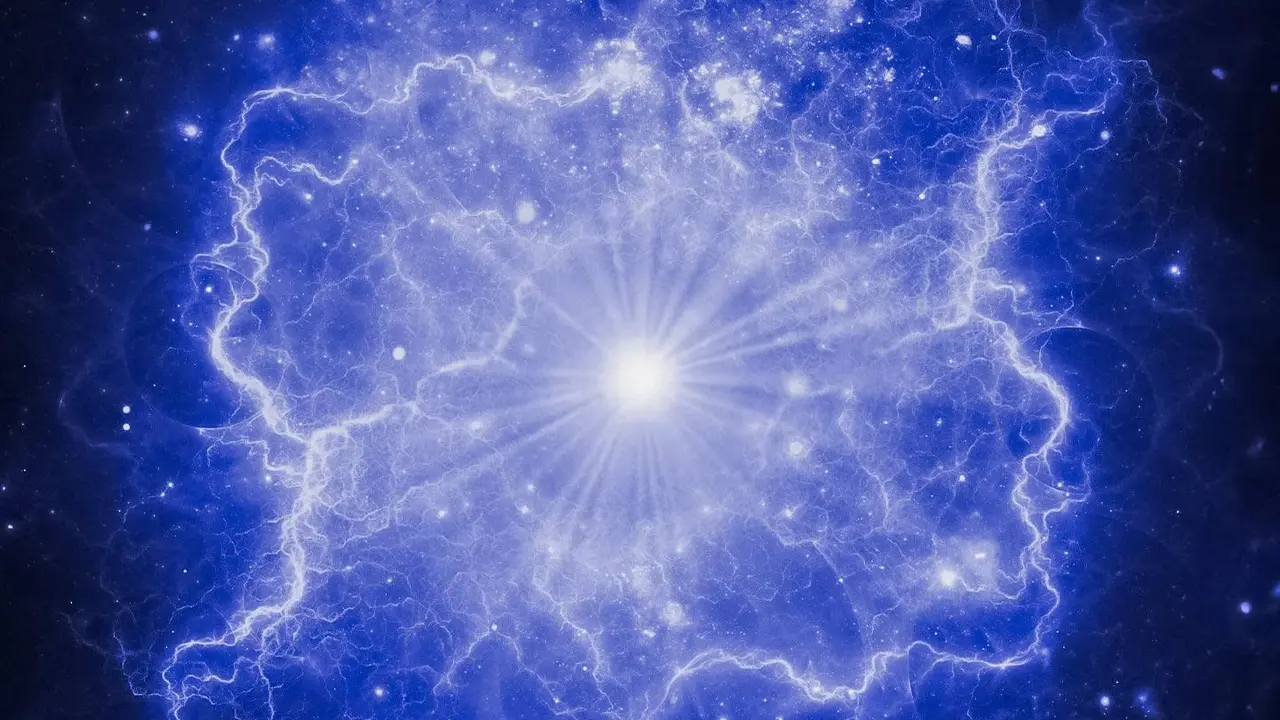
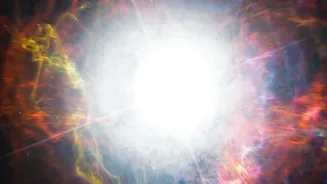
What Kepler and his contemporaries witnessed was not the birth of a star, but its violent death. Today, we know SN 1604 was a Type Ia supernova, the thermonuclear explosion of a white dwarf star in a binary system. It occurred about 20,000 light-years from Earth and remains the last supernova definitively observed within our own Milky Way galaxy. The remnant of this cataclysmic event is still studied by astronomers using modern telescopes like the Chandra X-ray Observatory. By challenging the dogma of an unchanging universe, the light from that long-ago explosion helped to usher in an era where observation and evidence triumphed over ancient authority, forever changing how we see our place in the cosmos.