


The Dangerous Cocktail: Rain, Darkness, and Glare
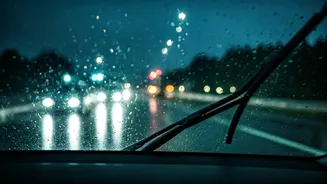
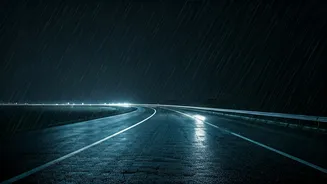
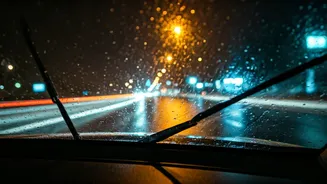
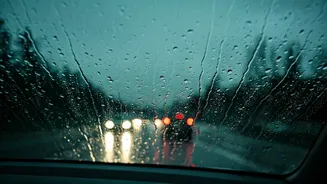
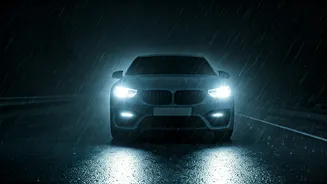
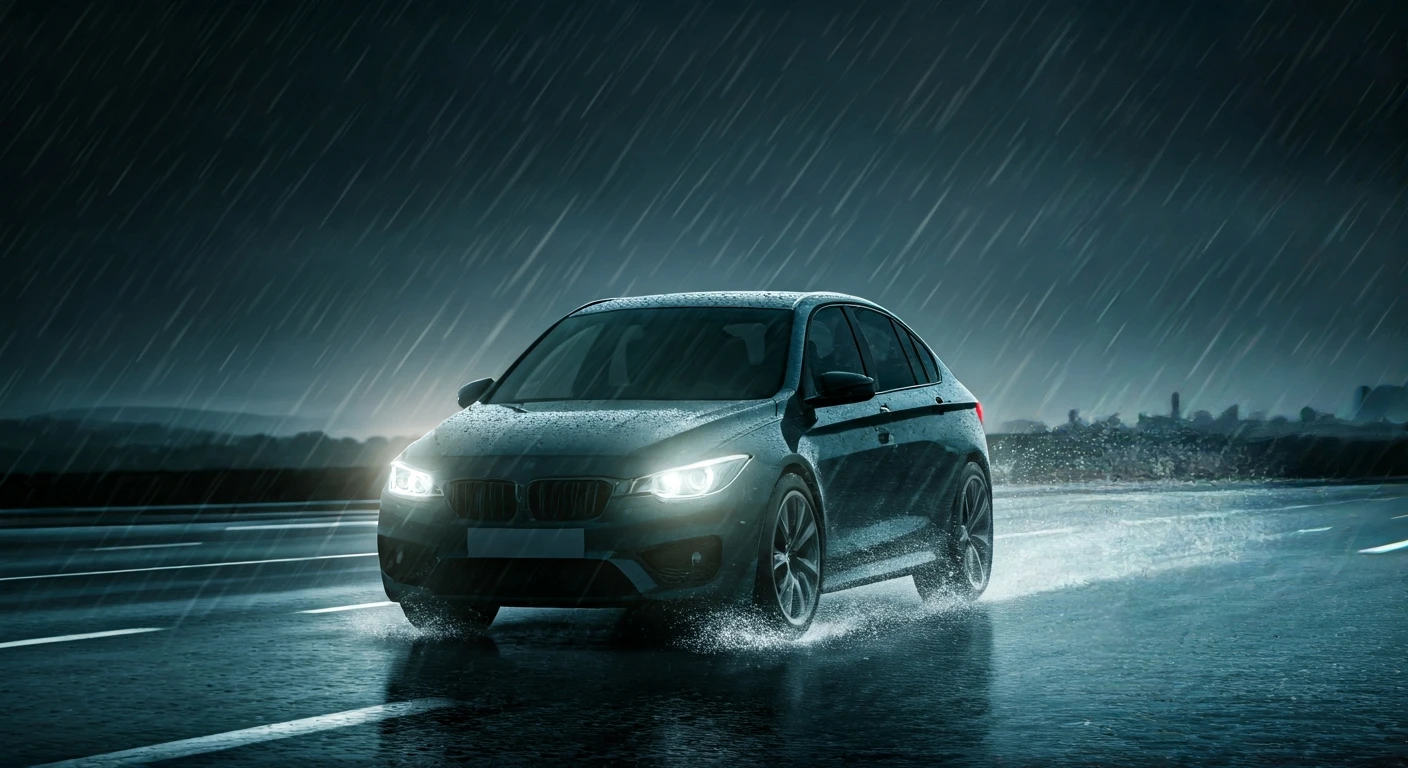
Driving at night is already a challenge due to naturally lower visibility. Add a heavy downpour, and the situation becomes exponentially more hazardous. Raindrops on the windshield distort light, blurring your vision and making it difficult to judge distances.
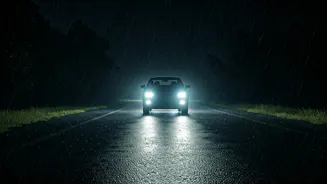
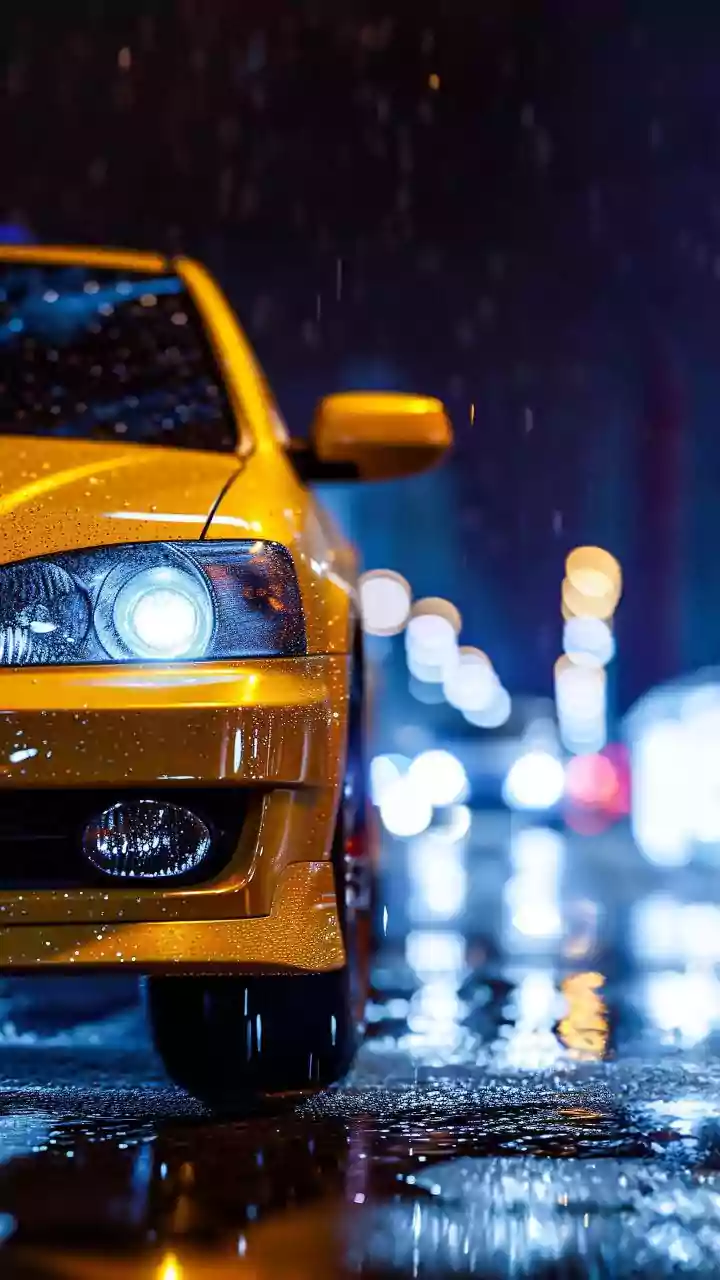
Heavy rain can overwhelm even the fastest wiper settings, turning your view into a watery blur. The wet roads act like a mirror, reflecting the glare from oncoming headlights and streetlights, which can be blinding. This is made worse by the fact that high beams are often ineffective in rain and fog, as the light scatters back at you, reducing visibility further. This combination of factors conceals some of the biggest monsoon threats: hidden potholes submerged under water, debris on the road, and the increased risk of other vehicles losing control.
Your First Line of Defence: Vehicle Readiness
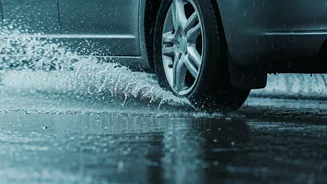
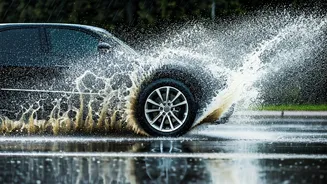
Before you even turn the key, ensuring your car is prepared for monsoon nights is crucial. Start with the absolute essentials for visibility. First, check your wiper blades. If they leave streaks or make noise, replace them immediately; they are your primary tool for a clear view. Keep your windshield washer fluid topped up, using a proper solution that can cut through road grime. Next, inspect all your lights: headlights, taillights, brake lights, and indicators. Older headlight lenses can become yellow or foggy, significantly reducing their effectiveness at night, so clean them thoroughly. Your tyres are your only connection to the slippery road. Ensure they have adequate tread depth to prevent aquaplaning—where a layer of water between the tyre and road causes a loss of traction. Finally, get your brakes checked. Wet conditions increase braking distances, and you need them to be in perfect working order.
On the Road: Safe Driving Techniques
Once you're driving, adapting your technique is non-negotiable. The most important rule is to reduce your speed. Driving slower gives you more time to react to unexpected hazards and helps maintain tyre grip on wet surfaces. Increase your following distance from the vehicle in front to at least four or five seconds, as stopping takes much longer on wet roads. Use your low-beam headlights to make yourself visible to others without causing glare. High beams should be avoided in heavy rain or fog. Be smooth with all your inputs—avoid sudden braking, sharp turns, or abrupt acceleration, as these actions can easily lead to a skid. If you feel the car begin to hydroplane or skid, stay calm, ease off the accelerator, and steer gently in the direction you want to go without slamming the brakes.
Mastering the Environment: Visibility and Awareness
Beyond car maintenance and basic techniques, situational awareness is key. To combat internal fogging from humidity, use your car's air conditioner and defroster to keep the windows clear. Dim your dashboard lights to reduce interior reflections and help your eyes adjust to the darkness outside. When faced with the glare of oncoming high beams, avoid looking directly into them. Instead, focus your gaze on the white line on the left side of the road to guide your position until the vehicle passes. In extremely low visibility, it can be helpful to turn down the radio and even crack open a window to listen for other traffic you might not be able to see. Be extremely cautious of standing water, as it can hide deep potholes or cause your car to stall if the water enters the engine.
Know When to Stop: The Safest Decision
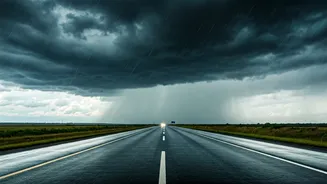
The most important safety tip is knowing when not to drive at all. If the rain is so heavy that your wipers can't keep up and visibility drops to near zero, the safest course of action is to pull over and wait for the weather to improve. Find a safe, well-lit location like a rest area or petrol pump if possible. If you must stop on the roadside, pull over as far as you can and turn on your hazard lights to alert other drivers. Using hazard lights while moving can confuse other motorists, so they should only be used when you are stationary or moving extremely slowly in an emergency. Ultimately, no destination is more important than your safety. Postponing a trip until conditions improve is always the wisest choice in a severe downpour.