








A new type of threat is quietly hitting supermarket aisles. This time, it's not a supply chain snag or a product recall, but a digital invasion targeting the very freezers that store our food, causing widespread disruption across Europe.
A Coordinated Digital Thaw
In early November
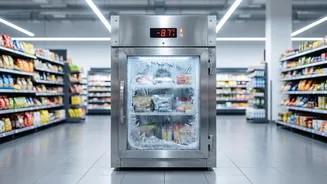
2026, supermarket chains in at least seven European countries, including Belgium, Sweden, the Netherlands, and Ireland, reported a bizarre and costly malfunction. Staff arrived to find that refrigeration and freezer units had been remotely tampered with overnight. In some cases, temperatures were raised to as high as 50°C, leading to the spoilage of huge quantities of frozen and chilled goods. The attacks, which follow a similar incident in France just weeks prior, forced retailers like Carrefour, Delhaize, and Sweden's Coop to discard tons of food, resulting in millions of euros in losses. The EU's agriculture commissioner has called the events a 'deliberate attempt to disrupt our food supply chain'.
How to Hack a Freezer
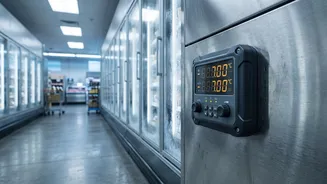
The attacks exploited a weakness not in corporate IT networks, but in the operational technology (OT) that manages physical equipment. Modern supermarkets use internet-connected controllers to remotely monitor and manage their refrigeration systems for efficiency and maintenance. However, this connectivity creates a new door for hackers. Investigators found that the attackers targeted these management systems, many of which were older models that no longer received security updates. In many instances, these systems were directly exposed to the internet, protected by weak or default passwords, making them easy targets. By gaining access, hackers could use the system's own controls to trigger defrost cycles or simply turn up the temperature, causing chaos from thousands of miles away.
Motive and Mystery
While official investigations are ongoing across Europe, with agencies like Europol coordinating the response, the question of who is responsible remains open. No one has officially claimed responsibility for this widespread, coordinated disruption. The incidents echo a growing trend of attacks on critical infrastructure. While some experts point to the possibility of ransomware, where hackers demand payment to restore systems, others speculate about state-sponsored actors aiming to create instability. Pro-Russian hacking groups have reportedly claimed credit online for similar past events, but these claims are unverified and have been dismissed by the Kremlin. The attacks serve as a potent reminder that the motive doesn't have to be data theft; creating physical disruption and financial damage can be an end in itself.
A Global Wake-Up Call
The vulnerability is not unique to European supermarkets. The incident exposes a critical flaw in the increasingly connected world of the 'Internet of Things' (IoT). As businesses everywhere, including in India, integrate smart technology into everything from power grids to building management and agriculture, they also inherit new risks. Security experts have warned for years that operational technology often lags behind traditional IT in terms of security. Many of these connected devices were built for longevity and reliability, not for fending off cyber threats, and are often managed by thirdparty contractors, creating gaps in security responsibility. This attack demonstrates that even seemingly mundane equipment like a freezer can become a weak link in national security and economic stability.