







The Lure of the 'Self-Transfer'
It’s a tempting scenario for any savvy traveller. You find a cheap flight from Mumbai to Dubai on a budget carrier, and another incredibly cheap flight from Dubai to London an hour or two later on a different airline. By booking them separately—a move
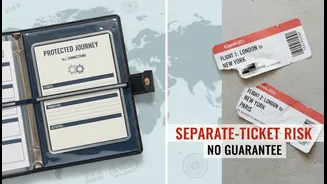
often called a 'self-transfer' or 'DIY connection'—you could save a significant amount compared to a single through-ticket. Online search engines sometimes highlight these combinations, showing you just how much you could save. The catch is that these two flights are completely unconnected in the eyes of the airlines. They are two separate contracts, and the responsibility for making that connection rests entirely on your shoulders.
Understanding the True Risk
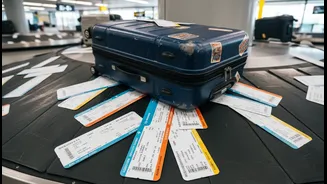
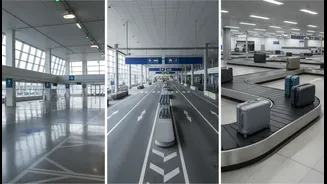
Accepting a self-transfer means you are accepting all the risk. If your first flight is delayed for any reason—weather, a technical issue, air traffic control—and you miss your second flight, the second airline has no obligation to help you. To them, you are simply a 'no-show'. You will likely forfeit the entire value of that ticket and have to buy a new, often expensive, last-minute ticket to your final destination. This risk extends beyond just delays. With separate tickets, your checked luggage will not be automatically transferred. You must claim your bags at the connecting airport, haul them to the next airline's check-in counter, and re-check them, all before clearing security again. This process can take hours and, on international routes, may require you to have a transit visa for a country you only intended to pass through.
What is a 'Protected Connection'?
The alternative is a 'protected connection', which is what you get when you book your entire journey on a single ticket, even if it involves different airlines. This single ticket, identified by one booking reference number (PNR), means the airlines have an agreement and take on the responsibility for getting you to your final destination. If your first flight is delayed and you miss your connection, the airline is obligated to rebook you on the next available flight at no extra cost. Your checked baggage is also typically tagged and transferred all the way to your final destination, meaning you can just walk to your next gate. This protection is why single-ticket itineraries can sometimes cost more—the price includes the airline's guarantee to manage disruptions.
How to Price the Protection
Before you jump on a seemingly cheap separate-ticket deal, take a moment to calculate the real cost of security. Use a flight search tool like Google Flights, Skyscanner, or KAYAK, and first search for your journey as a 'multi-city' trip. Enter each leg of your desired journey (e.g., Mumbai to Dubai, then Dubai to London) and let the tool find protected, single-itinerary options. Make a note of the best price. Then, search for each leg as a separate one-way flight and add the costs together. Now you can make an informed decision. Is the saving from the separate tickets worth the risk of potentially having to buy a new flight at a moment's notice? The price difference between the two is the cost of your 'insurance'—the airline's protection.
Is It Ever Worth the Risk?
While the default advice is to avoid self-transfers, there are niche scenarios where it might make sense. If the cost savings are truly massive and could cover the price of a brand-new ticket if something goes wrong, it might be a calculated gamble. Another scenario is when you build in a very long layover, such as an overnight stay, giving you a huge buffer against delays. This effectively turns your connection into a mini-trip. Travelling with only a carry-on also reduces the risk, as you don't have to worry about collecting and re-checking bags. However, for most travellers, especially on tight schedules or with checked luggage, the peace of mind that comes with a protected connection is well worth the extra cost.