





A Sudden and Startling Brightness
In late 2019, astronomers at California's Zwicky Transient Facility noticed something odd. A distant galaxy, known as SDSS1335+0728 and located about 300 million light-years away, had started to shine dramatically brighter than ever before. For years,
it had been a calm and unremarkable galaxy. Suddenly, its core began to show dramatic changes in brightness, a transformation unlike any typical cosmic event seen before. This sudden burst of light was the first clue that something extraordinary was happening, prompting scientists around the world to point their most powerful telescopes towards the awakening giant.
What is a Sleeping Black Hole?
Most large galaxies, including our own Milky Way, have a supermassive black hole at their center. These cosmic behemoths can be millions or even billions of times the mass of our sun. However, they are not always actively destructive. When there's no nearby material for them to pull in, they lie dormant. These 'sleeping' black holes are incredibly difficult to see directly because not even light can escape their immense gravity. They are silent monsters, but their slumber is not always permanent. If a star or a large cloud of gas strays too close, the black hole can reawaken, beginning a spectacular and violent feeding process.
The Cosmic Detective Work
The initial brightening of galaxy SDSS1335+0728 left astronomers with a puzzle. Such events can be caused by several phenomena, like a supernova explosion or a tidal disruption event, where a star is torn apart by a black hole. However, these events are relatively short-lived, lasting for a few hundred days at most. But this galaxy just kept getting brighter. For more than four years, its luminosity has continued to increase, a behavior that is completely unprecedented. To solve the mystery, an international team used a combination of archival data and new observations from multiple facilities, including the European Southern Observatory's Very Large Telescope (VLT) in Chile. By comparing data from before and after 2019, they found the galaxy was now radiating much more light across ultraviolet, optical, and infrared wavelengths. Then, in February 2024, it started emitting X-rays—another key piece of evidence.
Waking the Giant by Feeding It
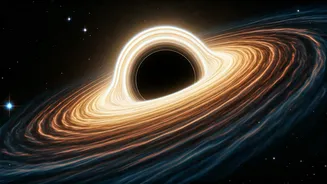
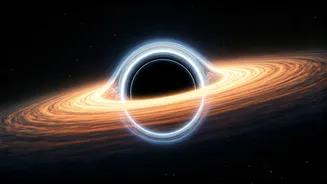
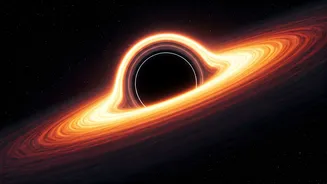
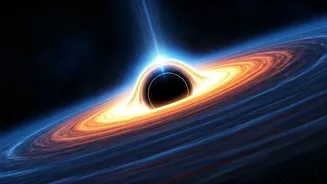
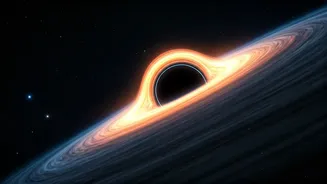
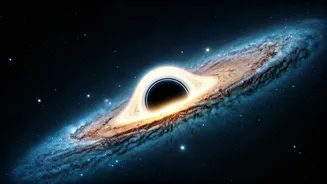
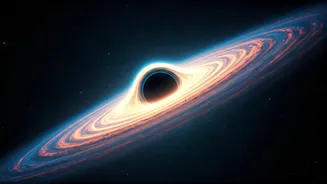
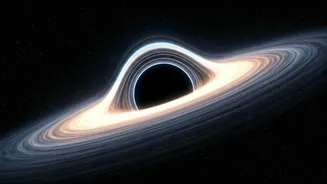
After ruling out other possibilities, scientists reached a stunning conclusion: they were watching the awakening of the galaxy's central massive black hole in real time. The leading theory is that the black hole has begun to 'feast' on a vast amount of gas from its surroundings. As this material is pulled towards the black hole, it forms a swirling, superheated structure called an accretion disk. The intense heat and energy from this disk radiate enormous amounts of light, causing the galaxy's core to shine brightly. This glowing region is known as an Active Galactic Nucleus (AGN), and scientists believe they are witnessing the birth of one for the first time.
Why This Discovery Is a Game-Changer
Observing a black hole's awakening provides a rare, real-time window into a process that was previously only theoretical. It helps scientists understand how these giants grow and how they influence the evolution of their entire galaxy. The environment around an active black hole can be incredibly violent, sometimes outshining all the stars in its galaxy combined. This process is fundamental to the life cycle of galaxies, and watching it happen live allows researchers to test their models and gain insights that were never before possible. It also raises fascinating questions, including whether the supermassive black hole at the center of our own Milky Way, currently a 'gentle giant', could one day awaken in a similar fashion.