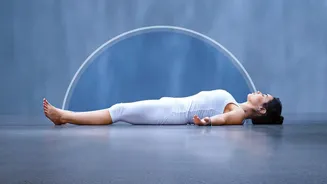



In the world of yoga, some of the most profound poses are the simplest. Apanasana, a gentle posture of hugging your knees to your chest while lying on your back, is a perfect example of accessible wellness for everyone, regardless of experience.
What Is Apanasana?
Apanasana
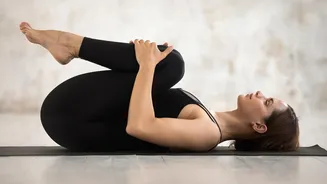
(pronounced ah-pah-NAH-suh-nuh) is a foundational supine pose often called 'Knees-to-Chest Pose' or 'Wind-Relieving Pose'. Its name comes from two Sanskrit words: 'Apana', which refers to the downward flow of energy in the body, and 'Asana', meaning pose. Apana Vayu is the subtle energy responsible for elimination and release, governing everything from physical digestion to letting go of negative thoughts. Therefore, Apanasana is literally the 'Pose of Downward-Moving Energy'. It is a calming, grounding posture that physically and energetically encourages release, making it a staple in Hatha, Restorative, and Yin yoga classes. It's often used at the beginning of a practice to gently awaken the body or at the end to cool down and relax the nervous system.
The Gentle Benefits of This Pose
Despite its simplicity, Apanasana offers a wealth of benefits for both body and mind. Its primary gift is relieving tension in the lower back by gently decompressing and stretching the lumbar spine. This makes it particularly beneficial for those who sit for long periods. The pose also provides a gentle massage to the abdominal organs as the thighs press against the belly. This action can stimulate digestion, aid in relieving gas and bloating, and ease menstrual cramps. On a more subtle level, hugging the knees toward the chest is a self-soothing gesture that helps calm the nervous system, reduce anxiety, and promote a sense of security and grounding. It also offers a gentle stretch for the hips and glutes, improving overall mobility.
A Step-by-Step Guide to Apanasana
Finding comfort in Apanasana is straightforward. Follow these steps to practice safely:
1. Begin by lying flat on your back on a yoga mat or a comfortable surface. You can start with your legs extended or your knees bent and feet flat on the floor.
2. Take a moment to settle, allowing your entire back to feel supported by the ground.
3. On an exhale, gently draw both of your knees in toward your chest.
4. Clasp your hands around your shins, just below your knees. If this is uncomfortable or you have sensitive knees, interlace your fingers behind your thighs instead.
5. Keep your head, neck, and shoulders relaxed on the floor. Try to avoid lifting your head or tensing your shoulders up toward your ears. Your entire spine, from your tailbone to the back of your head, should feel long.
6. Hold the pose for 30 seconds to a minute, breathing deeply and steadily. With each exhale, you might gently draw your knees a little closer to your chest, deepening the abdominal compression and lower back release.
7. To release the pose, inhale as you loosen your grip and exhale as you slowly lower your feet back to the floor.
Common Mistakes to Avoid
To get the most out of Apanasana, be mindful of a few common misalignments. First, avoid lifting your head and shoulders off the mat to try and meet your knees. This creates tension in the neck and defeats the purpose of this restorative pose. Instead, focus on keeping the upper body completely relaxed. Second, don't force your knees together if it feels unnatural; keeping them hip-distance apart is perfectly fine. Some people find it more comfortable to allow the knees to separate slightly toward the armpits, especially if they have a larger belly. Finally, remember to breathe. It's common for beginners to hold their breath when drawing the knees in. Focus on maintaining a slow, steady breath to help activate the parasympathetic nervous system, which promotes relaxation.
Modifications for Every Body
Yoga is about fitting the pose to your body, not the other way around. If the full expression of Apanasana feels inaccessible, try these variations:
Ardha Apanasana (Half Knees-to-Chest Pose): This is an excellent option if you have tight hips or lower back sensitivity. Lie on your back and draw just one knee toward your chest, keeping the other leg extended on the floor or bent with the foot on the mat. This variation allows you to focus on releasing one side of the lower back at a time.
Use a Strap: If you can't comfortably reach your shins or thighs, loop a yoga strap or a belt around them. This allows you to maintain a relaxed upper body while still enjoying the benefits of the pose.
* Gentle Rocking: Once you are settled in the pose, you can introduce a gentle side-to-side rocking motion. This provides a soothing massage for your lower back and sacrum.
While Apanasana is very safe, there are a few situations where caution is advised. Individuals who have recently had abdominal, knee, or hip surgery should avoid this pose until cleared by a doctor. Those with a hernia or severe spinal injury should also refrain from practicing it. Pregnant women, especially after the first trimester, should modify the pose by keeping the knees wide apart to avoid compressing any belly or skip it altogether.