






What Are Solid-State Batteries Anyway?
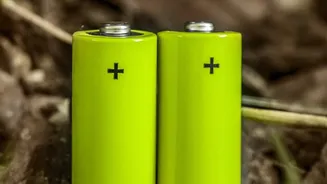
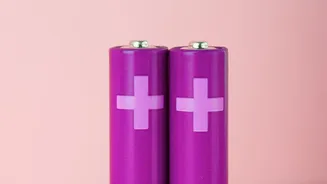
Think of the battery in today's electric cars (and your phone) as a container with two solids—an anode and a cathode—separated by a liquid electrolyte. This liquid allows charged particles, or ions, to flow between the solids, creating electricity. A
solid-state battery replaces this flammable liquid electrolyte with a thin, solid material, like a ceramic or polymer. This might sound like a simple swap, but it fundamentally changes the battery's properties, unlocking a new level of performance and safety that carmakers have been chasing for over a decade.
More Power, Less Weight, Better Safety
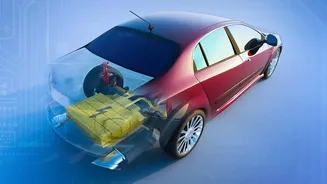
The primary advantage of going solid is a dramatic increase in energy density. Current lithium-ion batteries top out around 250-300 Wh/kg, but solid-state prototypes are demonstrating densities of 400 Wh/kg and even higher. This means a battery pack could be much lighter and smaller while delivering the same range, or offer a significantly longer range—potentially over 1,000 km on a single charge—for the same weight. Furthermore, eliminating the flammable liquid electrolyte drastically reduces the risk of fires, a key safety concern for some consumers. They also promise incredibly fast charging, with some companies targeting a 10% to 80% charge in under 15 minutes.
The Path to a Cheaper EV
While solid-state batteries are currently expensive to produce due to complex manufacturing and limited scale, the long-term view is that they will make EVs cheaper. The cost reduction comes from several areas. Firstly, their higher energy density means fewer raw materials are needed for a given range. Secondly, their inherent safety and stability could eliminate the need for the heavy, complex, and expensive cooling and management systems required for current lithium-ion packs. Automakers like Nissan believe that once mass-produced, these batteries could bring the cost of an EV down to parity with its petrol-powered equivalent. However, other, more readily available battery chemistries like Lithium Iron Phosphate (LFP) and sodium-ion are already helping to lower the price of entry-level EVs today.
Who Is Leading the Global Race?
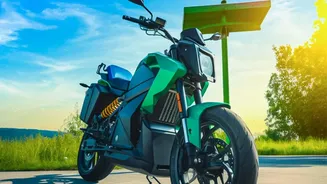
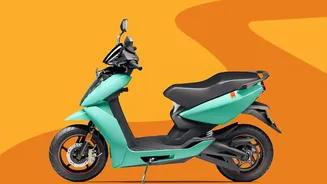
The race to commercialize solid-state batteries is a global marathon. Toyota has been a long-time leader in research and aims for limited commercialization in its vehicles between 2027 and 2028. In the US, companies like QuantumScape, backed by Volkswagen, and Factorial, which is working with Stellantis and Mercedes-Benz, are making significant strides with road-testing prototypes. Chinese auto giant Geely recently announced its own ambitious plans, targeting energy densities of 500 Wh/kg by 2027. While some small-scale production has begun for niche applications like electric motorcycles, most experts agree that widespread availability in mass-market cars is still a few years away, likely closer to 2030.
What It Means for India
For India, a price-sensitive market with a growing appetite for EVs, this technology is a potential game-changer. Solid-state batteries' superior performance in hot climates is a major advantage for Indian road conditions. The Indian government is already pushing for domestic battery manufacturing through initiatives like the Advanced Chemistry Cell (ACC) and Production Linked Incentive (PLI) schemes. While the initial market in India is small, it's projected to grow significantly by 2030 as the technology matures. Establishing local manufacturing and partnerships for solid-state technology could help India reduce its reliance on imports and accelerate its transition to clean mobility, making affordable, long-range EVs a reality for millions.