



Banana Stem Poriyal from South India
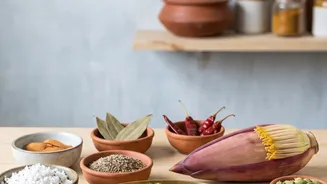
The fibrous inner stalk of the banana plant, known as 'vazhaithandu' in Tamil, is often discarded. In South Indian kitchens, however, it’s a star. This crunchy, nutrient-dense stem is finely chopped and transformed into a delicious stir-fry, or 'poriyal'.
After careful cleaning to remove the coarse fibres, the stem is cooked with mustard seeds, lentils, curry leaves, and a generous amount of grated coconut. The result is a delightfully crunchy and subtle dish that is both healthy and a testament to the zero-waste philosophy of traditional cooking.
Jackfruit Seed Sabzi from Across India
After savouring sweet, ripe jackfruit, what happens to the large, starchy seeds? Instead of being thrown away, they are collected and turned into a delicious 'sabzi' or curry. Found in various forms across states like Kerala, Maharashtra, and Bengal, the preparation usually involves boiling the seeds until they are soft, peeling their outer skin, and then cooking them with spices. The seeds have a nutty flavour and a texture similar to chestnuts, making them a hearty and protein-rich addition to any meal. Cooked with onions, tomatoes, and a blend of spices, this dish gives the humble seed its moment in the spotlight.
Moringa Leaf Poriyal from Tamil Nadu
Long before it became a global superfood, moringa leaves, or 'murungai keerai', were a staple in Tamil Nadu. Picked from the ubiquitous drumstick tree, these tiny leaves are packed with nutrients. The most common preparation is a 'poriyal', a simple and quick stir-fry. The leaves are stripped from their stems, washed, and sautéed with shallots, mustard seeds, and sometimes lentils for added texture. Finished with a sprinkle of fresh grated coconut, the dish has a unique, slightly bitter but pleasant taste that pairs perfectly with rice and sambar.
Patra from Gujarat and Maharashtra
Colocasia leaves, or 'arbi ke patte', are large, heart-shaped greens that can cause throat irritation if not prepared correctly. But in the hands of Gujarati and Maharashtrian cooks, they become the celebrated snack 'Patra' or 'Alu Vadi'. The leaves are carefully de-veined, then smeared with a thick, spiced paste of gram flour (besan), tamarind, jaggery, and chillies. They are then rolled up, steamed, and sliced into pinwheels. These slices can be eaten as is or shallow-fried for a crispy finish, offering a brilliant combination of sweet, sour, and spicy flavours.
Nadru Yakhni from Kashmir
The lotus stem, known as 'nadru' in Kashmir, is a crunchy, fibrous vegetable that grows in the region's lakes. While used elsewhere, its most iconic preparation is the Kashmiri 'Yakhni'. This classic dish features lotus stem slices cooked in a fragrant, creamy yogurt-based gravy. What makes it special is the use of aromatic whole spices like cinnamon, cardamom, and cloves, along with fennel and dry ginger powder, rather than stronger masalas. The result is a subtle, sophisticated curry that allows the unique texture and mild flavour of the nadru to shine through.
Mahua Flower Bhaji from Central India
The Mahua flower is a forest blossom from Central India, sacred to many tribal communities and treasured for its natural sweetness. While famously used to make a local brew, it is also a versatile food ingredient. The sun-dried flowers, which resemble raisins, are used to make sweets like 'ladoos' and also savoury dishes. A simple 'bhaji' or stir-fry is a popular preparation in regions like Palghar in Maharashtra. The boiled flowers are sautéed with onions, garlic, and local spices, creating a surprising and delicious dish that balances sweet, savoury, and floral notes.
Fiddlehead Fern Sabzi from Himachal Pradesh
In the Himalayan regions of Himachal Pradesh and Uttarakhand, the arrival of spring brings a special treat: coiled, young fern shoots called 'lingri' or 'kasrod'. This foraged vegetable has a unique, earthy flavour, often described as a cross between asparagus and green beans. A popular way to cook it is a simple 'sabzi'. The ferns are first cleaned to remove their fuzzy coating, then stir-fried with mustard oil, onions, tomatoes, and basic spices. Often finished with a pinch of dry mango powder ('amchoor') for a tangy kick, this dish is a true taste of the mountains.
Pointed Gourd Dolma from Bengal
Pointed gourd, or 'potol', is a common vegetable in Bengali cuisine, but 'Potoler Dolma' elevates it to a delicacy. This dish involves carefully scraping out the insides of the gourd and stuffing it with a flavourful filling. While modern versions exist, traditional fillings often featured minced meat or prawns, cooked with onions, ginger, and spices. A vegetarian version uses paneer or potato. The stuffed gourds are then lightly fried and simmered in a rich, aromatic gravy. It’s a labour of love that transforms a simple gourd into a dish fit for a celebration.