




Why A Daily Practice Matters
Before we dive into the poses, it's important to understand the 'fast and easy' part of the promise. True, lasting flexibility isn't built overnight, but quick progress comes from consistency, not intensity. Committing just 10 to 15 minutes each day can
yield more noticeable results than one intense, hour-long session per week. The goal is to gently encourage your muscles to lengthen and release tension. This daily practice improves your range of motion, can help reduce aches and pains, and lowers the risk of injury. The key is to listen to your body and never push into sharp pain. Progress is measured in how you feel, not how far you can bend.
1. Cat-Cow Stretch (Marjaryasana-Bitilasana)
This gentle, flowing movement is the perfect way to start. It warms up the spine, improves flexibility in the back and neck, and helps relieve tension from long hours of sitting. Start on your hands and knees in a 'tabletop' position, with your wrists under your shoulders and knees under your hips. As you inhale (Cow Pose), drop your belly towards the mat, lift your chest and tailbone, and look forward. As you exhale (Cat Pose), round your spine toward the ceiling, tucking your chin to your chest and pressing the mat away. Flow between these two poses for 5-10 breaths, coordinating the movement with your breath.
2. Child's Pose (Balasana)
Child's Pose is a foundational resting posture that offers a gentle stretch for the entire back body. It's excellent for releasing tension in the lower back, hips, and shoulders. From your hands and knees, bring your big toes to touch, spread your knees wide, and sit your hips back towards your heels. Fold your torso forward and rest your forehead on the mat. You can extend your arms forward for a deeper shoulder stretch or rest them alongside your body. Hold this pose for 30 seconds to a minute, focusing on deep, relaxing breaths.
3. Downward-Facing Dog (Adho Mukha Svanasana)
Perhaps one of the most recognized yoga poses, Downward-Facing Dog is a full-body experience that strengthens the arms and shoulders while providing a deep stretch for the hamstrings, calves, and spine. From your hands and knees, tuck your toes and lift your hips up and back, forming an inverted 'V' shape with your body. Keep your hands shoulder-width apart and press firmly into the mat. It's okay if your heels don't touch the ground; bending your knees is a great modification to keep your spine long. Try 'pedaling' your feet to gently deepen the stretch in each calf. Hold for 5 deep breaths.
4. Seated Forward Bend (Paschimottanasana)
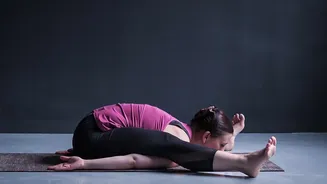
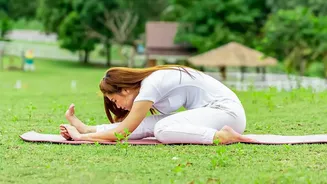
This pose provides an intense stretch for the entire back of the body, from your heels to your head, especially targeting the hamstrings and lower back. Sit on the floor with your legs extended straight in front of you. You can sit on a folded blanket to help tilt your pelvis forward. Inhale to lengthen your spine, and as you exhale, hinge forward from your hips, not your waist. Reach for your shins, ankles, or feet, but avoid rounding your back just to touch your toes. If your hamstrings are tight, bend your knees generously. Hold for 5-8 breaths, aiming to lengthen on the inhale and deepen on the exhale.
5. Bridge Pose (Setu Bandhasana)
Bridge Pose is a gentle backbend that helps to open the chest, stretch the hip flexors, and increase flexibility in the spine—a perfect counter-pose to a day spent sitting. Lie on your back with your knees bent, feet flat on the floor hip-width apart, and close enough that you can touch your heels with your fingertips. On an inhale, press through your feet to lift your hips off the floor. Keep your thighs parallel. You can keep your arms flat on the floor or clasp your hands together underneath your back. This pose strengthens your back and glutes while stretching the front of your body. Hold for 5 breaths, then slowly lower down.