





Putting Indians in Orbit
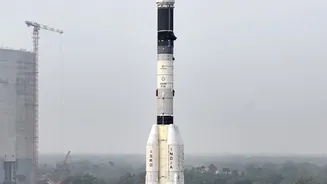
The most anticipated leap is undoubtedly the Gaganyaan mission, India's inaugural human spaceflight program. After a series of rigorous tests on the crew module and escape systems, ISRO is gearing up for the crucial uncrewed flights that precede sending
humans into orbit. The goal is to send a crew of three astronauts into a 400-kilometre Low Earth Orbit for three days and bring them back safely. This mission is far more than just a technological demonstration; it's about creating a pathway for sustained human presence in space. The scientific experiments planned during the mission in fields like biology and material science will leverage the unique microgravity environment. Success will make India only the fourth nation in the world to independently launch its citizens into space, a monumental achievement that will inspire generations.
A Permanent Address in Space
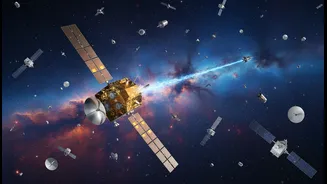
Gaganyaan is the stepping stone to an even grander vision: the Bharatiya Antariksha Station (BAS). India plans to establish its own modular space station by 2035, with the first module targeted for a 2028 launch. This orbital outpost will serve as a laboratory for long-duration scientific research and technology development, essential for future deep-space missions. Weighing around 52 tonnes and orbiting at an altitude of about 400 kilometres, the station will allow astronauts to live and work in space for extended periods of three to six months. ISRO has already invited Indian companies to participate in building the first module, signalling a new phase of public-private partnership in this national endeavour. The BAS represents India's ambition to become a long-term player in space, conducting continuous research and asserting a sovereign presence in orbit.
New Interplanetary Horizons
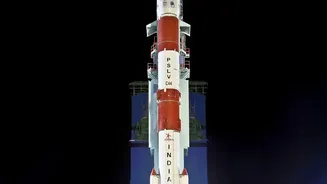
Building on the stunning success of its first Mars Orbiter Mission (Mangalyaan), ISRO is planning a return to the Red Planet. The Mars Lander Mission (MLM), unofficially Mangalyaan-2, aims to be a significant advancement, with plans including not just an orbiter but also a lander, a rover, and even a helicopter. This ambitious mission, tentatively scheduled for launch around 2030, would make India the third country to successfully land a craft on Mars. Closer to home, the Shukrayaan-1 mission is set to explore Venus, Earth's mysterious twin. With a potential launch in 2028, the orbiter will carry instruments to study the planet's dense, toxic atmosphere and map its surface, seeking to understand the runaway greenhouse effect that defines Venus. The mission also includes international collaboration, with payloads from Sweden and other partners. These missions signal a shift from demonstrating capability to conducting advanced, high-impact planetary science.
Fostering a Space Ecosystem
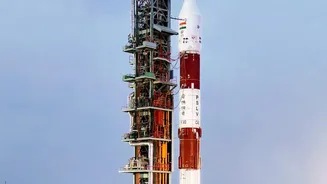
Underpinning these marquee missions is a broader strategy to expand India's entire space ecosystem. The Indian Space Policy 2023 has opened the doors for greater private sector participation, and the results are already showing. With the successful orbital launch of Vikram-1 by private firm Skyroot Aerospace, a new era of commercial spaceflight has begun in India. ISRO is actively fostering this growth, aiming to increase the country's launch cadence significantly. This synergy between the public and private sectors is crucial for developing a robust domestic supply chain, creating high-tech jobs, and growing India's share of the global space economy from its current valuation of approximately $8.4 billion towards a projected $100 billion by 2040. It’s a holistic approach that ensures these ambitious projects have a lasting economic and industrial impact back on Earth.