





Understanding the Gateway: Scientist/Engineer 'SC' Role
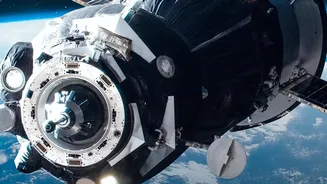
The primary entry point for engineering graduates into ISRO is the Scientist/Engineer 'SC' position. This is a Group 'A' Gazetted post, placing you at the heart of India's space missions. Responsibilities are vast, involving research, design, development,
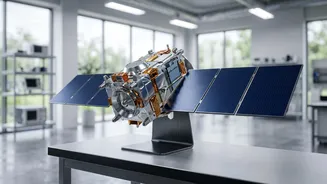
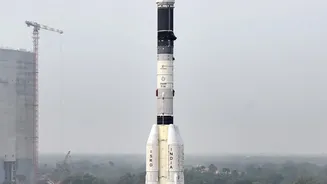
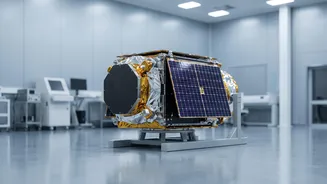
and implementation of systems for satellites, launch vehicles, and other pioneering space projects. It is a career that directly contributes to national milestones, from the Chandrayaan missions to developing next-generation satellite technology. The selection is conducted through the ISRO Centralised Recruitment Board (ICRB), which ensures a merit-based intake of the country's brightest minds.
First Step: Meeting the Eligibility Criteria
Candidates must be citizens of India. For the Scientist/Engineer 'SC' post, the fundamental educational qualification is a B.E./B.Tech degree in a relevant discipline, such as Electronics, Mechanical, or Computer Science. A minimum aggregate of 65% marks or a CGPA of 6.84 on a 10-point scale is mandatory. The age limit is typically 28 or 30 years for general category candidates, with relaxations for OBC, SC/ST, and PWD candidates as per government norms. Always check the official notification for the specific age cut-off date and accepted engineering disciplines for each recruitment cycle.
The Two Paths to Selection: Written Test and GATE Score
ISRO utilizes two primary methods for shortlisting candidates for the interview: a dedicated written test or through a valid GATE (Graduate Aptitude Test in Engineering) score. The specific method used is announced in the recruitment advertisement for each cycle. The written test, conducted by the ICRB, is the more common route. If the GATE score is used, candidates are shortlisted based on their performance in the relevant paper, after which they proceed directly to the interview stage. The final selection in such cases often gives equal weightage to the GATE score and the interview performance.
Decoding the Written Exam Syllabus and Pattern
The ISRO written test is designed to evaluate your core engineering knowledge and aptitude. The syllabus is based on the curriculum of the qualifying B.E./B.Tech degree. The exam typically consists of objective-type questions. It is often divided into two parts: Part A focuses on the specific technical discipline (e.g., Mechanical Engineering, Computer Science) and contains the majority of questions, while Part B assesses general aptitude, including reasoning and numerical ability. There is usually negative marking for incorrect answers in the technical section, so accuracy is crucial. To find the detailed syllabus for your specific engineering branch, you must refer to the official notification on the ISRO careers website.
Essential Advice for the Application Process
Applications for Scientist/Engineer 'SC' posts are accepted online through the official ISRO recruitment portal. When a recruitment notification is released, aspirants must carefully read the advertisement to confirm their eligibility and understand the specific requirements for that cycle. The process involves registering on the portal, filling in personal and educational details, uploading necessary documents like photographs and signatures, and paying the application fee. It is critical to provide accurate information, as any discrepancy can lead to the rejection of your application. Keep an eye on the official ISRO website for the latest recruitment news.
The Final Hurdle: The Technical Interview
Candidates who clear the written test or are shortlisted via GATE scores are called for the interview. The ISRO interview is famously rigorous and purely technical. The panel, often comprising 5 to 10 senior scientists, will deeply probe your understanding of fundamental concepts in your engineering discipline. You will likely be asked to name your favourite subjects, and the questions will follow from there. Be prepared to explain concepts on a blackboard. Thorough knowledge of your final year project is also essential. The interviewers are not just testing your memory but your problem-solving abilities and passion for space science. Honesty is key; do not bluff if you don't know an answer.