







What Exactly Is the Repo Rate?
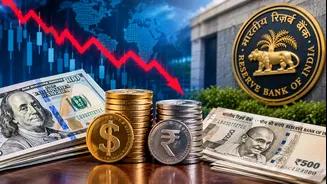
Think of the repo rate as the interest rate at which the Reserve Bank of India (RBI) lends money to commercial banks like SBI, HDFC Bank, or ICICI Bank. It's one of the central bank's most powerful tools to manage the country's money supply and control
inflation. When the RBI wants to reduce the amount of money circulating in the economy to curb rising prices, it increases the repo rate. This makes borrowing more expensive for banks. Conversely, when the economy needs a boost, the RBI might cut the repo rate, making it cheaper for banks to borrow and, in turn, lend money to businesses and individuals.
The Link: How Repo Rate Affects Your FD
The connection between the repo rate and your Fixed Deposit (FD) is direct, though not always immediate. When the repo rate goes up, commercial banks have to pay more to borrow from the RBI. To offset this higher cost and maintain their funds, banks often increase the interest rates they offer on fixed deposits to attract more money from savers like you. On the other hand, when the RBI cuts the repo rate, banks' borrowing costs decrease. With cheaper funds available from the central bank, they have less incentive to attract public deposits, which often leads them to lower FD interest rates. It's important to remember that if you have an existing FD, its interest rate is locked in and will not change until maturity. Any revision in FD rates applies only to new deposits or renewals.
The Current Scenario: What Is the RBI Doing?
As of early October 2026, the RBI's Monetary Policy Committee (MPC) is in the midst of a crucial meeting from October 5 to 7. Currently, the repo rate stands at 5.25%, a level maintained for the last four consecutive policy reviews. However, there is growing expectation among economists that the RBI may decide to increase the repo rate by 25 basis points (0.25%) to 5.50%. This would be the first rate hike since February 2023. The potential shift in stance comes amid rising inflationary pressures and increasing interest rates by global central banks. India's retail inflation has been climbing, and strong economic growth gives the RBI room to focus on controlling prices.
How Banks Are Responding to Rate Trends
Even before the RBI's October decision, the fixed deposit market has been active. As of October 2026, FD interest rates offered by major banks range widely, from around 2.50% to over 8.00%. Small finance banks tend to offer the highest rates, with some providing up to 8.25% for the general public and 8.50% for senior citizens. Larger public and private sector banks offer more moderate, stable returns. The transmission from a repo rate change to FD rates isn't always instant; some banks and non-banking financial companies (NBFCs) are quicker to pass on changes than others. However, the general trend is clear: a period of rising or high repo rates is usually good news for FD investors.
Smart Strategies for Savers
Given the expectation of a potential rate hike, what should savers do? If you believe interest rates are on an upward trajectory, it might be wise to stick to shorter-term FDs (e.g., one year). This strategy allows you to renew your deposit at a potentially higher rate sooner. Conversely, if you think rates are at or near their peak, it could be a good time to lock in a higher interest rate with a longer-term FD of three to five years. Another effective strategy is 'FD laddering'. This involves splitting your investment into multiple FDs with different maturity dates. For example, you could invest equal amounts in one, two, and three-year FDs. This approach ensures that a portion of your money becomes available at regular intervals, giving you the flexibility to reinvest at prevailing rates while mitigating the risk of locking all your funds into a single rate cycle.