


How Microwaves Actually Cook
First, let's demystify the process. A microwave oven doesn't heat food directly. Instead, it uses a component called a magnetron to generate microwaves—a type of electromagnetic wave. These waves flood the metal interior of the oven and cause certain
molecules in your food, primarily water, to vibrate rapidly. This high-speed vibration creates friction between the molecules, which in turn generates heat. So, a microwave is essentially an expert at making water molecules dance. This is why foods with higher water content often heat up much faster than drier foods like bread or pie crust.
The Problem of Hot and Cold Spots
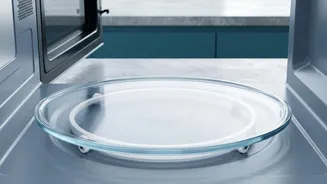
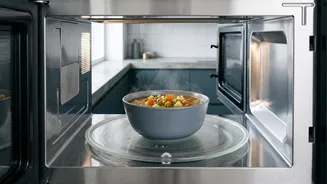
The primary culprit for uneven heating is a phenomenon called "standing waves." As microwaves bounce off the metal walls of the oven, they interfere with each other. This creates a predictable pattern of high-energy spots (called antinodes) and zero-energy spots (called nodes). If a part of your food sits in a node, it receives almost no energy and stays cold, while food in an antinode gets blasted and becomes piping hot. This is precisely why most microwaves have a rotating turntable. The rotation is designed to move your food through these different energy zones, ensuring all parts get a more even share of the microwaves. If your turntable is broken or if an oversized dish prevents it from spinning, you're guaranteed to get those frustrating hot and cold patches.
The Great Power-Setting Misconception
Here’s a secret about most microwave ovens: setting the power to 50% doesn't mean the appliance is generating gentler, half-strength microwaves. Instead, the magnetron is simply cycling on and off. At a 50% power level, it might blast your food with 100% power for five seconds, then turn off completely for five seconds. This on-off cycle gives the heat generated during the 'on' phase time to spread more evenly throughout the food via natural conduction, a process called 'standing time'. However, if the 'on' cycles are still too intense or the 'off' cycles are too short for your specific food, the outer edges can still overcook before the centre has a chance to warm up. So even at a lower power setting, you're still dealing with the full force of the microwaves, just intermittently.
Food Shape and Density Matter
The food itself plays a huge role. Microwaves can only penetrate about a few centimetres into dense food. If you're heating a thick, dense item like a potato or a frozen casserole, the outer layers will absorb most of the energy first. Heat then has to slowly conduct its way to the colder centre. The shape of your container and food arrangement also has a significant impact. Food spread in a ring shape, with a hole in the middle, will heat much more evenly than a solid clump. Square or rectangular containers can also cause problems, as the corners tend to absorb more energy and overcook.
Simple Tricks for an Even Reheat
Now that you understand the science, you can outsmart your microwave. For more even heating, arrange your food in a ring on the plate, leaving the centre empty. If possible, place your dish on the outer edge of the turntable rather than in the dead centre to ensure it travels more within the oven. For dense foods, use a lower power setting (like 70%) to take advantage of the on-off cycling and allow heat to conduct inward more gently. Always stir food like soups or sauces halfway through the cooking time. Finally, covering your food with a microwave-safe lid or a damp paper towel traps steam, which helps to distribute heat more evenly and keep your meal moist.