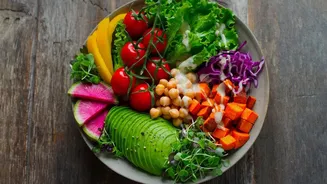









The Post-Meal Productivity Killer
That sleepy, unfocused feeling after a big meal has a scientific name: postprandial somnolence, or more colloquially, a 'food coma'. It’s often triggered by large meals, especially those heavy in refined carbohydrates and fats. When you consume these
foods, they are quickly broken down into glucose (sugar), causing a rapid spike in your blood sugar. Your body responds by releasing a large amount of insulin to manage this sugar surge. This sharp rise and subsequent fall in blood sugar is what leads to the familiar crash in energy, leaving you feeling drowsy and unable to concentrate. The size of the meal itself also plays a significant role; a larger meal triggers a greater shift toward the body's 'rest and digest' state, regardless of its exact composition.
The Simple Green Solution: Food Sequencing
A growing body of research supports a strategy called 'food sequencing' or 'meal sequencing'. The principle is straightforward: eat your food groups in a specific order to manage how your body responds. The recommended order is to start with fiber-rich foods like fresh greens and non-starchy vegetables, followed by proteins and fats, and saving carbohydrates for the end of the meal. Studies have shown that this approach can significantly lower the post-meal glucose spike—in some cases by up to 40%—without changing what you eat, only when you eat it. This simple 'veggie first' rule acts as a buffer, creating a more stable and sustained energy release.
How Fiber Acts as a Metabolic 'Sponge'
The magic behind this method lies in the power of fiber. When you eat fibrous greens first, the soluble fiber they contain absorbs water in your stomach and forms a viscous, gel-like substance. This gel lining effectively slows down digestion and the rate at which your stomach empties. As a result, the sugars from the carbohydrates you eat later are released into your bloodstream much more gradually. Instead of a sharp, disruptive spike, you experience a gentle, rolling hill of energy. This 'spongy' effect of fiber not only blunts the glucose spike but also helps improve your body's sensitivity to insulin, making the entire process more efficient.
More Than Just Blood Sugar Control
The benefits of starting with greens extend beyond just maintaining focus. By front-loading your meal with vegetables, you're more likely to consume a greater overall amount of these nutrient-dense foods. This boosts your intake of essential vitamins, minerals, and antioxidants. Furthermore, eating a high-fiber salad or vegetable dish first promotes a feeling of fullness, or satiety. This can help you naturally reduce your overall calorie intake during the meal, as you may feel satisfied sooner and be less likely to overeat the more calorie-dense carbohydrates and fats that follow. This approach also supports a healthy gut microbiome, which is crucial for digestion, immunity, and even mood regulation.
Putting It Into Practice
Incorporating this habit into your daily routine is simpler than it sounds. It doesn't mean you have to eat a separate, elaborate salad before every meal. You can start with a small bowl of simple greens with a light vinaigrette. Even a handful of raw vegetable sticks like cucumber and carrots will work. If you're having a mixed dish like a curry with rice, try to eat the vegetable components first before moving on to the main carbohydrate source. For a typical Indian thali, this would mean starting with the kachumber salad or the sabzi before digging into the roti, rice, and dal. The goal is simply to get that initial layer of fiber into your system before the starches arrive.