







How Do Hydrogen Trains Work?
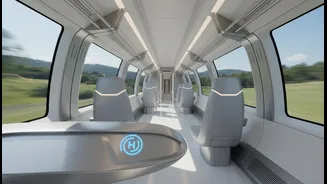
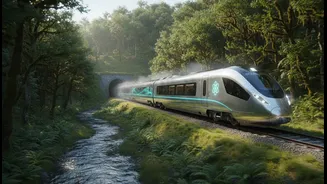
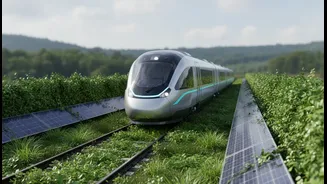
Imagine a train that glides silently, leaving behind only a trail of water. That's the core promise of hydrogen trains. Unlike conventional diesel engines that burn fossil fuels, these trains use hydrogen fuel cells to generate electricity. Inside the fuel cell,
hydrogen stored in tanks reacts with oxygen from the air. This electrochemical reaction produces electricity to power the train's motors, with water vapour as the only emission. This process makes them a zero-carbon alternative at the point of use, significantly reducing air and noise pollution compared to their diesel counterparts. The technology offers a clean solution for routes that are difficult or uneconomical to electrify, such as heritage lines and hilly terrains.
India’s Hydrogen Rail Debut in Haryana
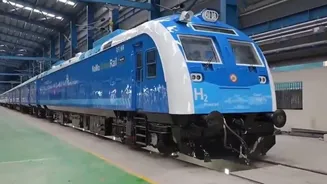
India's journey into hydrogen rail is set to begin on the Jind-Sonipat route in Haryana. After successful and extensive trials, the country's first hydrogen-powered train is expected to be inaugurated on July 17, 2026. This train is a retrofitted Diesel Electric Multiple Unit (DEMU), transformed to run on clean energy. Developed by Medha Servo Drives with fuel cells from Canada's Ballard Power Systems, the 10-coach train has reached speeds of 120 km/h in testing, though it will operate at 75 km/h. A dedicated hydrogen production and refuelling station has been established in Jind to support the service, capable of producing over 400 kg of hydrogen daily.
The 'Hydrogen for Heritage' Vision
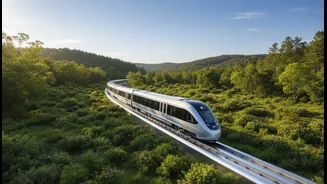
The Jind-Sonipat line is just the beginning. This pilot project is a cornerstone of Indian Railways' ambitious 'Hydrogen for Heritage' initiative. The plan aims to deploy 35 hydrogen trains on various heritage and hilly routes across the country. These include iconic lines like the Kalka-Shimla Railway, Darjeeling Himalayan Railway, and Nilgiri Mountain Railway. By replacing diesel engines on these scenic routes, the initiative seeks to preserve their unique charm while eliminating carbon emissions, aligning with the broader goal of making Indian Railways a net-zero carbon emitter by 2030.
The Promise of a Greener Future
The shift to hydrogen power holds immense environmental and economic potential. The most significant benefit is the elimination of tailpipe emissions, which will improve air quality along some of the country's busiest corridors. While the initial investment is high—with each train estimated to cost around ₹80 crore and ground infrastructure another ₹70 crore per route—the long-term savings are compelling. By replacing diesel, the railways can reduce annual operating costs and become less dependent on imported fossil fuels. Projections suggest that each hydrogen train could cut carbon dioxide emissions by over 11 metric tons annually and nearly eliminate particulate matter.
Navigating the Challenges Ahead
Despite the excitement, the path to a hydrogen-powered rail network is filled with challenges. The primary hurdle is the high upfront cost of the trains and the supporting infrastructure. Another major challenge is the production of 'green' hydrogen. For the technology to be truly sustainable, the hydrogen must be produced using renewable energy through electrolysis, a process that requires massive amounts of clean electricity and water. Currently, India's capacity for commercial-scale green hydrogen production is still in its early stages. Furthermore, ensuring the safety of handling and storing highly flammable hydrogen requires advanced systems and specialised training for railway personnel.