



A Sweet Surprise in Deep Space
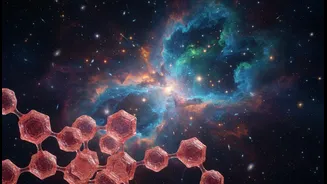
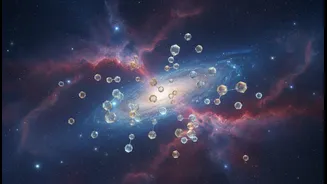
An international team led by Spanish researchers has made a groundbreaking discovery: the first direct detection of a 'true' sugar in the vastness of interstellar space. Using two powerful radio telescopes in Spain, they peered into a massive, cold cloud
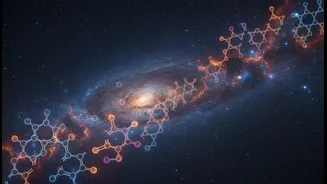
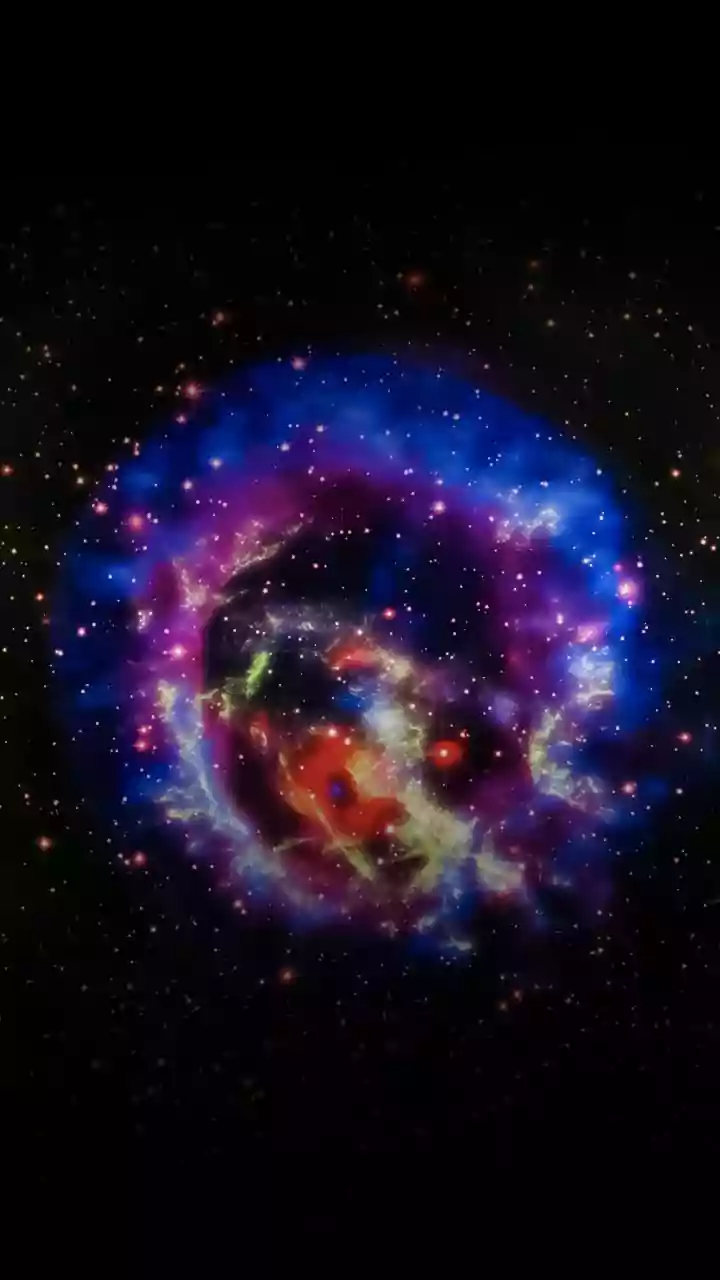
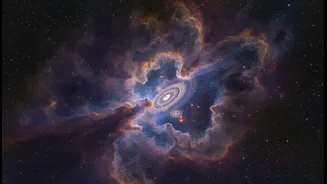
of gas and dust called G+0.693-0.027, located about 27,000 light-years away near the Milky Way's centre. There, they found the distinct chemical signature of erythrulose, a four-carbon sugar. While simpler, sugar-like molecules had been found before, erythrulose is the first definitive sugar—defined as having at least three carbon atoms—to be identified floating between the stars. Curiously, it’s the same compound found on Earth in raspberries and even used in some self-tanning lotions.
Rewriting the Cosmic Cookbook
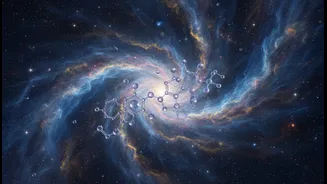
This discovery does more than just add a new molecule to the cosmic inventory; it challenges long-held theories about how complex molecules form in space. The prevailing view in astrochemistry was that molecules grow incrementally, one carbon atom at a time. If this were the case, scientists would have expected to find abundant amounts of simpler, three-carbon sugars. Instead, they found none, while the more complex four-carbon erythrulose was present. This suggests a different chemical pathway may be at play. The findings indicate that erythrulose could form from the combination of two simpler, two-carbon molecules that are known to be common in space. This implies that the universe might be able to build complex organic structures more directly and efficiently than previously believed, even in the freezing, near-vacuum conditions of a molecular cloud.
Ready-Made Ingredients for New Worlds
The location of the discovery is critical. These enormous molecular clouds are the stellar nurseries of our galaxy, the very places where new stars and their planetary systems are born. Finding erythrulose here means that this vital building block for life is a pre-existing ingredient in the raw material from which planets are made. This helps solve a major puzzle for scientists studying the origin of life. Laboratory experiments have shown that it's difficult to produce sugars in sufficient quantities under the conditions of an early planet like Earth. The discovery of pre-formed sugar in space provides a compelling alternative: the essential ingredients weren't necessarily cooked up on Earth, but were delivered ready-made as the planet itself was forming.
A Special Delivery for Life's Origins
The implications extend directly to the question of how life began. Sugars are fundamental to biology, forming the structural backbone of RNA and DNA. While erythrulose is not a direct component of our genetics, it is closely related and can be converted into other crucial molecules. Some scientists believe it could have been a key component in forming simpler, earlier versions of genetic material, like Threose Nucleic Acid (TNA), a hypothetical precursor to RNA. The theory of panspermia suggests that life's ingredients were delivered to a young Earth by comets and asteroids. This discovery gives that idea a significant boost. Researchers estimate that during the ‘Late Heavy Bombardment’ period about four billion years ago, millions of tonnes of erythrulose could have rained down on our planet, enriching the primordial soup from which life eventually emerged.