




India has officially entered the era of in-space computing with the launch of its first orbital AI satellite. This isn't just another object in orbit; it’s a fundamental shift in how we gather and use data from space. But what does that mean?
What Is an Orbital AI Satellite?
On October
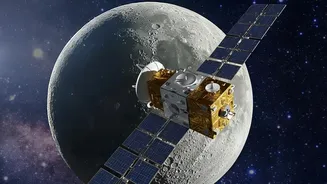
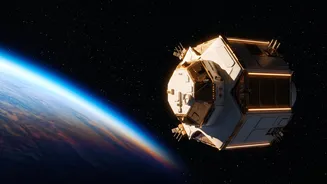
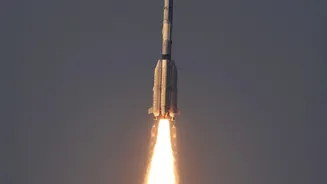
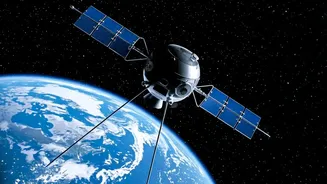
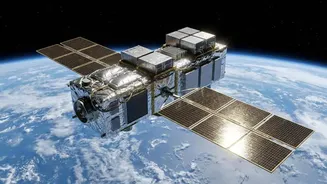
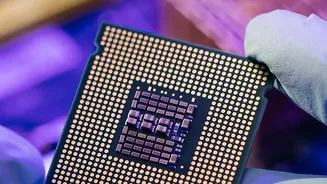
1, a satellite named MOI-1A, built by Hyderabad-based startup TakeMe2Space, was launched aboard a SpaceX rocket. Dubbed India's first orbital computing satellite, it is essentially a small, powerful computer in space. Unlike traditional satellites that are primarily data collectors, MOI-1A is a data processor. Traditional satellites observe Earth, gather vast amounts of imagery and information, and then spend significant time and bandwidth sending that raw data back to ground stations for analysis. MOI-1A, weighing under 50 kg and equipped with powerful Nvidia Orin NX processors, does the thinking in orbit. It can run artificial intelligence models directly in space, analyse the data it collects, and send back only the important insights.
The Edge Computing Revolution Goes to Space
This new approach is a form of 'edge computing'. Think of it like your smartphone. Instead of uploading every single photo you take to a cloud server just to identify the ones with faces, your phone’s processor does it locally and instantly. Orbital AI applies the same logic to space. The current model of downloading terabytes of raw satellite data is slow and expensive. By placing the 'edge'—the point of data processing—directly on the satellite, missions can become drastically more efficient. This reduces the bottleneck of communication links, saves bandwidth, and allows for near real-time decision-making, something that is impossible when you have to wait for data to travel from orbit to Earth and back.
What Can It Actually Be Used For?
The applications for in-orbit AI are vast and transformative. TakeMe2Space has already signed up 23 customers spanning agriculture, mining, insurance, and supply chain management. For a farmer, an AI satellite could analyse crop imagery in orbit to detect signs of disease or drought and send an alert, rather than transmitting massive image files. In disaster management, it could autonomously identify flooded areas or wildfires from sensor data and immediately transmit precise location maps to first responders. For defence and surveillance, it offers the ability to analyse sensitive information without it ever needing to be downloaded to a vulnerable ground station. The startup even plans to explore offering 'cold storage' in orbit for financial and defence clients, creating an ultra-secure data backup location.
A Strategic Leap for India's Space Sector
The launch of MOI-1A is a significant milestone for India's burgeoning private space industry. While developed by a startup, it aligns with the national strategy of both ISRO and the Indian government to build advanced AI and deep-tech capabilities in space. By demonstrating the ability to not only build satellites but also integrate cutting-edge AI for commercial services, Indian firms are moving up the value chain. This mission, which designs and manufactures most subsystems in India, showcases the country's growing self-reliance in space technology. As global tech giants like Google also begin experimenting with data centres in space, this launch positions India as an early mover in a field expected to define the next era of space exploration and commerce.