





A High-Speed Threat Above Our Heads
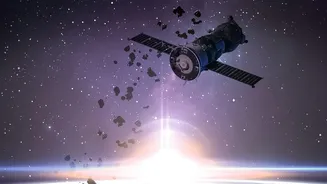
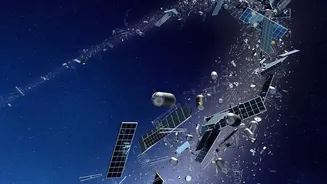
Imagine a cosmic junkyard orbiting Earth, where millions of pieces of debris—from defunct satellites and spent rocket stages to tiny fragments from past collisions—are hurtling at speeds of nearly 28,000 kilometres per hour. In this environment, a collision with
an object as small as a paint chip can be catastrophic for a functioning satellite. This isn't science fiction; it's the reality of modern space. For the Indian Space Research Organisation (ISRO), this orbital chaos poses a direct threat to its fleet of crucial satellites. In 2025 alone, Indian space assets faced over 1.5 lakh close-approach alerts, forcing numerous collision avoidance manoeuvres to steer spacecraft out of harm’s way. This constant threat requires a move from manual intervention to a smarter, more automated form of protection.
India's Answer: An AI-Powered Guardian
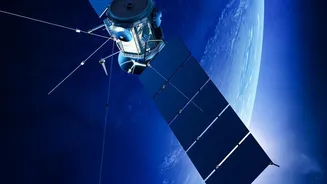
The headline-making 'Autonomous Thruster AI' isn't a single device but a strategic vision coming to life. It represents the fusion of several next-generation technologies ISRO is developing to create a proactive defence system for its assets. The core idea is to empower satellites to detect and dodge threats on their own. This involves using artificial intelligence to analyse data, predict collision courses with debris, and automatically fire onboard thrusters to manoeuvre to safety—all without waiting for commands from ground control. This autonomy is critical, as the window to react to a potential collision can be incredibly short. By integrating AI, ISRO is developing a system that can think and act for itself in the high-stakes environment of Earth's orbit.
Building the Components of the Shield
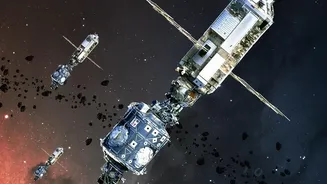
Several key initiatives form the building blocks of this futuristic shield. Project NETRA (Network for Space Object Tracking and Analysis) is ISRO's ambitious project to build a dedicated network of radars and optical telescopes to monitor objects in space, acting as the system's eyes. At the same time, ISRO and its partners are developing advanced AI and machine learning algorithms specifically for Space Situational Awareness (SSA). These algorithms are designed to process vast amounts of tracking data to identify threats with greater speed and accuracy than human operators ever could. Furthermore, missions like the Space Docking Experiment (SpaDex) are proving India's capability in autonomous operations, demonstrating that satellites can perform complex manoeuvres like rendezvous and docking independently—a foundational skill for advanced collision avoidance.
Protecting India's Eyes in the Sky
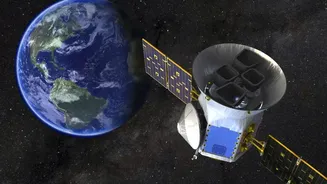
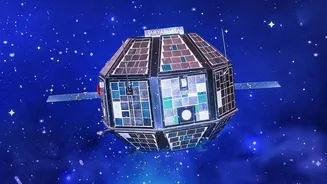
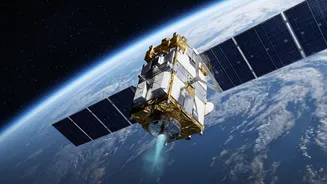
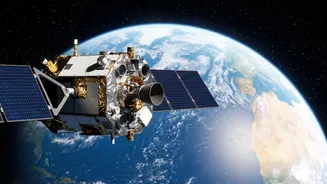
The primary beneficiaries of this technological shield are India's Earth-observation satellites. These are not just scientific instruments; they are vital national assets. Satellites from the RISAT and Oceansat series provide critical data for everything from accurate weather forecasting and disaster management to agricultural planning and national security. They help predict crop yields, monitor forest cover, map land use, and provide crucial intelligence. Losing even one of these satellites to space debris could disrupt services that millions of Indians rely on and compromise strategic capabilities. By automating their protection, India ensures the continuity and reliability of this essential space infrastructure.
A Leap for Self-Reliance in Space
Developing this autonomous protection technology is a significant step in India’s journey towards 'Aatmanirbhar Bharat' (self-reliant India) in the space sector. It not only secures multi-crore satellite investments but also establishes India as a leader in creating sustainable space solutions. As more countries and private companies launch vast satellite constellations, the problem of orbital debris will only intensify. By pioneering AI-driven traffic management and collision avoidance systems, India is not just protecting its own assets but also contributing to a global framework for safer, more responsible space operations. This capability showcases ISRO's evolution from a launch provider to a mature space power capable of managing the full lifecycle of its presence in orbit.