






As winter sets in, finding effective indoor workouts becomes key. The humble step-up is a powerhouse exercise, but its true benefits are only unlocked with controlled movement and a stable, appropriate step height for a safe and effective session.
The Unsung Hero of Indoor Workouts
The
step-up is a functional strength exercise that mimics an everyday movement: climbing stairs. Its simplicity is its strength. As a compound exercise, it engages multiple major muscle groups in the lower body simultaneously, including the quadriceps, glutes, hamstrings, and calves. Beyond just building strength, step-ups are exceptional for improving balance, coordination, and core stability, as your body has to work to stay upright. Because each leg works independently, this unilateral movement is fantastic for identifying and correcting muscle imbalances between your two sides, leading to more symmetrical strength and reducing injury risk. It is a low-impact exercise, making it a joint-friendly alternative to high-impact movements like jumping, while still offering excellent cardiovascular benefits if performed at a brisk pace.
Finding Your Ideal Step Height
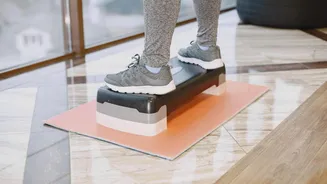
Choosing the right height for your step is the most critical part of the setup. A common mistake is selecting a platform that is too high, which can lead to poor form and increase stress on the knee. A good starting point for beginners is a low step, around 6 to 8 inches. A general rule is to choose a height where your knee does not bend beyond a 90-degree angle when your foot is placed on the surface. Your platform must be stable and not prone to slipping; a sturdy workout box, an aerobic step, or even the bottom step of a staircase are all excellent options. The priority should always be control and proper form over the height of the step. If you find yourself having to use momentum or push off forcefully from your back leg, the step is too high.
The Art of the Controlled Movement
Mastering the form is essential for both safety and effectiveness. Stand tall facing the step. Place your right foot fully and firmly on the platform, ensuring the whole foot is on the surface, not just the toes. Keeping your chest up and core engaged, drive through the heel of your right foot to lift your body straight up. The power should come from this lead leg; avoid pushing off with the toes of the back (left) foot. Bring your left foot up to stand tall on the box. The descent is just as important. Lower yourself slowly and with control, leading with the left foot first, then bringing the right foot back to the starting position. This controlled lowering, or eccentric phase, is crucial for building strength and stability.
Common Mistakes to Watch For
Several common errors can undermine the benefits of step-ups. The most frequent is using momentum by pushing off the back leg to propel yourself up. This takes the workload off the lead leg, which is the muscle group you are trying to target. Another frequent mistake is dropping down too quickly instead of controlling the descent. This can be hard on your joints and negates a significant portion of the muscle building stimulus. Also, watch for your knee caving inward as you step up; it should always track in line with your toes. Leaning too far forward can also put unnecessary strain on your lower back. Focus on maintaining an upright torso throughout the movement.
Advancing Your Winter Routine
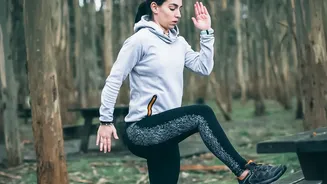
Once you have mastered the bodyweight stepup with perfect form, there are several ways to progress the exercise. The most straightforward method is to add weight. You can hold dumbbells in each hand, a kettlebell at your chest, or even use a weighted vest. Another way to increase the challenge is to slightly increase the height of your step, but only if you can maintain flawless form. For a more dynamic challenge, you can add a knee drive at the top of the movement, bringing the nonworking leg up towards your chest. Lateral stepups, where you stand beside the box and step up sideways, are another great variation that targets the inner and outer thighs.