






Why Humidity Is a Dehydration Game-Changer
Staying hydrated in the summer feels obvious, but high humidity presents a unique challenge. Normally, your body cools itself when sweat evaporates from your skin. But when the air is already saturated with moisture — as is common when humidity climbs
above 60% — sweat can't evaporate efficiently. Your body's cooling engine effectively breaks down. In response, your system tries to compensate by producing even more sweat, which accelerates fluid and electrolyte loss without providing the same cooling benefit. This means you can become dehydrated faster, even if you don't feel like you're exerting yourself. You might feel fatigued, dizzy, or develop a headache as early signs.
Calculate Your Personal Hydration Baseline
The old 'eight glasses a day' rule is too generic for humid conditions. A more personalized starting point considers your body weight. A common guideline is to drink about half your body weight in ounces of water. For example, a 150-pound person would aim for a baseline of 75 ounces (about 2.2 litres) daily. However, this is just the beginning. For hot and humid climates, you should increase this baseline. A general recommendation is to add an extra 0.5 to 1 litre (about 17 to 34 ounces) to your daily total to account for increased sweat. Factors like age, activity level, and overall health also play a significant role, so it's important to adjust accordingly.
Structure Your Day: Timing Is Everything
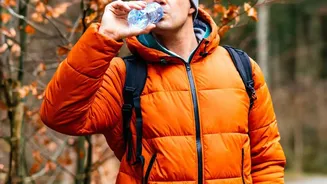
To successfully stay hydrated, consistency is key. Don't wait until you feel thirsty; thirst is a delayed signal that you're already on your way to being dehydrated. Instead, sip fluids steadily throughout the day. Try to make it a habit: start with a glass of water upon waking, drink with every meal, and keep a reusable water bottle handy at all times. If you know you'll be active or outdoors, plan ahead. Drink about two to three cups of water a couple of hours before heading out. While you're in the heat, especially during peak hours, aim to drink about eight ounces every 15 to 20 minutes.
Think Beyond Plain Water: The Role of Electrolytes
When you sweat profusely in high humidity, you don't just lose water; you lose critical minerals called electrolytes, particularly sodium. Drinking large amounts of plain water without replacing these electrolytes can dilute the sodium levels in your blood, which can be dangerous and lead to symptoms like headaches and nausea. For prolonged activity (over an hour) in the heat, consider a sports drink or an electrolyte powder. You can also replenish electrolytes through food. Bananas, avocados, and citrus fruits are rich in potassium, while a salty snack can help replace lost sodium. Hydrating foods like watermelon (92% water), cucumber (95%), and strawberries (91%) also contribute to both fluid and nutrient intake.
Listen to Your Body's Signals
Your body provides clear feedback on your hydration status. One of the simplest indicators is your urine color. It should be a pale, lemonade-like yellow; if it's dark yellow or amber, you need to drink more fluids. Other signs of dehydration include a dry mouth, fatigue, muscle cramps, and headaches. It's also important not to overdo it. Drinking more than 48 ounces (about 1.4 litres) of water in an hour can be harmful. Pay attention to how you feel. If you're feeling sluggish, irritable, or have trouble concentrating, take it as a sign to pause and have a glass of water.