





Perform a Pre-Ride Vehicle Check
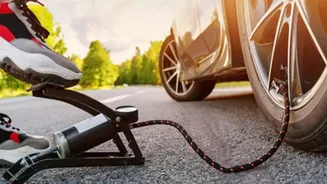
Before you even start your journey, a quick inspection of your vehicle can prevent a majority of monsoon-related mishaps. Your tyres are the most critical safety component. Ensure they have adequate tread depth, which is essential for grip on wet roads
and to avoid skidding or aquaplaning. Next, check your brakes. If you notice any squealing sounds or reduced response, get them inspected immediately, as stopping distances increase significantly on wet surfaces. Finally, test all your lights—headlights, tail lamps, brake lights, and indicators. Clean, bright lights are crucial for visibility in heavy rain. Also, make sure your windscreen wipers are in good condition and can clear water effectively without leaving streaks.
Maximise Your Visibility—And Be Seen
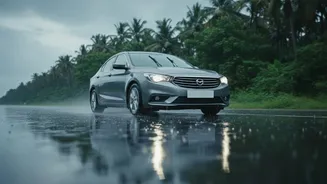
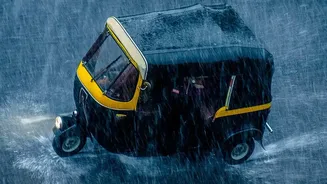
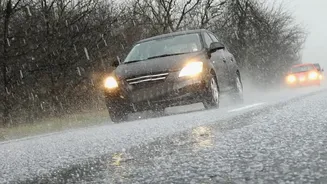
During a downpour, seeing and being seen is a top priority. Always keep your headlights on, even during the day, to make your vehicle more visible to other drivers and pedestrians. Use the low beam setting to avoid dazzling oncoming traffic. For motorcyclists and scooter riders, wearing brightly coloured or reflective rain gear can make a life-saving difference. Before you set off, ensure your windscreen and helmet visor are clean. An anti-fog visor or treatment can also be a valuable investment for two-wheeler riders to maintain clear vision throughout the ride. If visibility drops severely due to heavy rain or fog, the safest option is to pull over to a safe location and wait for conditions to improve.
Navigate Waterlogged Roads with Caution
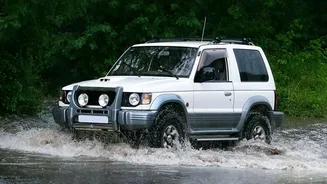
Encountering a flooded street is one of the biggest challenges of monsoon commuting. If possible, avoid these routes altogether. If you must proceed, try to assess the water's depth; as a rule of thumb, avoid crossing if the water is more than halfway up your wheels. Drive slowly and steadily, staying in a low gear. It's a myth that high engine revolutions prevent water from entering the exhaust; in fact, high RPMs can increase suction and pull water into the engine, causing severe damage. Try to stick to the centre of the road, as urban roads are often sloped towards the edges for drainage, meaning the water is deepest at the sides where submerged potholes and open manholes may be hidden.
Slow Down and Increase Following Distance
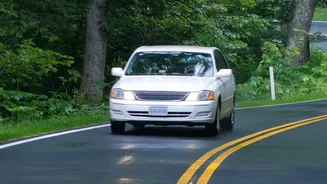
The single most effective safety measure in the rain is to reduce your speed. Wet roads dramatically decrease tyre traction and significantly increase your vehicle's braking distance. Driving slower gives you more time to react to unexpected hazards like a hidden pothole or a vehicle braking suddenly ahead of you. It is crucial to maintain a greater distance from the vehicle in front. This buffer zone is your safety margin. Avoid any sudden acceleration, hard braking, or sharp turns, as these manoeuvres can easily lead to a skid or loss of control on slippery surfaces. Smooth and gentle inputs for steering, braking, and throttle are key to maintaining stability.
Be Prepared for Emergencies
Despite all precautions, things can still go wrong. Being prepared can turn a crisis into a manageable inconvenience. Keep a basic emergency kit in your vehicle. This should include a torch, a first-aid kit, a fully charged power bank for your phone, and a list of emergency contact numbers. A tool kit with essentials like a puncture repair kit and jumper cables can also be invaluable. For two-wheeler riders, ensuring your mobile phone and wallet are in a waterproof pouch or box is a simple but effective step. Knowing that you have these essentials on hand provides peace of mind and equips you to handle unexpected breakdowns or delays safely.