

The Harsh Reality of the Lunar Surface
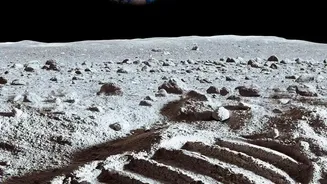
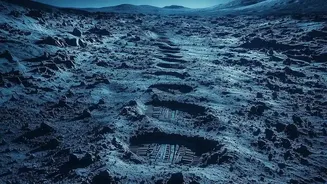
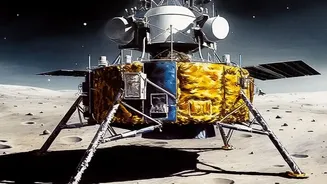
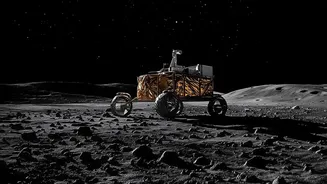
Living on the Moon isn't as simple as planting a flag. With no atmosphere to protect it, the lunar surface is a hostile place. Astronauts and their habitats would be exposed to intense cosmic and solar radiation, a constant barrage of micrometeorites
traveling at extreme speeds, and wild temperature swings. During the two-week-long lunar day, surface temperatures can soar to a scorching 121°C, before plummeting to a frigid -146°C during the equally long night. Any long-term human presence would require heavy, expensive shielding to survive these conditions, making the prospect of a sustainable surface base a monumental engineering challenge.
Nature's Underground Sanctuaries
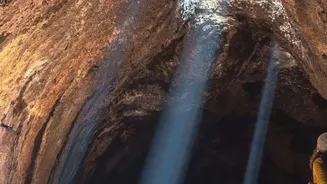
The answer to this daunting problem might have been waiting for us for billions of years. Scientists are increasingly confident that the Moon is riddled with lava tubes: vast, hollow tunnels formed by ancient volcanic eruptions. When rivers of lava flowed, the outer edges cooled and solidified, creating a rock-solid roof over the still-flowing molten core. Once the lava drained away, it left behind enormous subterranean caverns. Orbiters have identified hundreds of pits on the Moon's surface, believed to be 'skylights' where the roof of a lava tube has collapsed, offering a tantalizing glimpse into these hidden worlds. Some of these tubes are thought to be colossal, potentially over a kilometre wide and hundreds of kilometres long—large enough to house entire cities.
The Ultimate Shielding
The true genius of using lava tubes for habitats lies in the natural protection they offer. The thick ceiling of basaltic rock provides a near-perfect shield against the dangers of the surface. Studies have shown that the radiation levels inside a lava tube could be dramatically lower, dropping from a hazardous 100-400 millisieverts per year on the surface to a much safer 1-20 millisieverts—comparable to the annual exposure on Earth. Furthermore, the rock acts as a powerful insulator. Deep beneath the surface, the temperature remains at a stable, albeit cold, -20°C, eliminating the extreme thermal fluctuations that plague surface structures. This stable environment would make it far easier and more energy-efficient to maintain a comfortable habitat for human occupants.
Robotic Spelunkers Lead the Way
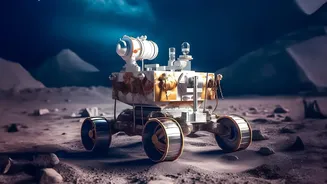
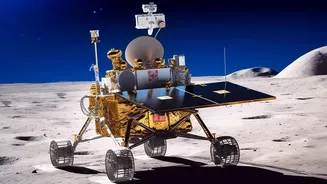
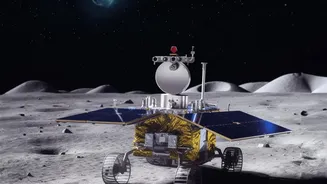
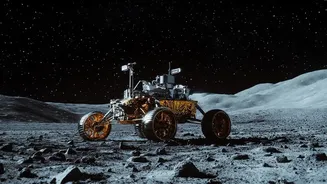
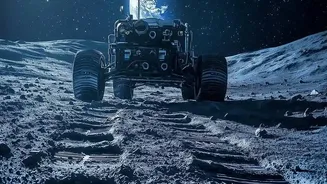
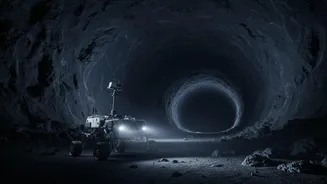
Before humans can move in, we need to know exactly what's down there. Exploring these caves is a complex task, too dangerous for astronauts in the initial stages. This is where robotics comes in. Several space agencies and private companies are developing innovative concepts to explore these lunar caves. One European consortium has successfully tested a multi-robot system in the volcanic caves of Lanzarote, Spain, an environment similar to the Moon. Their concept involves a team of three autonomous robots: one to map the surface, another to lower a scout rover into a pit, and the scout itself to explore and create 3D maps of the cave's interior. NASA is also funding research into concepts like the Lunar Underground eXplorer (LUX), a tethered, laser-powered drone designed to hover down into a lunar pit and explore the tunnels beyond.
From Exploration to Habitation
The exploration of these subterranean spaces is the first step toward turning science fiction into reality. Once a suitable lava tube is identified and thoroughly mapped, future missions could land nearby, access the cave through a skylight, and begin construction. Inside the protected cavern, astronauts could build habitats using lighter materials, potentially even inflating large structures within the vast, open space. With a stable temperature and protection from radiation and impacts, these underground bases could become hubs for scientific research, resource mining, and a crucial staging point for further exploration of the solar system. While significant challenges remain, from landing technology to robotic construction, the path to becoming a multi-planetary species may well be paved through the ancient, silent tunnels beneath the Moon's surface.