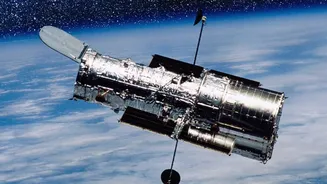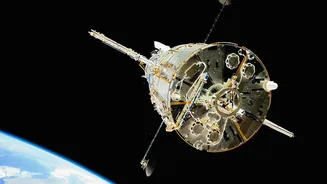






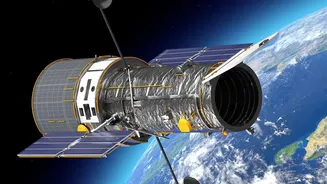
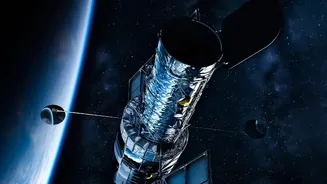
For over three decades, the Hubble Space Telescope has been humanity’s eye on the cosmos, revolutionizing astronomy. But its time is running out. Now, NASA is turning to the private sector in a bold quest to save this irreplaceable scientific icon.
A Slow Descent
The
Hubble Space Telescope is not failing, but it is falling. Launched in 1990, the bus-sized observatory circles Earth in a low orbit where it is subject to faint but persistent atmospheric drag. This friction gradually slows the telescope, causing it to lose altitude over time. Since its final servicing mission by a Space Shuttle crew in 2009, Hubble has had no way to counteract this decay. Its orbit has been steadily sinking, and without intervention, NASA projects it has a significant chance of an uncontrolled reentry into Earth's atmosphere between 2033 and 2034. This wouldn't just mean the end of a legendary mission; the uncontrolled crash of such a large object also poses a potential risk on the ground.
A Call for New Ideas
Recognizing the urgency, NASA has officially launched a search for a commercial partner to tackle the problem. On October 29, 2026, the agency issued a formal Request for Information (RFI), asking private companies to submit their ideas for saving Hubble. This isn't a contract, but a market study to see what's possible in the modern space industry. NASA has outlined three potential pathways for consideration: reboost the telescope to a higher, more stable orbit; service it with new hardware to upgrade its capabilities; or, as a last resort, guide it to a safe, controlled de-orbit over the ocean. Any mission would need to be executed by 2032 to be effective, and companies have until November 30, 2026, to respond.
The Commercial Space Revolution
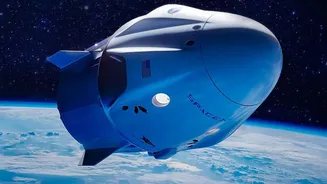
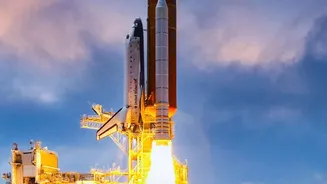
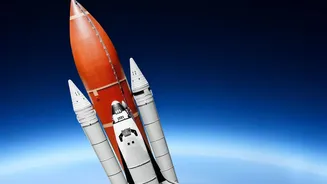
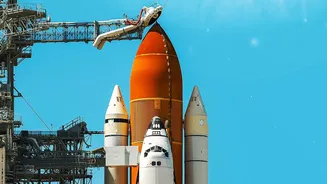
This turn to the private sector marks a significant shift from how Hubble was maintained in the past. All five previous servicing missions were conducted by government astronauts flying on NASA's Space Shuttle fleet. With the shuttle program retired in 2011, NASA lost its purpose-built vehicle for in-person repairs. In the years since, the commercial space industry has matured rapidly, with companies developing new capabilities for in-orbit servicing, rendezvous, and docking. This isn't the first time a private rescue has been floated. In 2022, NASA and SpaceX conducted a joint study to assess the feasibility of using a Dragon spacecraft for a reboost mission, an idea championed by billionaire and now-NASA Administrator Jared Isaacman. While that specific plan was not pursued at the time, this new, broader request opens the door to the entire industry.
What Comes Next for Hubble
The key proposal is a 'reboost' mission. The RFI asks companies to detail how they could safely capture Hubble and push it to an altitude of at least 600 kilometers (about 373 miles). Such a maneuver could add another quarterndecade of life to the observatory, allowing it to continue its groundbreaking science. While the newer James Webb Space Telescope has captured headlines, it is not a direct replacement for Hubble. Webb primarily observes in the infrared, whereas Hubble remains the premier observatory for visible and ultraviolet light, a capability that may not be replaced until the Habitable Worlds Observatory launches in the 2040s. For now, NASA has not allocated any funding for a rescue mission. The agency is asking companies to propose missions where they would supply the launch vehicle, the spacecraft, and all operations, representing a potential cost saving for taxpayers while leveraging cutting edge commercial innovation.