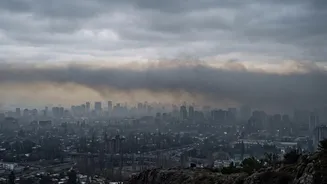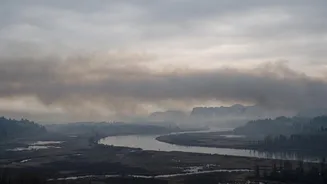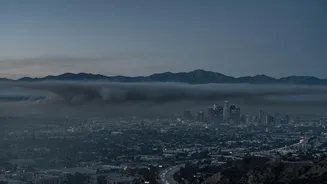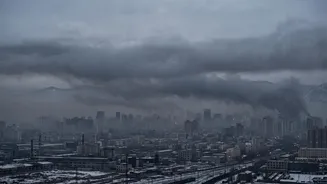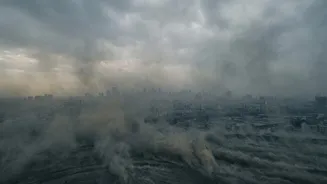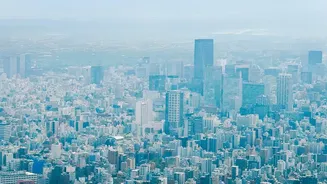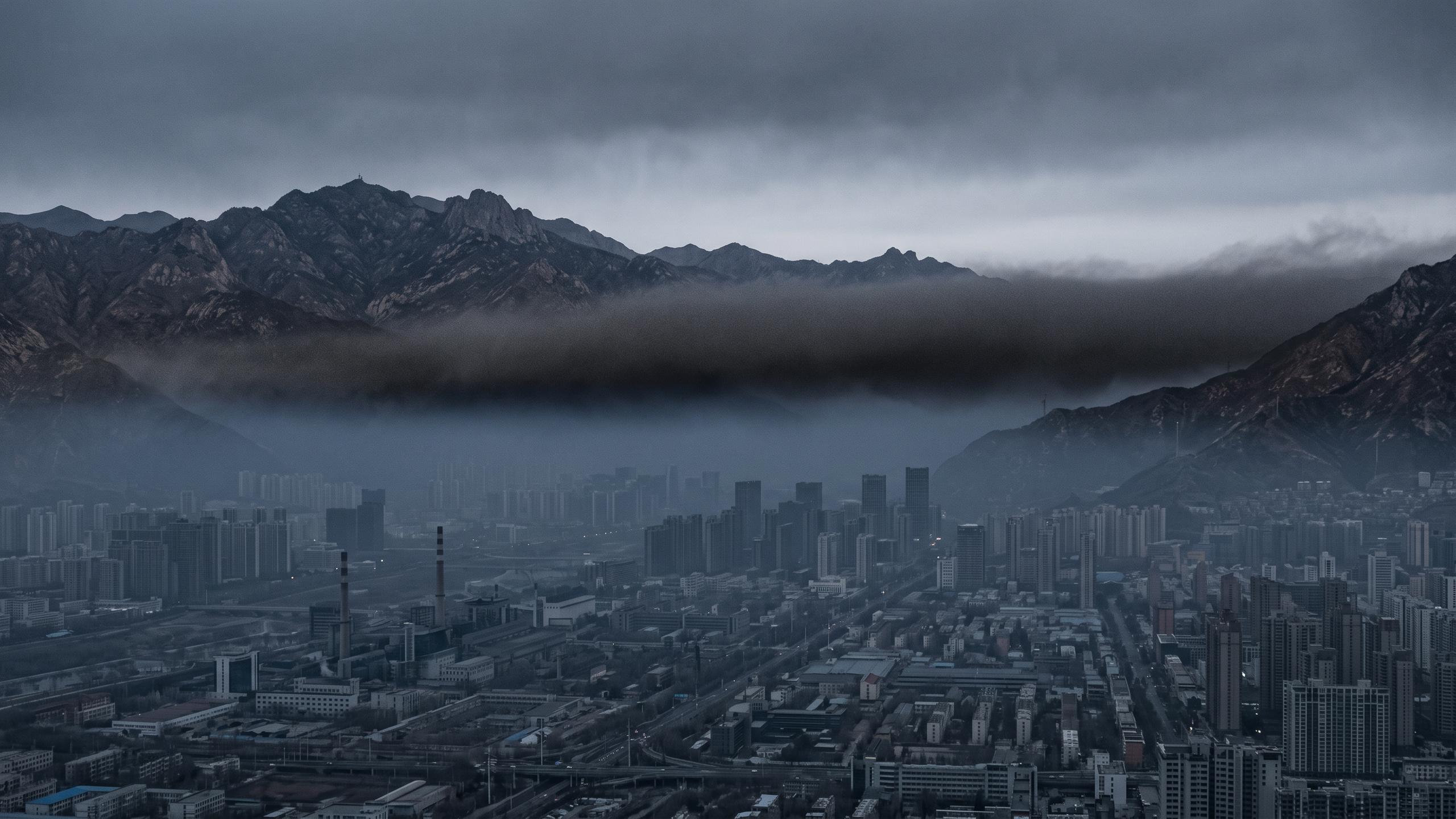





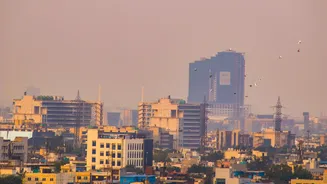

Ever wonder why the air in cities like Delhi gets so hazy and toxic during winter? A key culprit is a weather event called a temperature inversion, which creates an invisible 'lid' in the atmosphere, trapping pollution where we breathe.
How Air Normally Cleans Itself
On a typical day,
the sun warms the Earth's surface. This, in turn, heats the air closest to the ground. As this air gets warmer, it becomes less dense and rises, much like a hot air balloon. This upward movement carries pollutants — from vehicle exhaust, industrial smoke, and dust — away from the ground and disperses them high in the atmosphere. As the warm air rises, cooler, denser air from above sinks to take its place, creating a continuous cycle of vertical air mixing that helps keep the air we breathe relatively clean. This process is the atmosphere's natural ventilation system.
What is a Temperature Inversion?
A temperature inversion flips this normal process on its head. It’s an atmospheric condition where a layer of cool air at the surface is trapped beneath a layer of warmer air. This 'inversion' of the usual temperature gradient can happen for several reasons, but a common cause, especially during winter in India, is radiational cooling. On clear, calm nights, the ground loses heat rapidly, cooling the layer of air directly above it. The air at higher altitudes, however, remains relatively warm. This creates a stable situation where the cooler, denser air is stuck at the bottom, and the warmer, lighter air sits on top like a lid on a pot.
Creating a Lid for Pollution
This layer of warm air acts as a cap, preventing the vertical movement of air from below. Because the cool, heavy air at the surface cannot rise through the warm, lighter air above it, the atmosphere's natural cleaning cycle is shut down. All the pollutants being emitted at ground level from traffic, industry, construction, and biomass burning have nowhere to go. They become trapped in this stagnant layer of cold air, leading to a rapid buildup of harmful particles and gases. The longer the inversion lasts, the more concentrated and dangerous the pollution becomes.
The Winter Problem in Indian Cities
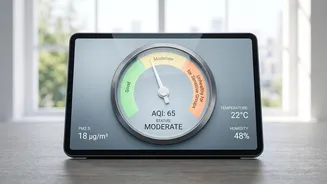
Cities like Delhi are particularly vulnerable to this phenomenon during the winter months. The combination of long, cool nights, clear skies, and low wind speeds creates the perfect conditions for strong and persistent temperature inversions. The region's geography, with the Himalayas acting as a barrier, can further trap air masses, making the situation worse. This meteorological trap coincides with increased sources of pollution, such as stubble burning in neighbouring states and higher fuel consumption for heating. The result is the severe, multi-day smog episodes that have become an annual public health crisis, sending the Air Quality Index (AQI) into the 'Hazardous' category.
Health Under the Haze
Living under this thermal lid has severe health consequences. The trapped pollutants, especially fine particulate matter known as PM2.5, can penetrate deep into the lungs and even enter the bloodstream. Shortterm exposure can cause coughing, wheezing, shortness of breath, and irritation of the eyes and throat. For vulnerable populations like children, the elderly, and people with preexisting conditions, the effects are far worse leading to aggravated asthma,< respiratory infections,< and an increased risk of heart attacks and strokes. Longterm exposure to high pollution levels common during inversions is linked to chronic diseases like COPD,< lung cancer,< and cardiovascular damage.