




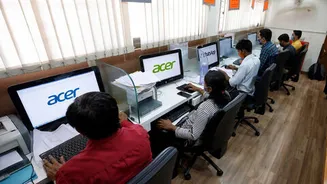
India is on the verge of a profound workplace transformation. A recent study forecasts the nation's office-using workforce will swell to 48 million by 2030, a massive increase that traditional office models simply cannot accommodate.
What is an Adaptable Workspace?
Forget endless rows
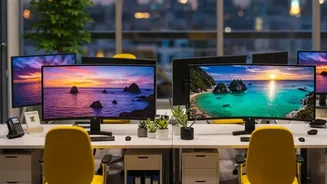
of cubicles and fixed floor plans. An adaptable or flexible workspace is a commercial office designed for versatility. These environments can be easily reconfigured to meet the changing needs of a business without requiring major renovations. This includes everything from modular furniture and movable partitions to a variety of work settings under one roof—such as quiet zones for focused tasks, collaborative hubs for team projects, and informal lounge areas. The model prioritizes agility, allowing companies to scale their space up or down, support hybrid work schedules, and create environments that cater to different work styles and team sizes. This 'plug-and-play' approach significantly reduces the time and capital expenditure associated with setting up a traditional office.
The Engine of Demand: Hybrid Work and Global Business
The push for adaptable spaces is not just about fitting more people into buildings; it's a strategic response to fundamental shifts in work culture. The post-pandemic era has cemented hybrid work as a dominant preference in India, with around 79% of professionals favoring a mix of remote and in-office work. Companies are no longer just leasing square footage; they are curating experiences to make the commute worthwhile. Another major driver is the relentless expansion of Global Capability Centres (GCCs). These offshore hubs for multinational corporations are a primary demand driver for flex spaces, accounting for 44% of total flex seats leased in the first half of 2026. GCCs favor managed and flexible offices because they offer speed, scalability, and operational consistency across multiple cities, which is crucial for rapid expansion.
Accommodating 10 Million New Workers
A study by Cushman & Wakefield projects India's office-based workforce will grow from approximately 38 million in 2025 to 48 million by 2030. This addition of nearly 10 million workers is expected to be driven by the continued expansion of office-based services, particularly as GCCs move into higher-value activities like research, development, and analytics. This growth will not necessarily be linear or traditional. As artificial intelligence automates routine tasks, the nature of office work will evolve, placing a greater premium on spaces that foster collaboration, innovation, and specialized skills. The real estate sector is racing to meet this impending demand, with India’s flexible office stock projected to nearly double from around 90 million square feet in 2026 to between 170-180 million square feet by 2030.
The Real Estate Industry's Response
India has become one of the world's most mature and fastestest growing flexible office markets. In the first half of 2026, leasing by flexible workspace operators reached a record high, accounting for nearly 20% of all office leasing activity. Developers and operators are moving beyond just providing desks. The modern offering includes 'managed offices,' where the provider handles everything from fitout and IT infrastructure to daily facilities management. There is also a significant focus on 'amenitization'—turning the office into a destination. This involves incorporating wellness rooms, social hubs, tech enabled meeting rooms, and high quality collaborative areas to enhance the employee experience and justify the time spent away from home. Furthermore, sustainability is becoming a key differentiator, with green certified buildings expected to comprise nearly three quarters of India's Grade A office stock by 2030.