

A Symbol of Rebellion
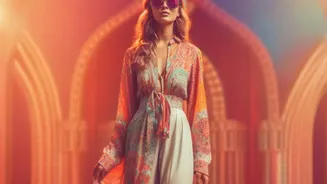
The 1970s marked a significant departure from the rigid, heavily styled hairdos of the 1960s. As the counterculture movement gained momentum, hair became a powerful symbol of freedom and a rejection of the mainstream. Long, natural, and free-flowing styles
dominated the era, and the centre part was at the heart of this aesthetic. It was an effortless, low-maintenance look that stood in stark contrast to the coiffed beehives and bouffants of the previous decade. This simple parting was a quiet rebellion, signalling a shift towards authenticity and a more relaxed approach to beauty that was deeply intertwined with the hippie and bohemian movements.
The Icons Who Defined the Look
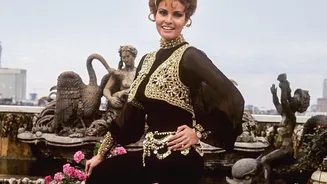
The long, centre-parted style was cemented in pop culture by a wave of influential figures. Actresses like Ali MacGraw in the 1970 film 'Love Story' and Peggy Lipton in 'The Mod Squad' made the pin-straight, centre-parted look iconic. Perhaps most famously, Cher wore her waist-skimming, glossy black hair with a severe middle part, a look that remains legendary. These women, along with folk singers like Joni Mitchell, embodied a new kind of cool—natural, confident, and unapologetically individual. Their hair wasn't just a style; it was an extension of their artistic and personal identities, influencing millions to embrace a simpler, more organic look.
More Than Just Hair
Beyond its hippie origins, the centre part also held androgynous appeal. As the women's liberation movement gained ground, styles that blurred traditional gender lines became more common. The shag, a unisex cut created for Jane Fonda in 'Klute' (1971), and long hair on men became widespread. The centre part fit perfectly into this evolving landscape. It was a style worn by both men and women, from rock stars like the Bee Gees to activists, breaking down old beauty standards. This gender-fluid quality made it a subtle but significant statement about equality and the changing social dynamics of the time.
The Feathered Flip and Other Variations
While the pin-straight look was a hallmark of the early '70s, the decade also gave rise to softer, more voluminous styles. Farrah Fawcett's iconic feathered haircut, with its bouncy layers flicked away from the face, often featured a soft centre or side part and became one of the most requested styles of the era. This 'feathered' look added movement and glamour to long hair, representing a shift towards the more polished, disco-inspired trends of the later '70s. Similarly, curtain bangs—a longer, parted fringe—emerged as a popular way to frame the face while maintaining the overall centre-parted silhouette.
The Modern Revival
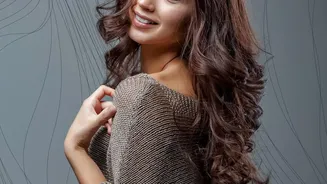
Today, the centre part is back in a big way, largely thanks to Gen Z and social media platforms like TikTok. A generational debate has even emerged, with younger users championing the middle part as more flattering and youthful. Celebrities like Zendaya and Kim Kardashian have embraced the look, often paying direct homage to its '70s origins. The modern interpretation ranges from the sleek, 'glass hair' look to softer versions with curtain bangs or gentle waves. This revival speaks to a renewed appreciation for the '70s aesthetic, with its themes of nostalgia, individuality, and effortless style resonating strongly with a new generation.