

A World of Extremes
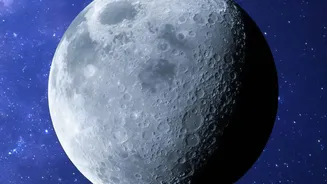
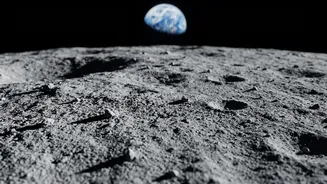
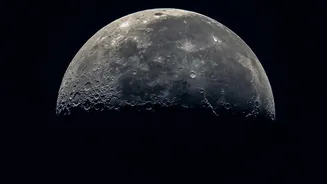
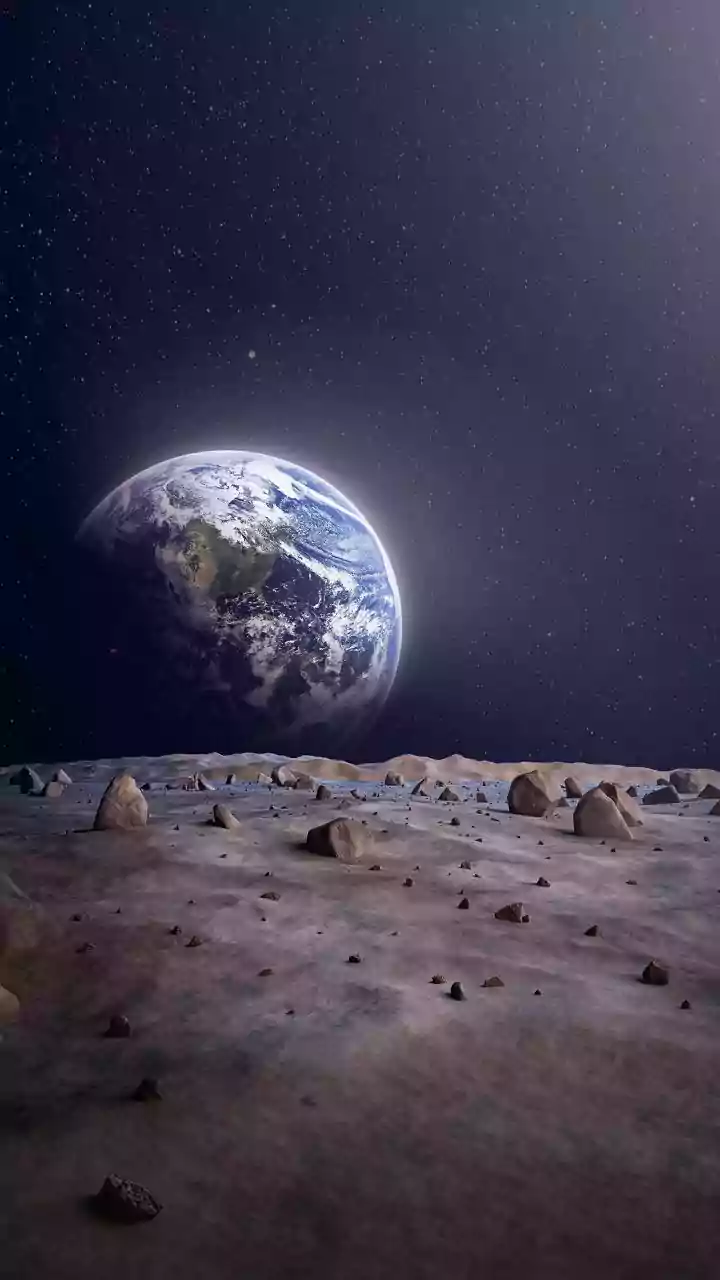
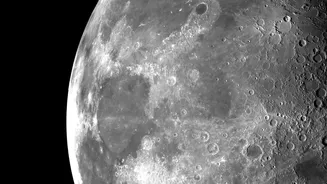
For life as we know it, the Moon's surface is a nightmare. It has no significant atmosphere to shield it from the Sun’s intense ultraviolet (UV) radiation or from a constant bombardment of cosmic rays. Temperatures swing violently, from scorching highs
of around 127°C in the sunlight to frigid lows in the dark. Without air, water, or protection, most organisms would be destroyed almost instantly. For decades, the samples returned by the Apollo missions seemed to confirm this, showing a world that was bone-dry and devoid of life. This understanding has led scientists to treat the Moon as a pristine, albeit harsh, environment.
Finding Shelter in the Shadows
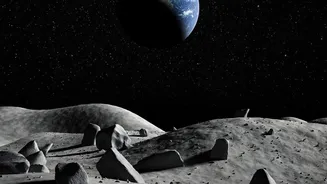
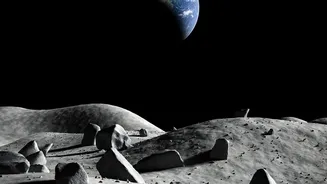
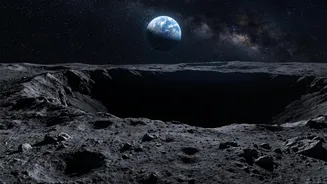
The key to survival lies in finding refuge. A recent NASA study, published in August 2026, has identified potential “survivable niches” where microbes might just stand a chance. The most promising locations are near the Moon's south pole. Due to the Moon's slight axial tilt, the Sun always hangs low on the horizon in these polar regions. This creates permanently shadowed regions (PSRs) inside deep craters—areas that have not seen direct sunlight in potentially billions of years. These dark, ultra-cold pockets provide a crucial shield from the deadly UV radiation and extreme heat that sterilise the rest of the lunar surface.
Not Just Craters, but Footprints
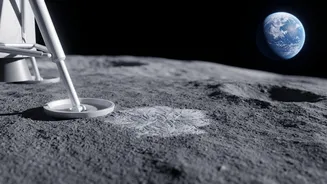
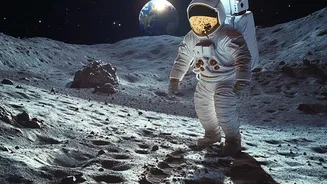
These potential havens aren't just limited to massive craters. The models show that even small depressions, like a rover's tread marks or an astronaut's bootprint, could create enough shadow to protect a dormant microbe from the worst of the radiation. It’s important to note the difference between surviving and thriving. Scientists believe these microbes would likely enter a dormant or cryptobiotic state, not actively grow or reproduce. The Moon simply doesn't have the liquid water or nutrients needed for that. However, the fact that they could remain viable for days, weeks, or even longer in these shaded spots is a revolutionary idea.
Earth's Toughest Hitchhikers
So, what kind of life could endure such conditions? Scientists looked at microbes commonly found in spacecraft environments, some of which hitch a ride on every human mission. These aren't necessarily “extremophiles” that evolved for such harshness. One of the most resilient candidates turned out to be Aspergillus niger, a common black fungus found in damp places like bathrooms. It was also found surviving on the outside of the International Space Station. In simulations, this fungus showed remarkable resistance to UV radiation, even outperforming the famously tough bacterium Deinococcus radiodurans. This suggests that even seemingly ordinary microbes have an extraordinary capacity for survival.
Contamination and Future Missions
This discovery presents both a challenge and an opportunity for future lunar exploration, including India's space program and NASA's Artemis missions, which are targeting the south pole. The main challenge is planetary protection. If we are searching for signs of native lunar chemistry or, however unlikely, ancient lunar life, we need to be sure we aren't just finding the microbes we accidentally brought with us. Understanding where Earth-based contamination can survive is the first step to creating protocols to protect these scientifically valuable sites. On the other hand, these lunar niches serve as a natural laboratory. By studying how terrestrial life fares in these extreme, protected environments, we can learn more about the absolute limits of life itself, knowledge that will be invaluable as we plan missions to Mars and beyond.