



What is Communications Redundancy?
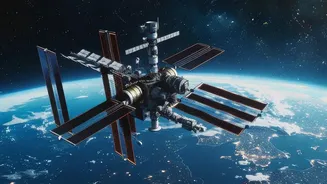
Imagine driving on a highway with only one lane open. It works, but any small problem can cause a major backup. In space, this is a risk you cannot afford. The ISS relies on multiple communication systems to send and receive data, including scientific
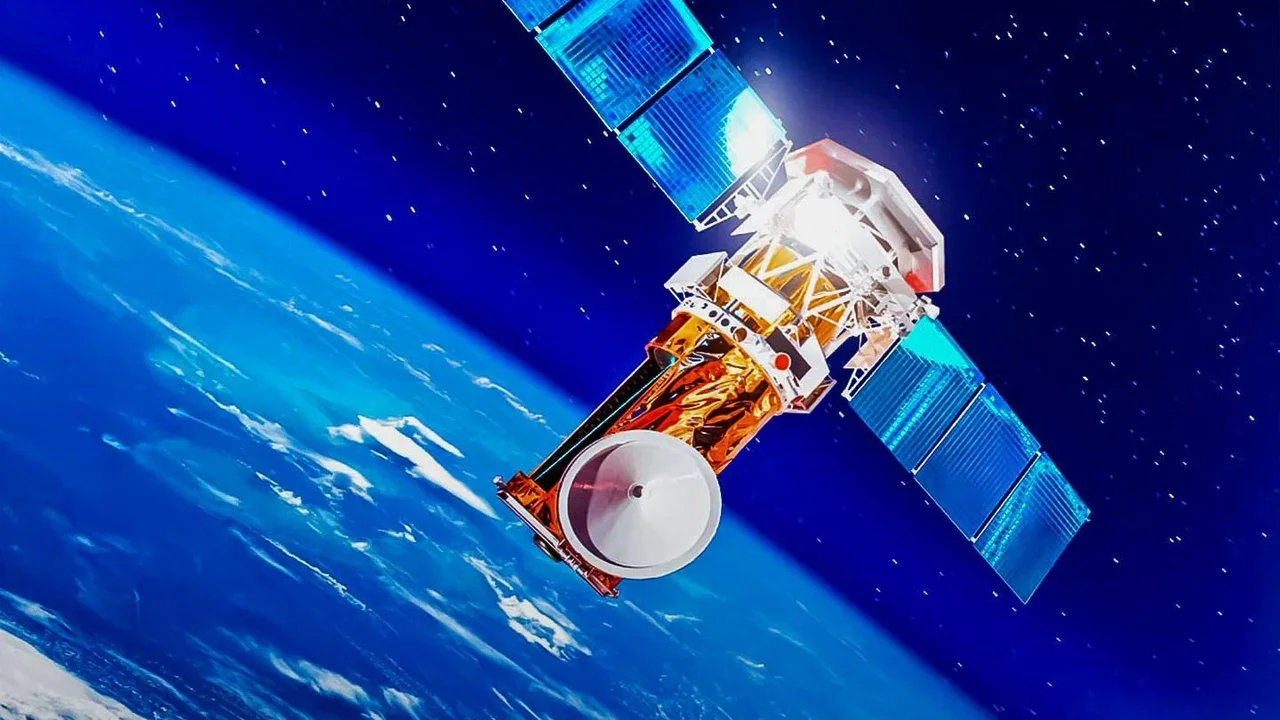
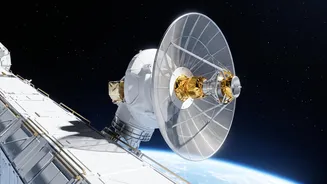
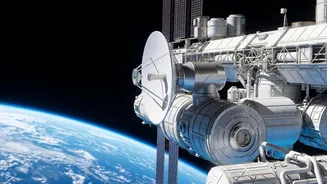
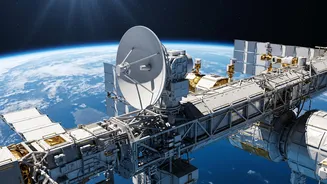
results, crew health information, and high-definition video. This is called redundancy. When one of these systems, a Space-to-Ground Antenna (SGANT), stopped working correctly last November, the station lost one of its vital data highways. While another antenna kept communications flowing, the lack of a backup increased operational risk. Restoring this redundancy was a top priority for mission managers to ensure the station remains fully capable and safe.
A High-Stakes Spacewalk
On Tuesday, August 25, NASA astronaut Anil Menon and European Space Agency (ESA) astronaut Sophie Adenot ventured outside the station for a six-and-a-half-hour spacewalk to fix the problem. This was the 283rd spacewalk in support of station assembly and maintenance. The task was not simple. A previous attempt on August 18 saw the astronauts successfully remove the failed antenna, but they ran out of time to install the new one due to stubborn bolts and electrical connectors. For the follow-up spacewalk, Menon was positioned at the end of the Canadarm2 robotic arm, while Adenot traversed the station's exterior by hand. Together, they retrieved the spare antenna and meticulously bolted it into place on the station's Z1 truss segment.
The Astronauts Behind the Mission
The successful repair was the result of a skilled international team. This was the third spacewalk for Anil Menon, an experienced NASA astronaut. For Sophie Adenot, it was her second, having already made history on the August 18 excursion as the first woman from France to perform a spacewalk. Inside the station, NASA astronauts Jack Hathaway and Jessica Meir provided crucial support, with Hathaway operating the Canadarm2 robotic arm that moved Menon into position. After the successful installation, an elated Mission Control celebrated the achievement. Astronaut Anne McClain humorously sang, "You just saved the video dish," a nod to the antenna's role in transmitting video from the orbiting lab.
Why This Repair Matters
The newly installed antenna, either an S-band or Ku-band model which handles voice, telemetry, and high-rate data, immediately showed good power and data transmission in initial checkouts. This repair does more than just fix a broken part; it ensures the continuous flow of invaluable scientific research from the unique microgravity environment. It also secures the primary and backup communication links for the crew, which is essential for their safety and for coordinating complex operations. With a fully redundant system, the ISS can better handle any future communication issues without compromising its mission. This kind of maintenance is a constant reality for the aging orbital outpost, showcasing the incredible engineering and human effort required to keep our presence in space secure.