


From Cane to Crystal: A Tale of Two Processes
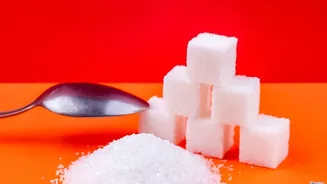
Both jaggery and white sugar begin their journey as juice extracted from sugarcane, but their paths quickly diverge. White sugar undergoes an intensive industrial refining process involving chemicals, filtration, and centrifugation. This strips away everything
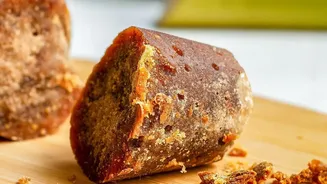
but the pure sucrose, resulting in uniform white crystals with a neutral taste. Jaggery, on the other hand, is made by simply boiling and reducing the sugarcane juice in large, open pans. This minimal processing means it retains the molasses, which is where its characteristic golden-brown colour, rich flavour, and, crucially, its mineral content come from. Nothing is chemically stripped away, making it a less-processed, more natural product.
Unpacking the 'Trace Minerals' Claim
The headline claim is true: jaggery does contain trace minerals that are completely absent in refined sugar. Because the molasses is not removed, jaggery contains small amounts of iron, potassium, magnesium, and calcium. Some reports show that 100 grams of jaggery can contain a significant amount of iron (around 11mg) and potassium. However, the portion size is key. A typical serving of jaggery is about 10 grams, not 100. At this realistic amount, the mineral contribution is quite small and shouldn't be seen as a replacement for nutrient-rich foods. So, while jaggery is nutritionally superior to sugar's 'empty calories', it isn't a health supplement.
The Calorie and Blood Sugar Question
Many people switch to jaggery hoping it will help with weight management or be safer for blood sugar. This is a common and potentially dangerous misconception. Calorie-wise, jaggery and white sugar are nearly identical, with about 383 calories per 100 grams in jaggery versus 387 in sugar. Swapping one for the other without reducing the amount will not lead to weight loss. More importantly, for diabetics, the glycemic index (GI) is what matters. While some sources claim jaggery has a lower GI, several studies show sugarcane jaggery has a GI of around 84, which is actually higher than white sugar's GI of about 65. This means it can raise blood sugar levels just as quickly, if not faster. Both should be used with extreme caution by people with diabetes.
The Winter Wellness Angle
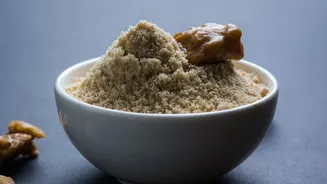
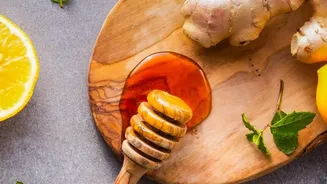
So why is jaggery, or 'gur', so beloved in winter? Traditionally, it's considered a 'warming' food in Ayurveda. Consuming it is believed to generate heat, which is welcome during colder months. This might be linked to the energy the body uses to digest it. Jaggery is also a traditional remedy for colds and coughs, often mixed into warm water or tea. It's thought to have a soothing effect on the throat and help clear the respiratory tract. These traditional uses, combined with its comforting, caramel-like flavour in winter sweets like chikki and gajak, have cemented its role as a seasonal staple in India.
Aiding Digestion After Meals
Another long-held belief is that a small piece of jaggery after a meal aids digestion. Traditional wisdom suggests that it activates digestive enzymes and can help prevent issues like constipation and bloating. While strong scientific backing for this is limited, many people find it helps settle the stomach after a heavy meal. The sweet taste can also satisfy post-meal cravings, potentially preventing you from reaching for a larger, more calorie-dense dessert. It acts as a natural and flavourful end to a meal, a practice passed down through generations.
The Verdict: Better, but Not a Health Food
So, is jaggery truly better than white sugar? The answer is a qualified 'yes'. It is less processed and retains a small profile of minerals and antioxidants that refined sugar lacks. This makes it a marginally better choice. However, it is crucial to remember that jaggery is still, at its core, a sugar. It is high in calories and has a significant impact on blood sugar levels. The true health benefit doesn't come from swapping sugar for jaggery, but from reducing your overall intake of all added sweeteners. Enjoy jaggery for its unique flavour and cultural significance in winter dishes, but do so in moderation.