






The Policy That Opened the Skies
The single most significant catalyst for this commercial shift is the Indian Space Policy 2023. For years, the space sector was the exclusive domain of the Indian Space Research Organisation (ISRO). The new policy dramatically changed the landscape by
explicitly allowing and encouraging Non-Government Entities (NGEs) to undertake end-to-end space activities. This includes everything from building and launching rockets and satellites to operating ground stations and providing space-based services. The policy created a clearer, more predictable regulatory environment, giving private companies the confidence to invest in long-term commercial projects. The goal is to transform the sector from a government-led program into a flourishing commercial industry.
New Institutions, New Roles
To manage this transition, the government established new institutions with distinct roles. The Indian National Space Promotion and Authorisation Centre (IN-SPACe) acts as a single-window agency to promote, authorize, and supervise all private space activities. It helps startups access ISRO's world-class infrastructure and testing facilities, which was a major barrier in the past. Meanwhile, NewSpace India Limited (NSIL), ISRO's commercial arm, is tasked with transferring mature technologies to the private sector and commercializing space products. This restructuring allows ISRO to move away from routine manufacturing and focus on what it does best: advanced research, deep-space exploration, and strategic missions like Gaganyaan.
Meet the NewSpace Trailblazers
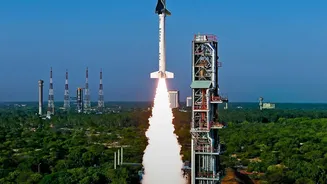
A vibrant ecosystem of startups has emerged, moving rapidly from the drawing board to commercial reality. Hyderabad-based Skyroot Aerospace made history by becoming the first Indian private company to launch a rocket into orbit with its Vikram-1 vehicle in July 2026. The company, which reached unicorn status in May 2026, already serves a majority of foreign clients. Other key players include Agnikul Cosmos, which is developing configurable, on-demand launch vehicles, and Dhruva Space, focusing on small satellite platforms and deployers. In the downstream segment, companies like Pixxel are making waves. Pixxel secured a major NASA contract for its hyperspectral Earth-observation data, which has applications across agriculture, mining, and environmental monitoring. These companies are not just innovating; they are building scalable manufacturing capabilities to compete globally.
Following the Money
This commercial pivot is attracting significant investment. The Indian space-tech sector has seen a steady rise in funding, reaching a record $200 million in 2025 and a total of approximately $871 million as of July 2026. Initially, funding was based on innovation potential, but investors now seek tangible outcomes like manufacturing capabilities and revenue contracts. The growth has attracted not just domestic venture capital but also global institutional investors and sovereign wealth funds. The Indian space economy, currently valued at around $8-9 billion, is projected to grow to over $40 billion by 2030, signaling immense economic potential and job creation in high-tech fields.
The Final Frontier: Challenges Ahead
Despite the momentum, the path to commercial success is not without hurdles. The primary challenge is shifting from proving technology to scaling up manufacturing and launch frequency. While policy has opened doors, startups still face infrastructure deficits and a lack of sufficient testing facilities outside of ISRO's umbrella. Attracting growth capital for the expensive scaling phase remains a challenge, as space businesses have long development cycles and require patient investment. Furthermore, to compete globally, companies must not only innovate on cost but also build a track record of reliability and secure anchor customers to demonstrate predictable demand.