



From Function to Focal Point
The long-held approach to lighting in Indian homes—often a single, central ceiling fixture—is fading. Homeowners are now treating lighting as a primary decorative element, on par with furniture and art. This evolution marks a significant departure from
purely utilitarian choices, where fixtures were meant to be discreet and functional. Today, lighting is expected to command attention and define the character of a space, even when switched off. Designers note that modern Indian homeowners are seeking fixtures that serve as sculptural centerpieces, a role once reserved for a piece of art. This shift is part of a broader trend where every element in the home is curated to reflect a distinct personality.
The Search for a Personal Touch
This trend is deeply connected to a growing desire for personalisation. The post-pandemic era, in particular, made people more aware of their living spaces, transforming homes into offices, schools, and social hubs. This, combined with exposure to global trends through platforms like Instagram and Pinterest, has empowered homeowners to seek out designs that feel unique to them. Many now arrive at design consultations with mood boards, ready to articulate a specific vision. The 'one-size-fits-all' approach is being replaced by a layered and considered one, where a statement light can anchor an entire room's design narrative. It's a move away from safe, anonymous interiors towards spaces that feel expressive and deeply personal.
What Defines 'Statement' Lighting?
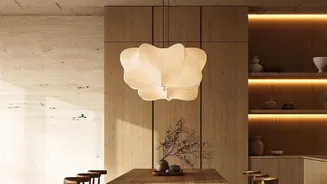
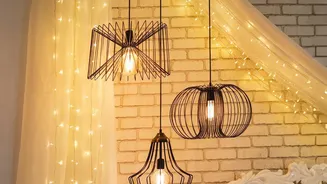
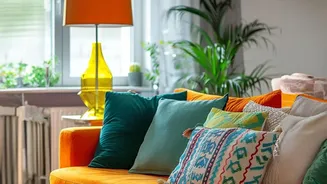
A statement light is defined by its strong visual presence, whether through scale, material, or artistry. In 2026, the trend leans towards sculptural and abstract geometric forms, moving away from the heavy, traditional crystal chandeliers of the past. Think of oversized pendants with organic shapes, clusters of lights hung at varying heights, or wall sconces that double as luminous art pieces. Materials are also key; designers are mixing metals like brushed brass and copper with frosted glass, natural fibres like jute, and even marble. These fixtures often feature warm-toned glass or ambient glows, creating an inviting atmosphere that complements the earthy palettes common in Indian decor.
Global Trends Meet Local Craft
The demand for unique fixtures has created a vibrant market where global aesthetics and local craftsmanship intersect. While international trends inspire forms and materials, there is a growing appreciation for fixtures made by Indian designers and artisans. This allows for the creation of bespoke pieces that are adapted to the Indian context, considering factors like standard ceiling heights and climate. For example, a grand chandelier might be scaled down for a modern apartment, or materials might be chosen to withstand humidity. This fusion results in lighting that feels both contemporary and rooted, adding another layer of individuality to the home.
Choosing Your Centrepiece
Integrating a statement fixture requires careful thought. The key is to see it as buying a piece of art. Consider the scale of the room—a common rule of thumb is to add the room's length and width in feet, then use that number in inches as a rough diameter for your fixture. Over a dining table, the light should be about half to two-thirds the table's width. Beyond size, think about the mood. Do you want dramatic and celebratory or soft and intimate? Finally, ensure it complements your existing decor. A minimalist home might suit a sleek, linear fixture, while a bohemian space could host a cluster of woven pendants. The goal is to find a piece that not only lights up the room but also reflects your story.