


The Sun’s Unseen Temper
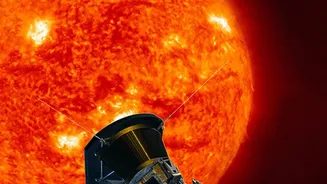
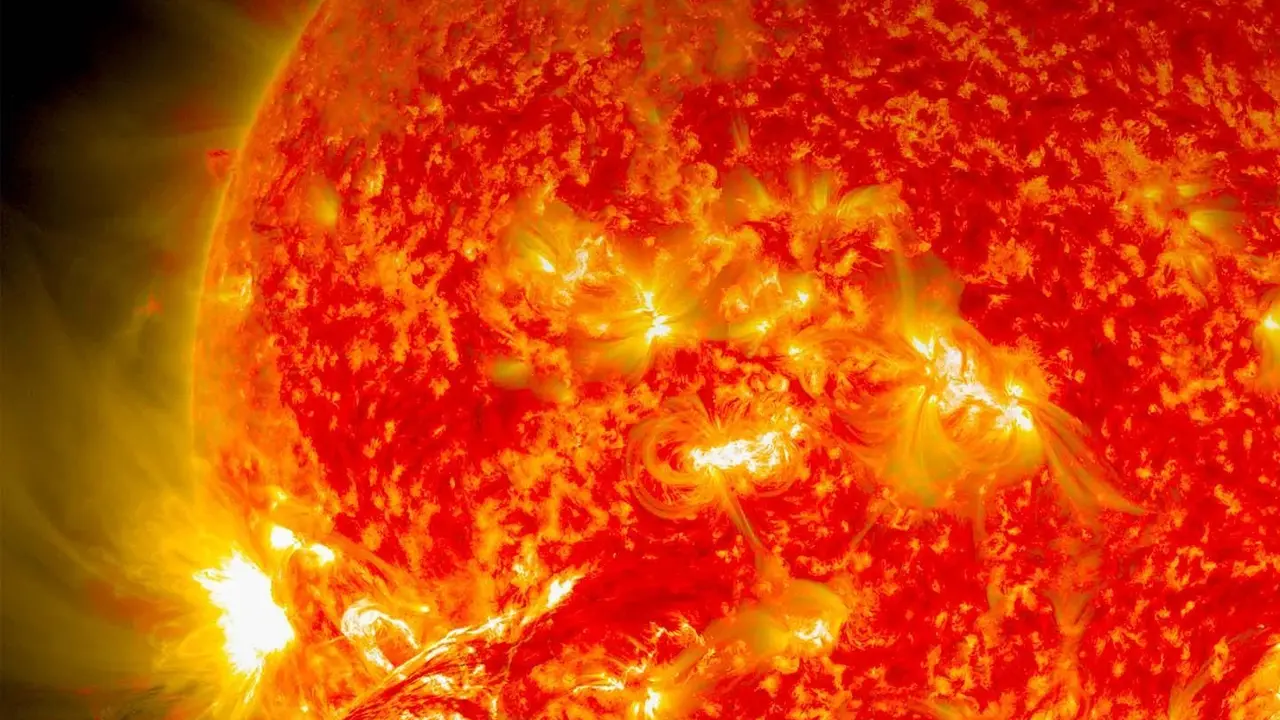
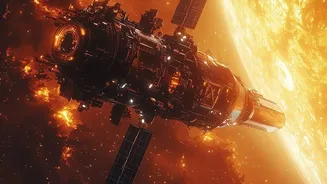
Space weather refers to the changing conditions in space, driven primarily by activity on the Sun. Far from being a quiet, constant star, the Sun periodically erupts, launching enormous amounts of energy and matter into the solar system. The two main
types of events we worry about are solar flares and coronal mass ejections (CMEs). A solar flare is an intense burst of radiation, while a CME is a massive cloud of magnetised plasma and radiation hurled into space at millions of kilometres per hour. While Earth's magnetic field and atmosphere protect us on the ground from most of this onslaught, our satellites orbit largely unprotected. When a powerful CME is aimed at Earth, it can trigger a geomagnetic storm, a major disturbance of our planet's magnetic field that poses a severe risk to technology.
Satellites in the Firing Line
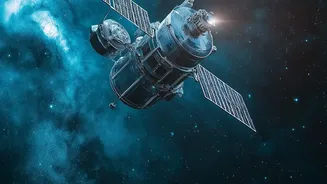
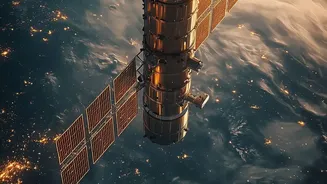
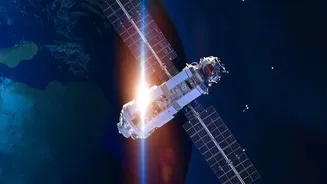
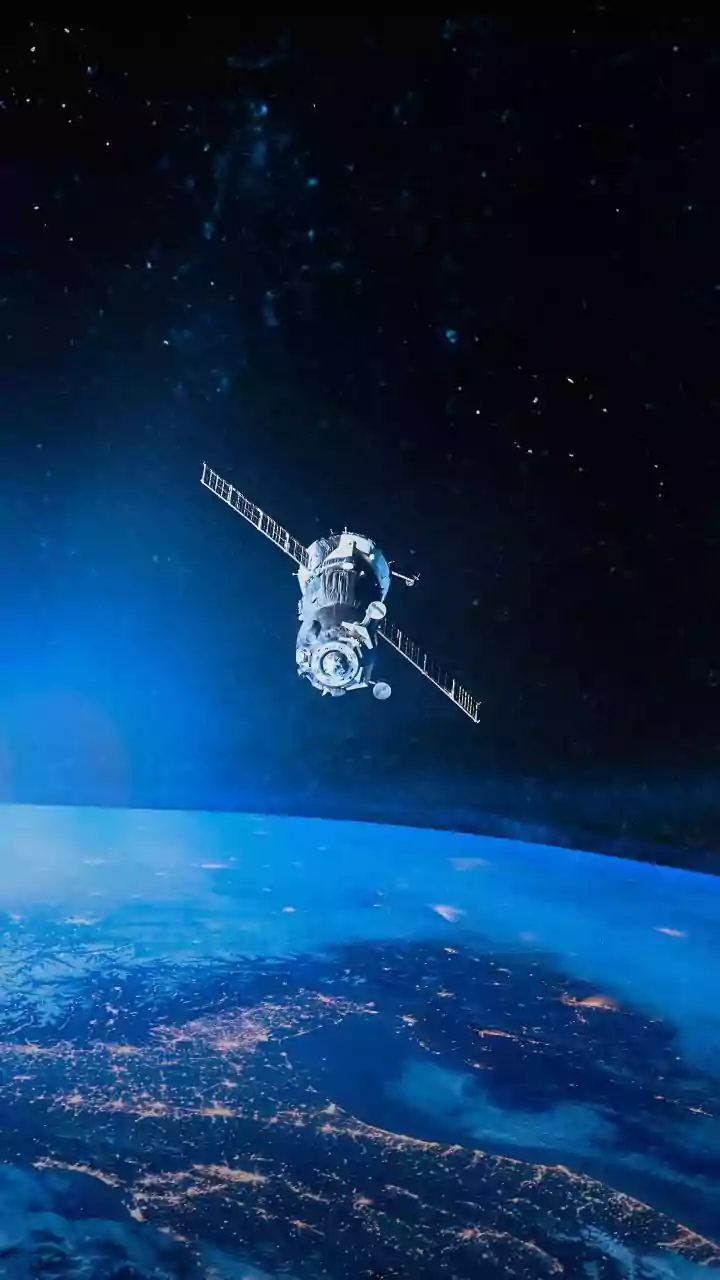
For a satellite, a geomagnetic storm is a multi-pronged assault. High-energy particles can penetrate the spacecraft's shielding and damage its internal electronics. This can lead to 'single-event upsets'—where a particle strikes a microchip and flips a bit of data, causing phantom commands or system errors. Over time, this accumulated radiation degrades sensitive components like solar panels and instruments, shortening the satellite's operational lifespan. Another effect is spacecraft charging, where particles build up on a satellite's surface, leading to powerful electrostatic discharges that can damage electronics. Furthermore, these storms heat and expand Earth's upper atmosphere. This increases the atmospheric drag on satellites in low-Earth orbit, which can cause them to lose altitude and even re-enter the atmosphere prematurely if not corrected. In February 2022, a geomagnetic storm led to the loss of 38 commercial satellites due to increased atmospheric drag.
Our Eyes on the Storm
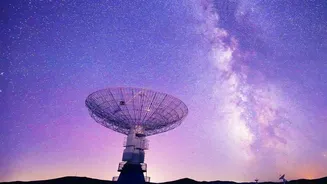
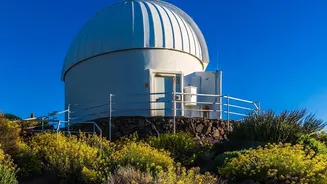
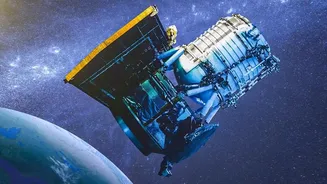
This is where monitoring stations become indispensable. We cannot stop space weather, but we can see it coming. Forecasting relies on a network of both ground-based and space-based observatories that work together to provide a complete picture of solar activity. Space-based observatories like NOAA's Deep Space Climate Observatory (DSCOVR), positioned 1.5 million kilometres from Earth, act as an early-warning system. They measure the solar wind—the stream of charged particles constantly flowing from the Sun—and can detect the tell-tale signs of an approaching CME. This gives forecasters crucial lead time. Other satellites, like the GOES series, continuously watch the Sun for flares. On the ground, a global network of instruments, from solar telescopes to radio antennas and magnetometers, monitors the Sun and tracks disturbances in Earth's ionosphere and magnetic field.
From Forecast to Protective Action
An accurate forecast is the key to mitigating damage. When agencies like NOAA's Space Weather Prediction Center (SWPC) issue a warning, satellite operators have a window of opportunity to act. With hours or sometimes days of notice, they can take protective measures. This often involves putting the satellite into a 'safe mode,' where non-essential and sensitive electronic systems are powered down to prevent them from being fried by a surge of energetic particles. Operators can also reorient the spacecraft to present a smaller profile to the incoming storm or adjust its orbit to compensate for increased atmospheric drag. For navigation systems like GPS that are sensitive to ionospheric disturbances, forecasts allow operators of critical infrastructure like aviation and precision agriculture to anticipate and manage potential inaccuracies. In short, monitoring gives us the time to brace for impact.