





Beyond the Usual Suspects
Ask anyone to name an Indian rice, and the answer is almost always Basmati. Its long, slender grains and delicate fragrance have made it a global ambassador for Indian cuisine, synonymous with biryanis and festive pulaos. For daily meals, especially in the south,
Sona Masuri is another familiar name, loved for its lightweight and aromatic character. But to stop here is like looking at a map of India and only seeing Delhi and Mumbai. The reality is that India was once home to an estimated 110,000 rice varieties, a staggering biodiversity that has now shrunk to around 6,000. Each grain tells a story of a specific place, climate, and culture. From the sticky, aromatic offerings in the east to the bold, red grains of the south, a whole universe of flavour, texture, and tradition is waiting to be explored.
A Grain for Every Region and Ritual
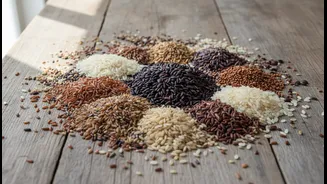
Travel east to West Bengal, and you’ll find Gobindobhog, a short-grained, sticky rice with a sweet, buttery aroma. Its name translates to "pleasing the Lord," and it is the heart of festive dishes like khichuri and payesh, especially during Durga Puja. Head further to Manipur, and you’ll encounter the visually stunning Chak-Hao, or black rice. Once reserved for royalty and known as "forbidden rice" in ancient China, its grains turn a deep purple when cooked, offering a nutty flavour and chewy texture perfect for a traditional kheer. Down south in Kerala, the staple is not white but a robust red. Palakkadan Matta rice, with its coarse texture and earthy taste, is the perfect vehicle for the region’s rich, spicy curries and is used in everything from daily meals to snacks like murukku. In Maharashtra, Ambemohar, which means "mango blossom," delights with its unique fragrance, while the sticky Indrayani is a local favourite for simple, comforting dal rice.
More Than Just Sustenance
In India, rice is woven into the very fabric of life, symbolizing fertility, prosperity, and purity. Its significance begins at birth with the 'Annaprashan' ceremony, where a baby is given its first taste of solid food—almost always rice. At weddings, rice is showered over the couple as a blessing for a life of abundance. Festivals celebrating the harvest, like Pongal in Tamil Nadu and Bihu in Assam, are centered around rice, with special dishes offered to deities as a sign of gratitude. Uncooked rice mixed with turmeric, known as 'akshata', is used in pujas as a sacred offering to the gods, a symbol of devotion. Even in rituals for ancestors, rice balls called 'pinda' are offered, bridging the gap between the living and the departed. This grain is not just food; it is a sacred link that connects generations.
The Keepers of the Grain
The incredible diversity of India's rice is not a given; it is a legacy protected by generations of farmers. In an era dominated by high-yield commercial hybrids, these indigenous varieties, or landraces, are under threat. However, a quiet revolution is underway. Across the country, individual farmers and grassroots organizations are working to conserve and revive these heirloom seeds. In Odisha, a conservation farm named Basudha cultivates over 1,400 traditional varieties, including some that can grow in deep floodwaters and others with unique medicinal properties. In West Bengal, the Forum for Indigenous Agricultural Movement (FIAM) has helped revive around 100 native paddy types, including the famously aromatic Tulaipanji. These conservationists aren’t just saving seeds; they are preserving culinary history, climate resilience, and the cultural identity of their communities.