





The High Cost of Moving
Establishing a permanent base on the Moon presents a colossal logistical challenge. The cost of launching materials from Earth is astronomical; sending even a single brick to the Moon can cost up to $2 million. This makes traditional construction methods
completely unfeasible. The solution, embraced by space agencies like NASA and the European Space Agency (ESA), is a strategy called In-Situ Resource Utilization (ISRU). The principle is simple: live off the land. By harnessing materials already on the Moon, we can dramatically reduce our reliance on expensive Earth-based supply chains and begin building a sustainable off-world presence. This is where robotic 3D printing becomes not just a possibility, but a necessity.
Moon Dust: The Ultimate Building Material
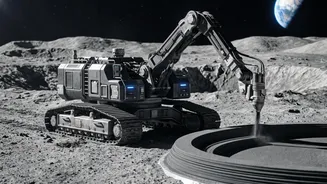
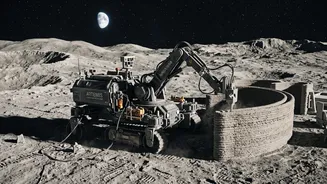
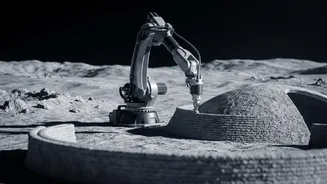
The Moon's surface is covered in a fine, abrasive powder called regolith. While it can be a nuisance for equipment, this lunar dust is rich in silicon dioxide and oxides of aluminum, iron, and other metals. This composition makes it an excellent raw material for construction. The leading method for turning this dust into solid structures is a process called sintering. Robotic systems can use high-energy sources, like lasers or concentrated solar power, to heat the regolith to its melting point (around 1,200°C). As it cools, the material fuses into a hard, ceramic-like solid. Layer by layer, these robots can 'print' everything from landing pads and protective berms to the core structures of habitats.
Meet the Robotic Construction Crew
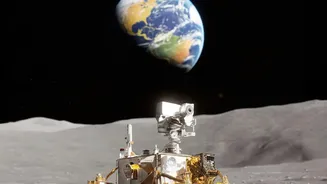
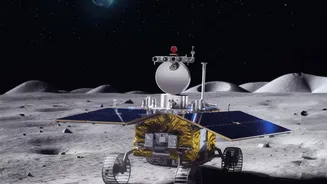
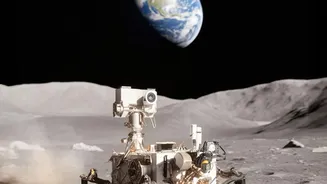
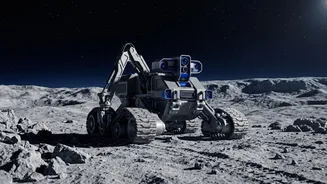
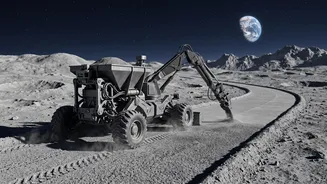
The future construction sites on the Moon will be staffed by highly specialized robots. These systems are being designed to be autonomous, lightweight, and incredibly resilient. We can expect to see multi-robot systems working in tandem. Some rovers will be responsible for site preparation, excavation, and collecting regolith. Others will be equipped with advanced 3D printing heads, which extrude the molten regolith or regolith-polymer composites to build structures layer by layer. NASA, in partnership with companies like ICON, is developing 'Project Olympus,' an advanced construction system intended to use these very techniques. The goal is a system that can build durable habitats providing superior protection from radiation and micrometeorites compared to inflatable or prefabricated metal structures.
Overcoming a Hostile Work Environment
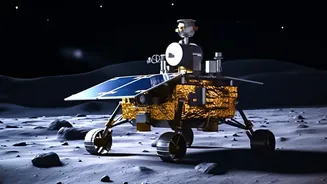
Building on the Moon is unlike any construction project on Earth. Engineers must design systems that can operate in one of the harshest environments imaginable. The challenges are immense: extreme temperature swings from deep-freeze to scorching heat, a near-total vacuum, constant bombardment by cosmic radiation, and the ever-present problem of abrasive, electrostatically charged dust that clings to everything. Robots must be built to withstand these conditions with minimal human oversight. Furthermore, the lower gravity—one-sixth of Earth's—fundamentally changes structural engineering principles, forcing designers to focus more on challenges like internal pressure and micrometeorite impacts rather than just a structure's weight.
The Blueprint for a Lunar Economy
The infrastructure built by these robotic printers will be the foundation of a future lunar economy. The initial focus is on mission-critical elements: landing pads to prevent dangerous plumes of dust during take-off and landing, habitats to shelter astronauts, and protective shields. But the vision extends much further. As capabilities grow, these systems could construct roads, equipment shelters, and facilities for resource extraction, like mining for water ice at the lunar poles. This ability to build and expand using local resources is the key to moving beyond short-term exploratory missions and establishing a permanent, self-sustaining human presence, potentially as a staging post for future missions to Mars.