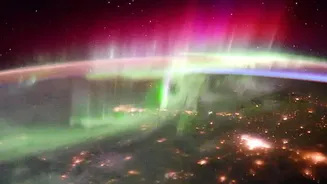


The ethereal dance of the aurora across the night sky is one of nature's most breathtaking spectacles. But behind this beauty lies a powerful space weather event. New research, however, complicates our understanding of its danger to our power grids.
The Mesmerising Misconception
For
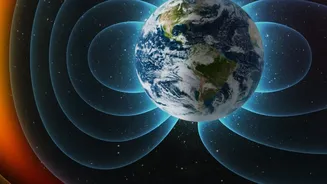
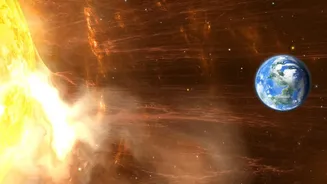
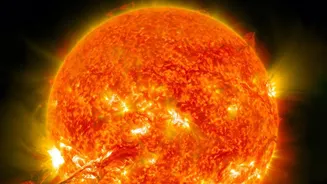
as long as we have observed them, the northern and southern lights have been a source of awe and myth. Caused by charged particles from the sun interacting with Earth's atmosphere, these displays are a visible sign of a geomagnetic storm. It’s a logical leap to assume that the brighter and more spectacular the aurora, the greater the danger to our technology on the ground. After all, major power outages, like the one that left six million people in Quebec without power in 1989, have coincided with intensely beautiful auroras. This has led to a common belief that a vibrant light show is a direct warning of a powerful threat to our electrical infrastructure.
A Deeper Look at the Data
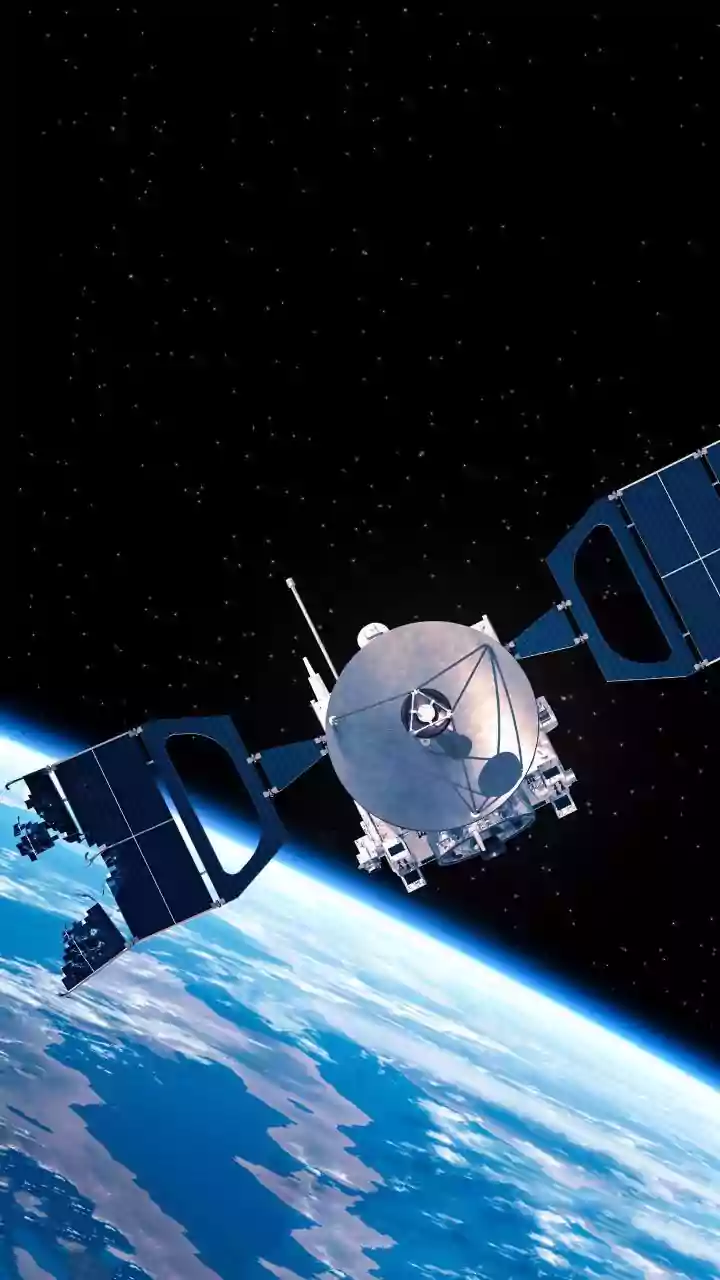
Recent scientific findings are challenging this straightforward assumption. A study combining data from NASA spacecraft and ground-based magnetometers—devices that measure changes in Earth's magnetic field—has revealed a more complex relationship. Researchers found that a visually stunning aurora doesn't always correspond to the most severe magnetic disturbances at ground level. The study showed that even stations just a few hundred miles apart could record vastly different magnetic field changes during the same auroral event. A bright overhead aurora at one location did not guarantee a strong disturbance directly beneath it, suggesting other factors are at play.
The Invisible Culprit: GICs
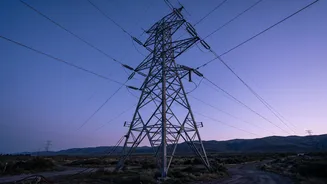
The real threat to power grids comes from something invisible: geomagnetically induced currents, or GICs. These are low-frequency, quasi-DC currents that are induced in long conductors—like power lines and pipelines—during a geomagnetic storm. GICs are not caused by the light of the aurora itself, but by the rate of change of the Earth’s magnetic field. Think of it like a river: a large, slow-moving river might be impressive, but a flash flood that rises incredibly quickly is what causes the most damage. Similarly, it is the rapid fluctuation of the magnetic field, not just the total energy, that induces these harmful currents. These currents can flow into power transformers, causing them to saturate, overheat, and potentially fail, leading to widespread blackouts.
Local Conditions Matter
The research highlights that local conditions on Earth play a crucial role in determining the strength of GICs. Two key factors are the electrical conductivity of the upper atmosphere and the ground itself. The geology and moisture level of the ground beneath a power line can either dampen or amplify the effect of the induced currents. This explains why two nearby locations might experience the same storm differently; one area might have ground composition that is more susceptible to generating strong GICs, while another is more resilient. Therefore, predicting grid disruption requires more than just looking at the sky; it demands a detailed understanding of the ground beneath our feet.
Improving Our Defenses
This new understanding has significant implications for how we protect our increasingly tech‐dependent society. Relying on aurora brightness alone is an insufficient warning system for grid operators. Instead, accurate space weather forecasting must focus on the rapid changes in the magnetic field and incorporate models of local ground conductivity. This allows for more precise warnings, giving utility companies crucial time to take preventative measures to protect transformers and stabilise the grid. While auroras serve as a beautiful visual cue that a storm is happening, the science shows that the most critical threats are the ones we can't see. As our world becomes more reliant on stable power, this research is vital for building a more resilient infrastructure against the powerful forces of our own sun.