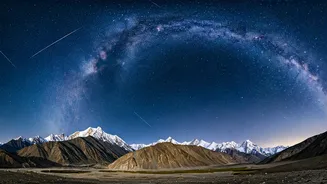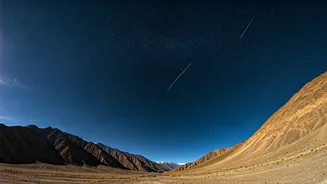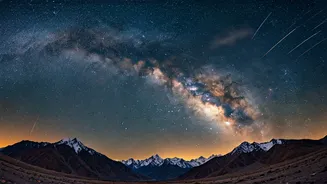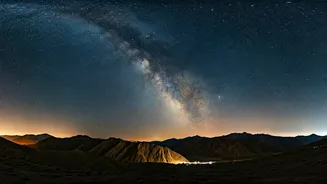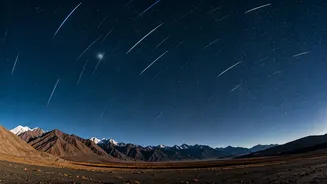




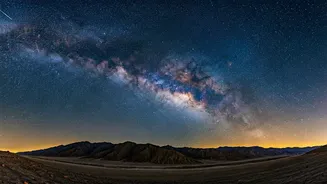


What Are the Delta Aquariids?
The Delta Aquariid meteor shower is an annual celestial event that occurs from mid-July to late August. It happens when Earth passes through the dusty trail of debris left behind by comets Marsden and Kracht. These tiny particles burn up upon entering
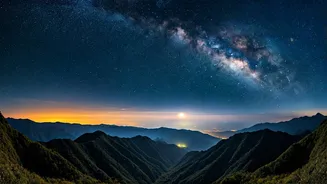
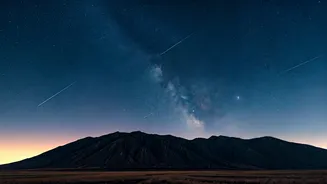
our atmosphere, creating the fleeting streaks of light we call meteors or shooting stars. While not as famous as the Perseids in August, the Delta Aquariids offer a steady stream of meteors, with a typical rate of 15 to 20 per hour under ideal dark-sky conditions. The meteors appear to radiate from a point near the star Skat, or Delta Aquarii, in the constellation Aquarius, which is how the shower gets its name.
The Best Time to Watch in 2026
The Delta Aquariids will be active from July 12 to August 23, 2026. The shower is expected to peak on the night of July 29-30. The best viewing window in India will be in the pre-dawn hours of July 30 and 31, roughly between 1:30 AM and 4:30 AM IST. However, there is a significant challenge this year: a nearly full moon will be present during the peak, its bright glare washing out many of the fainter meteors. For a better experience, consider planning your viewing a week before the peak, between July 21 and July 26. During this period, the moon will set earlier, leaving the skies dark for the prime meteor-watching hours after midnight.
Why Ladakh Is the Perfect Spot
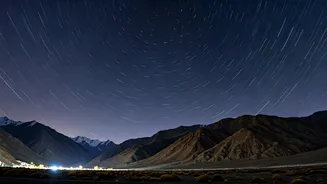
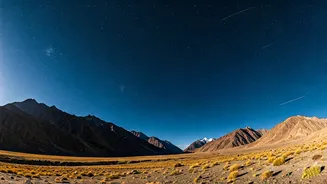
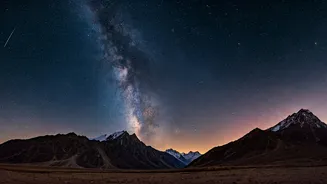
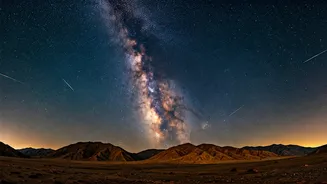
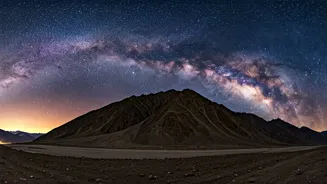
Ladakh's unique geography makes it one of the best places in India, and the world, for stargazing. Its high altitude, with many locations above 3,000 metres, means the atmosphere is thin and dry, resulting in crystal-clear skies. The region's remoteness and sparse population contribute to minimal light pollution, a critical factor for seeing faint celestial objects like meteors. In places like Hanle, which has been designated as India's first Dark Sky Reserve, the sky's darkness is actively protected, offering an unparalleled astronomical experience. This combination of high altitude, clear air, and dark skies makes Ladakh a dream destination for any astrophotographer or amateur astronomer.
Top Viewing Locations in Ladakh
While almost anywhere away from town lights in Ladakh will offer a good view, some spots are exceptional. Hanle is the premier choice, home to the Indian Astronomical Observatory and offering some of the darkest skies on the planet. Pangong Tso is another breathtaking option, where you can watch meteors streak across the sky as they reflect in the high-altitude lake. Tso Moriri, being less crowded than Pangong, provides a tranquil setting for uninterrupted stargazing. The Nubra Valley, with its unique sand dunes and lower altitude, offers a more comfortable but still spectacular viewing experience, especially in villages like Hunder or Diskit.
Your Essential Stargazing Toolkit
To make the most of your meteor-watching night, preparation is key. First, find a spot away from any artificial lights with a wide, unobstructed view of the southern sky. Dress in warm layers, as temperatures in Ladakh can drop significantly at night, even in summer. Instead of standing, use a reclining chair or simply lie on a blanket to comfortably gaze upwards for long periods. Your eyes need about 20-30 minutes to fully adapt to the darkness, so avoid looking at your phone or other bright screens. If you need a light, use a red-light flashlight to preserve your night vision. No special equipment like binoculars or telescopes is needed; your naked eyes are the best tool for catching the wide arcs of meteors.
Tips for Photographing the Shower
Capturing a meteor on camera is rewarding. Even a smartphone can get the job done with the right technique. The most crucial piece of equipment is a tripod to keep your phone or camera absolutely still for long exposures. Use a manual or pro mode to control the settings. Aim for a long shutter speed (15-30 seconds), a wide aperture (the lowest f-number your lens allows), and a high ISO (start around 1600-3200 and adjust). Use a wide-angle lens to capture as much sky as possible. Since meteors are unpredictable, take as many photos as you can. Using an intervalometer or a time-burst mode can automate this process, increasing your chances of capturing that perfect fiery streak across the Ladakhi sky.