




Why Our Cities Become Ovens
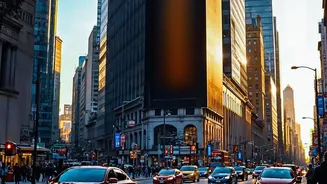
Anyone who has walked barefoot on a dark asphalt road in May knows the feeling. Our cities are dominated by dark surfaces like roads and rooftops that are incredibly efficient at absorbing the sun's energy. These surfaces can absorb up to 95% of sunlight,
reaching blistering temperatures well over 60°C. This absorbed heat doesn't just disappear when the sun sets; it radiates back into the air, keeping the city warmer long into the night. This phenomenon is known as the Urban Heat Island effect, where a city is significantly hotter than the surrounding rural areas. In a country like India, where dense urban centres are grappling with increasingly frequent and severe heat waves, this effect poses a serious risk to public health and strains energy grids.
The Simple Science of 'Cool' Pavements
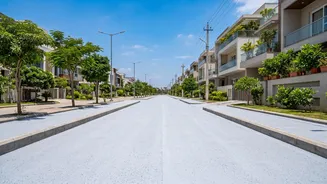
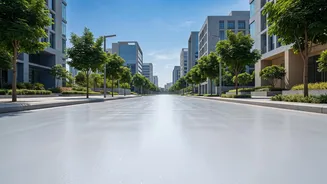
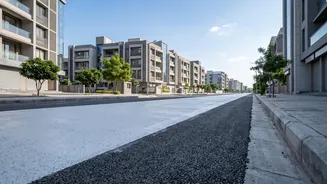
The basic principle behind cool pavements is deceptively simple: make surfaces lighter so they reflect more sunlight. Think of wearing a white shirt versus a black shirt on a sunny day. Lighter colours have a higher 'albedo,' which is a measure of how much solar radiation is reflected. By applying a reflective coating to a dark asphalt street, you can dramatically increase its albedo. Instead of absorbing the sun's heat, the surface bounces a significant portion of it back into the atmosphere. This simple change can lead to remarkable results. Studies from pilot projects in cities like Phoenix and Los Angeles have shown that these coatings can lower surface temperatures by 5 to 8 degrees Celsius.
Beyond Just Paint: The 'Bio-Engineered' Edge
While a simple coat of light-coloured paint helps, the term 'bio-engineered' points to more advanced and durable solutions. These aren't just standard paints but sophisticated coatings, often water-based epoxies or polymer-modified overlays, designed for the harsh environment of a busy street. The 'bio' aspect can refer to incorporating materials derived from renewable sources or designing coatings that mimic natural cooling processes. Some advanced systems are also permeable, allowing water to seep through and cool the surface through evaporation, a process similar to how plants cool the air. These engineered solutions are designed to be durable against traffic, fuel spills, and weather, ensuring they remain effective for years.
Real-World Impact and Local Promise
The benefits of this technology are being proven in cities worldwide. In a project in Pacoima, Los Angeles, covering over 700,000 square feet of surfaces with cool coatings reduced ambient air temperatures by as much as 2°C during a heatwave. While India is still in the early stages, the potential is enormous. A recent modelling study for Bhopal suggested that a city-wide implementation of 'smart surfaces,' including cool pavements and roofs, could lower peak summer temperatures by up to 2.8°C. These may seem like small numbers, but in heat-risk management, they are incredibly significant, potentially reducing heat stress for millions and lowering the demand for energy-guzzling air conditioning. Beyond temperature reduction, another benefit is improved night-time visibility, which can enhance road safety and reduce the need for street lighting.
Challenges and the Path Forward
Cool pavements are a promising tool, but they aren't a magic bullet. One challenge is the cost and the lifecycle impact of producing these materials, as some can be more energy-intensive to manufacture than traditional asphalt. Another consideration is pedestrian comfort; highly reflective surfaces can sometimes increase the amount of radiation felt by people walking on them, even if the surface itself is cooler. Researchers are actively working on these issues, refining materials and strategies. Ultimately, experts agree that cool pavements are most effective as part of a larger strategy. Combining them with other solutions like increasing tree cover, designing green corridors, and installing cool roofs creates a multi-layered defence against extreme heat, building more resilient and livable cities for the future.